London Fashion Week SS22: “Generation Z” Takes Over:
 “He was the future once”. It was with these teasing words in the British Parliament on 7th December 2005 that the new conservative opposition leader, David Cameron, portrayed the then Prime Minister, Tony Blair, as a politician whose best days were behind him. Blair nonetheless remained in 10 Downing Street until 27th June 2007 and Cameron himself became a figure of the past when he resigned as PM on 24th June 2015, the day after the UK voted to leave the European Union.
The Guardian’s fashion editor, Jess Cartner-Morley, used a similar phrase in an article on 2nd December 2020 in which she recalled “the glory days” when Topshop was “the rock star of retail and the catwalk shows”. Two days earlier, its owner, the Arcadia Group, run by the now discredited Sir PhilipGreen, had collapsed into administration. Until then, Cartney-Morley pointed out, the Topshop front row at the biannual London Fashion Week “regularly outshone designer labels with the glossiest celebrities, the sharpest new trends and the most copious champagne”.
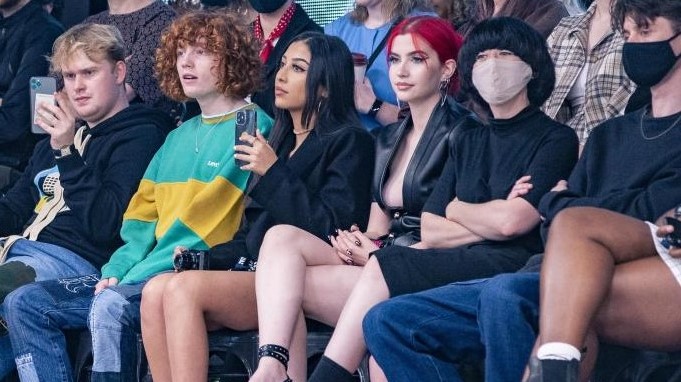
“Tik Tok Royalty” At LFW SS22 -Sunday Times.
Not any more. On 10th September 2021, her colleague, Sarah Butler, reported that IKEA was poised to buy Topshop’s former Oxford Street store, previously “the jewel in Green’s retail empire”, for around £385 million. The following weekend, the Sunday Times Fashion Director, Jane McFarland, noted that at London Fashion Week SS22 (September 17th – 21st) the “upper echelons” of the sector had been displaced from the most coveted front row seats at the catwalks by what she described as “Tik Tok royalty”.

Tik Tok Logo.
Who, asked McFarland, were these new fashionistas? Simple, really: They’re all “Generation Z” (Zoomers), between the ages of 18- 24. Equally significant, their lives revolve around Tik Tok, an app whose followers “have quickly become the most important target audience for brands chasing the next generation of luxury spenders and whose influence on the fashion industry thus cannot be ignored”. As Kristina Karassoulis, Tik Tok’s head of luxury brand partnerships, emphasised to the Evening Standard columnist, Suzannah Ramsdale, on 15th December, fashion houses that don’t make the effort to appeal to those born after 1997 risk being left behind.

Business Of Fashion “Generation Z” Photo.
Data provided by the Brandastic agency, indicates that Tik Tok has an estimated 1.1 billion users worldwide who spend an average of 52 minutes per day on the app. It’s controlled by the Chinese company Bytedance, which is valued is at $140 billion, making is worth more than Twitter and Coca Cola. This rather explains why the British Fashion Council’s CEO, Caroline Rush, declared at the outset of LFW SS22 that the BFC was extremely proud to be partnering with Tik Tok to support emerging talent.
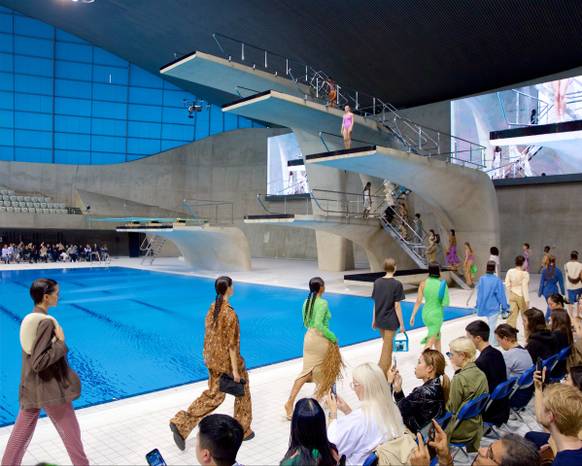
Regina Pyo – Fashion United.
The event this autumn included 82 digital shows , 28 catwalks, 10 presentations and 34 evening functions. For the first time at LFW, Tik Tok had its own Show Space, located at the Old Selfridges Hotel in central London, where an extensive array of designers had been invited to display their creations – among them Supriya Lele (India/UK), Saul Nash (UK), Yuhan Wang (China),Eftychia Karamolegkou (Greece),Feben (UK),Nensi Dojaka (Albania) and S.S.Daley (UK).
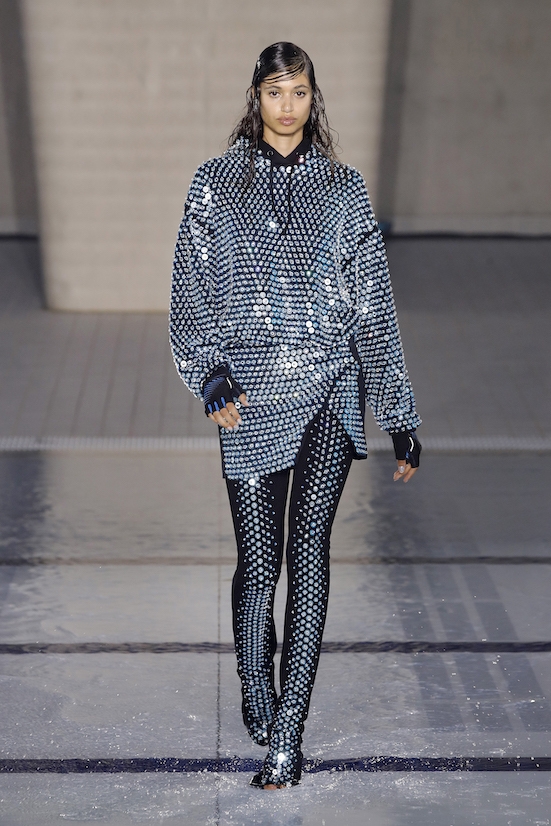
David Koma LFW SS22 Catwalk.
Rush’s enthusiasm for Tik Tok, however, is not shared by commentators such as Salvador Rodriguez at the US business news TV channel CNBC, who observed on 25th June that some cybersecurity experts are uneasy that the Chinese government could use the social media app for propaganda and censorship purposes. On August 18th, the Variety magazine correspondent Rebecca Davis, cited a Reuters news agency report that WangTouZhongWen (Beijing) Technology, which is owned by three Chinese government entities, including a fund backed by the Cyberspace Administration of China (CAC), the country’s top internet censor, had acquired a stake in ByteDance.

David Koma LFW SS22 at the London Aquatic Centre – Richard Pohle – The Times.
Meanwhile, in February the BBC highlighted an allegation by the European Consumer Organisation that Tik Tok is failing to protect children from hidden advertising and inappropriate content and is handling their personal data in a misleading way.
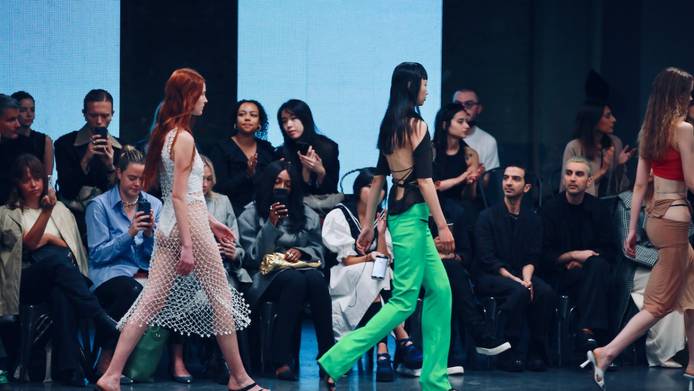
Supriya Lele – LFW SS22 – Charlie Wheeler – Fashion United
The BFC collaborative initiative with the “buy now pay later” company Clearpay, whereby the latter’s Collective produces, among others, “a range of exclusive fashion designs and unique shopping experiences” at LFW has also proved slightly controversial. On 2nd August, CNN’s business editor, Rob McLean, disclosed that the digital payments platform Square (SQ), run by the Twitter co-founder Jack Dorsey, would be buying the Australian firm Afterpay (as Clearpay is known there) for $29 billion in order to capitalize on the rapid shift to online shopping among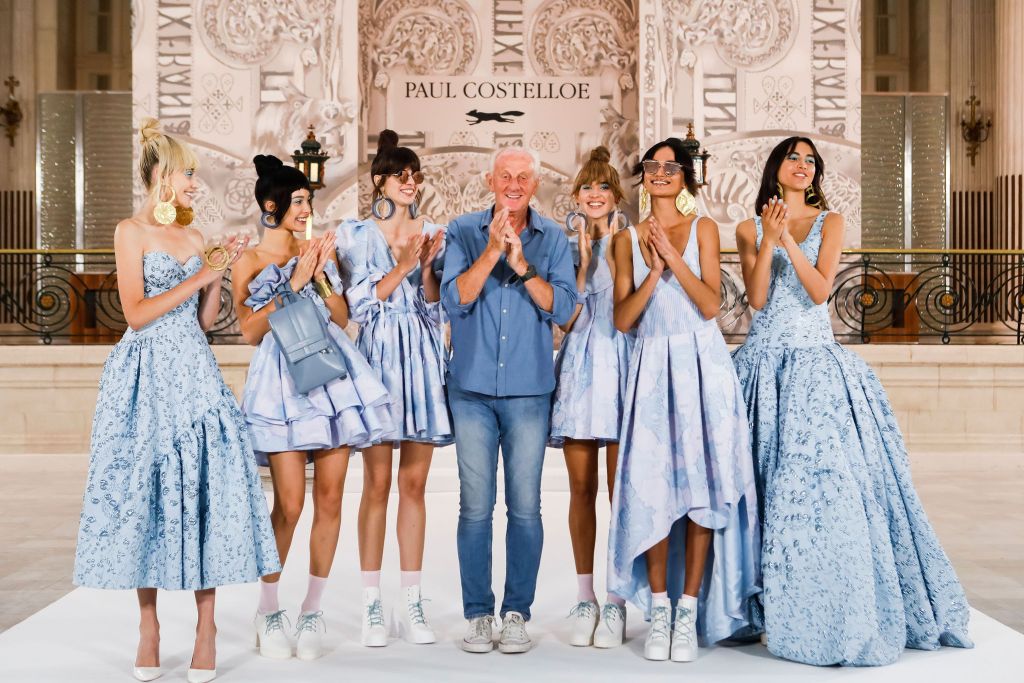 younger consumers.
According to the Pew Research Centre, there are two types of Gen Z: The “Generation Me”,who are social-media obsessed fashionistas and escapists who will queue for hours during a new product launch, and “Generation We”, who are particularly concerned about corporate responsibility, environmental issues and sustainability and will stop buying from a brand if they dislike its behaviour.
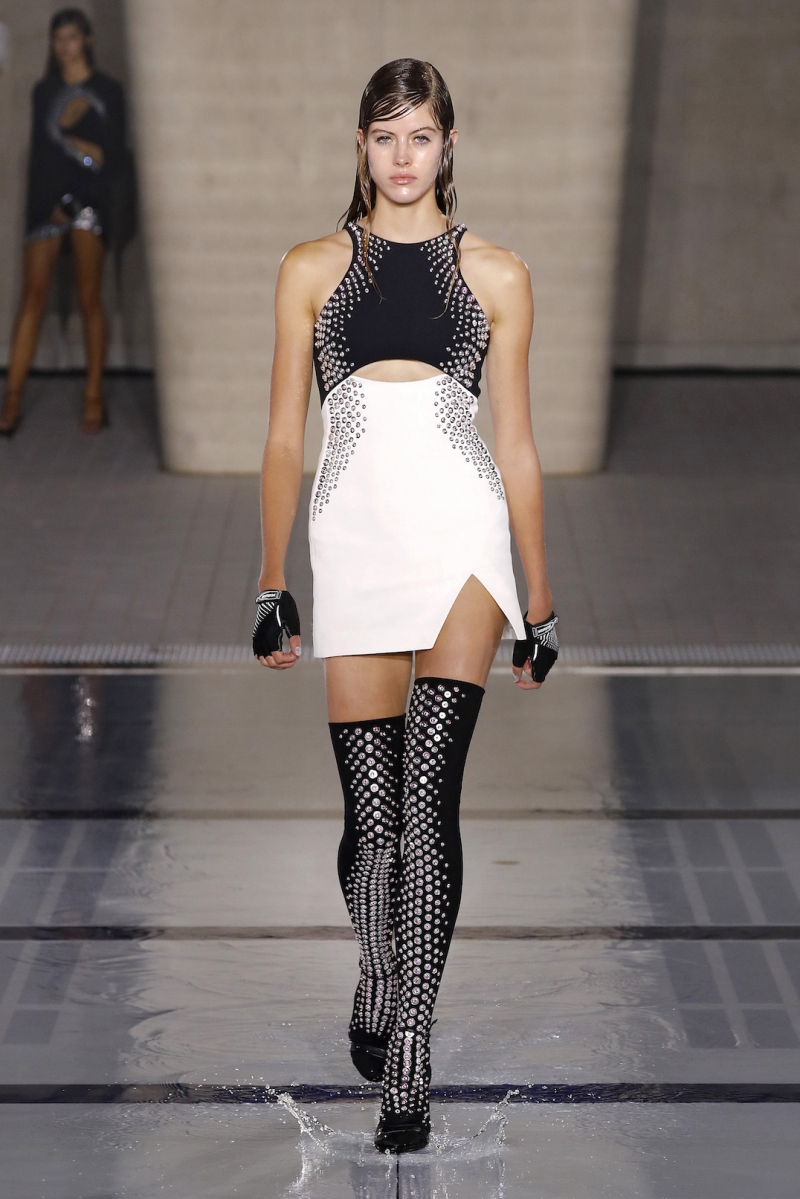
David Koma Catwalk – LFW SS22.
Both groups, say Pew, tend to be financially cautious and have an aversion to debt due to having grown up during the 2008 market crash and the recession that followed.
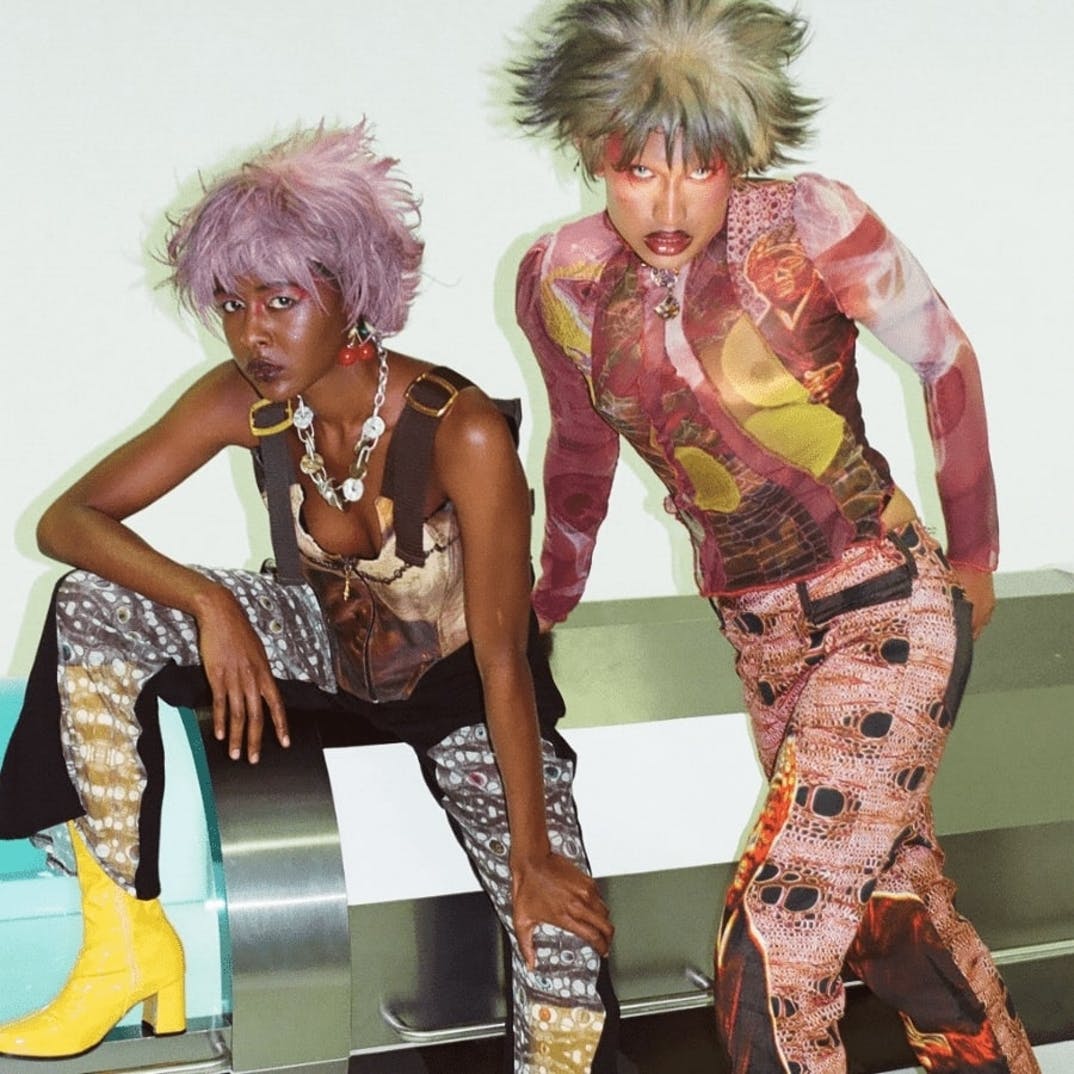
British Mustard – LFW SS22.
The business world, though, is already turning its attention to the Zoomers’ successors – Generation Alpha. Although most of them are still under 10 years old, 75% of parents surveyed acknowledged that they are influenced by their children’s preferences when making technological purchases.