The Uncertain Future Of Supermarket Loyalty Cards:
 “The easiest and most powerful way to increase customer loyalty is really very simple: Keep them happy”. That, in the opinion of the American marketing professional, Kevin Stirtz, is the obvious route to business success. This, however, then raises the question as to exactly how companies can attract customers in the first place and then ensure they stay with them. Part of the answer, according to the Harvard Business Review contributors, Andrew Chamberlain and Daniel Zhao, is having contented and motivated employees, especially in sectors with the closest contact between workers and customers, such as retail, tourism and restaurants.
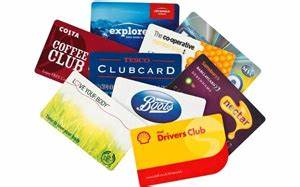 Since the 1990’s, the solution for large businesses such as supermarkets and chain stores has been – as the Statista organisation noted on 26th January – to focus on using coupons, deals and especially loyalty schemes to provide the best offers available on the market. The problem they now face is that consumers in the UK are tending to acquire more than one loyalty card, with 28.3% of those questioned in surveys saying they have at least three, which means that they don’t just shop at one store.
 Research conducted in 2019 by YouGov and the promotional agency Mando-Connect, revealed that 77% of adults in Britain were members of at least one loyalty programme, with Tesco having the biggest share (65%), followed by Sainsburys (58%), the Co-Operative (26%), Mórrisons (23%), M&S (19%), Waitrose (18%) and Iceland (16%). Yet by the end of last year, this had changed significantly.
 On 22nd November, YouGov’s Head of Data Journalism, Matthew Smith, reported that 16% of people in Britain had moved to a different supermarket because of the rise in the cost of living. Tesco appears to have suffered most from this trend: The survey shows that they have been abandoned by 28% of their former shoppers, Sainsbury’s by 16% and ASDA by 13% . Aldi has been by far the main beneficiary with 41% of respondents confirming they’ve made the discount retailer their new main supermarket, followed by Lidl with 24% of additional shoppers.
In an article questioning whether “supermarket loyalty cards as we know them are coming to an end”, the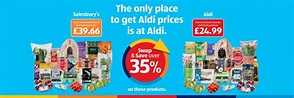 freelance food writer for Yahoo! News, Ellen Manning, on December 18th quoted Jason Sit, a retail expert and a senior lecturer in marketing at the University of Portsmouth, as emphasising that today’s consumers are no longer committed to a single supermarket and that indeed even the word “loyalty” is out of date: Instead “they mix and match their shopping activities to hunt for the best deals and fulfil their shopping needs, especially in the challenging economic climate they are currently facing”.
 Likewise, the consumer affairs correspondent for Inews, Katie Grant, on February 4th highlighted the warning by the “Which?Retail” editor Reena Sewraz that consumers will probably risk losing out on greater savings if they stay faithful to one retailer just because they’ve signed up to their loyalty programme, especially if their overall prices are higher than those of their competitors. Hence, recommended Sewraz “ Make sure you shop around if you can”.
 As the Independent newspaper’s columnist, William Mata, pointed out on 10th March, the “high street giants” have responded to the situation by making sweeping changes to their loyalty card schemes. For example, shoppers at Boots who currently receive 4p credit for every
  £1 they spend at one of their outlets will only get 3p from May onwards, a reduction of 25%; Tesco has increased its “meal deal price” from £3 to £3.40 for it’s Clubcard holders and Sainsburys Bank customers will now only get one Nectar point for every £2 spent instead of two points for every £1.
All this is happening in the midst of increasing concern about how the vast amount of information being accumulated about consumers is being used. The campaign group Privacy International is particularly unhappy with what it considers to be “the mass exploitation of people’s data” by retailers and third-party companies “wanting to know you better than you know yourself”.
 David Hatter, a cybersecurity expert with the Cincinnati-based company
 IntrustIT, doubts whether the average non-technology person really understands how detailed a profile is being potentially created about them, how it could be used and how third parties might have access to it. His advice, observes Vilius Petkauskas, a senior journalist for Cybernews, is not to give “real information” and certainly not more than
  you need to. Use a secondary email address, he suggests, not your main one. Hatter is encouraged, nonetheless, that people are beginning to “wake up” to what’s going on.
By contrast, Sheila Power, chief sales officer at Antavo Enterprise, which has devised loyalty schemes for brands such as KFC and the toy company Hornby, seems to consider this somewhat alarmist. Retailers, she asserted to Katie Grant, “are fighting for their share of the wallet, not manipulating people into buying something they don’t want. This seems to make good sense”.