Historic London Bus Routes Under Imminent Threat:
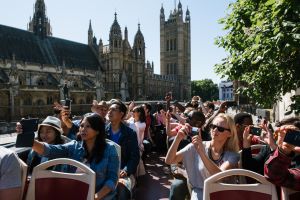
(Big Bus Company – Upper Deck)
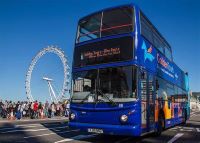
Which is the best way to get around the UK ‘s capital and really appreciate everything the city has to offer? In the 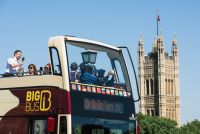 opinion of the Big Bus and Golden Tours companies, their “hop-on-hop-off” services offer visitors, both from abroad and elsewhere in the country, by far the best option, especially from their open top-decks when it isn’t raining.
The Conservative Member of Parliament for Chelsea & Fulham, however, is rather less convinced of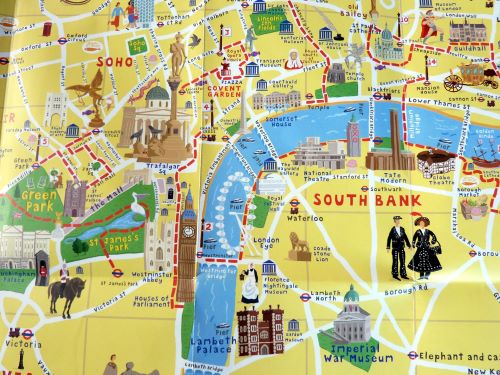 this. On 14th April, he issued a bulletin to his constituents expressing his strong opposition to the plan by London Mayor Sadiq Khan to drastically shorten the “iconic” number 11 bus route. This was due to take place on 29th April, just a few days before the coronation of King Charles III. In what Hands and his fellow Conservative MP Nickie Aiken, depict as “cultural vandalism”, it will no longer connect Fulham Broadway with Westminster, the Houses of Parliament, Trafalgar Square, the Bank of England and St. Paul’s Cathedral.
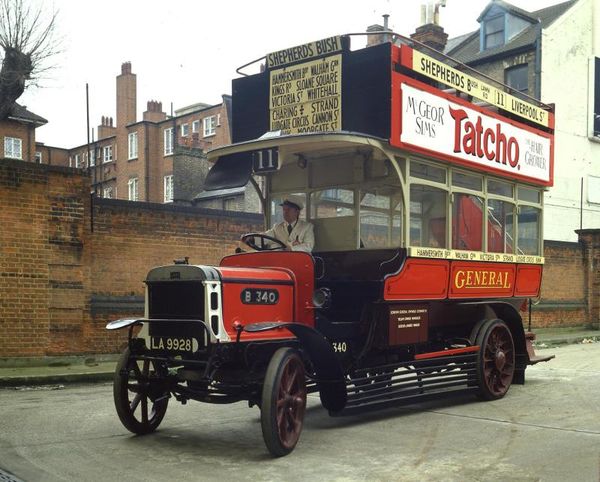
(General Omnibus Company No.11)
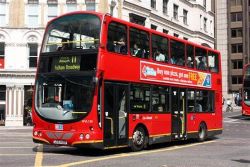 Restructuring this key transport link”, which has been in operation for over 100 years, taking tourists to many of London’s great attractions, declared Hands, will cause completely unnecessary disruption and delays. As the Evening Standard’s Transport Editor, Ross Lydall, noted on 3rd April, Hands believes that this “symbolic bus route” deserves the same “world heritage status” as was given by
 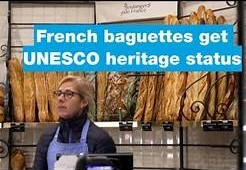 UNESCO to the French baguette in November 2022.
The number 11, however, is not the only one being targeted by the Mayor. On 23rd March, Lydall’s colleague, Emma Lofthagen, pointed out that Khan had initially proposed to eliminate 22 routes and to reduce the frequency or length of almost 60 others, but eventually relented after deciding to use town hall reserves of £25 million to keep more buses running. This has still meant, however that the number 16  and 521 bus routes will be
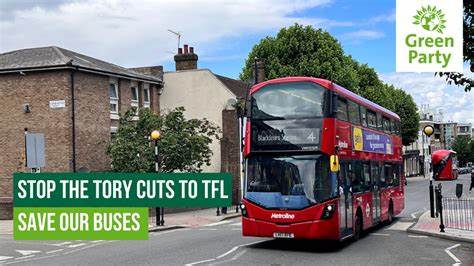 “axed” and 15 others, including the 3,6,23,26,59,77 and 133 will all be “curtailed”. Khan insists that there’s still time to save these buses if the government provides additional funds, whereas Aiken attributes the situation to the Mayor’s “poor financial management of TfL (Transport of London)” and professes amazement that “despite having received £6 billion in handouts in recent years, he still can’t provide Londoners with the buses they need to go to doctor’s appointments or see relatives in hospital”.
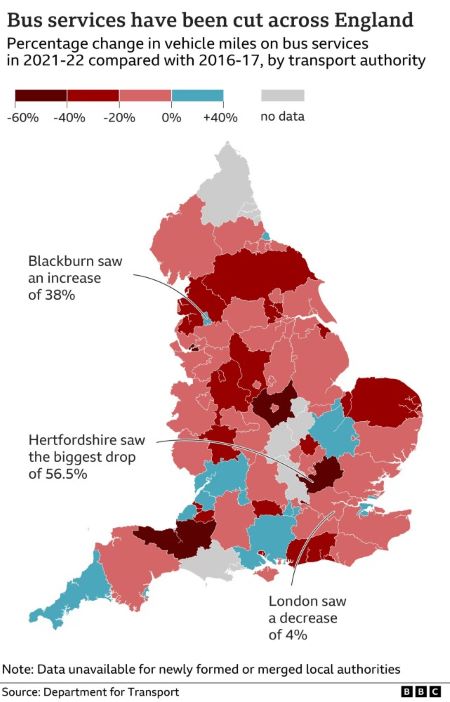 London, however, is not the only part of the UK experiencing further drastic reductions in the provision of the country’s bus services. On 24th January, the Guardian journalists Michael Goodier and Jedidajah Otte, noted that one in ten routes have been discontinued despite government promises to improve regional transport connectivity and that as a result people in communities such as Sheffield, Bath, Lincoln or Stoke-on-Trent, among many others had been forced to abandon medical appointments, house purchases or even going to work.
The following 7th February, the newspaper’s Transport correspondent, Gwyn Topham, highlighted an analysis by the Labour Party indicating that 1,600 more routes could be affected this spring and a warning by the Urban Transport Group that the public transport system in Britain is “hanging in the balance” unless more financial support is provided by the Government.
(Golden Tours Company bus)
A recent report published by the Trades Union Congress (TUC), cited by Topham on 12th April, has advocated that £18 billion more a year should be spent on operating trains, trams and buses to help cut car use by 20%. The TUC plan, produced by the charity “Transport for Quality of Life” (TQL), also recommends that annual bus subsidies should be trebled and daily expenditure on the rail network should be more than doubled from 2019 levels to help people switch from cars to public transport.
(Waiting for a bus in the English countryside)
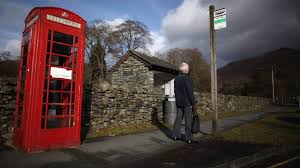
The main obstacle to achieving this, as the authors of TQL’s “Radical Transport Policy” document, Lynn Sloman and Jonathan Tyler, have emphasised, is that outside London, local transport authorities in the UK lack the power to harmonize bus services and timetables. Instead, private companies are able to decide which routes are the most profitable for themselves. Furthermore, coordination between bus timetables and rail timetables “is almost unheard of” and indeed, since rail privatisation was initiated in 1994, “different train services are not even able to synchronize timetabling with each other”.
Meanwhile, as Mylondon.news has observed, the bus routes in the capital with low numbers (such as 10 & 14) tend to have a higher “profile” and pass through central London. The system of prefix numbers, as Mark Hadfield, a contributor to “Gormandizer Man” explains, was introduced by London Transport in 1968 and designates the areas served by those particular routes, such as P4,P5 and P13 (Peckham) and E1 – E11 (Ealing). Route 24 started operating between Pimlico and Hampstead Heath under the General Omnibus Company in 1911 and has remained almost the same since then. When in 2003, the number 414 was allocated for the new route between Maida Vale and Putney Bridge, the objective was to augment the historic route 14. As Hadfield acknowledges, passengers get attached to the number of their usual bus and don’t like it when it gets changed.