Out Of This World: The Stampede To Colonize The Moon:
 “Don’t be surprised if in 2025 a Chinese flag is placed on
 the moon”.This prediction by the American physicist and futurologist, Michio Kaku, quoted by the Wall Street Journal in March 2012, was incorrect in only one respect: It’s already happened. As Rebecca Morelle, Science Editor for BBC Depth, pointed out on 9th June 2024, that same
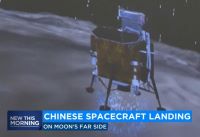 week images had been been beamed back to the Earth of the People’s Republic’s pennant unfurled on the far side of the moon. And that’s just the start. They’ve already announced that their objective is to land two astronautss there by 2030.
 The US National Aeronautics and Space Agency’s (NASA) own plan to do likewise with it’s “Artemis”programme has been delayed until at least
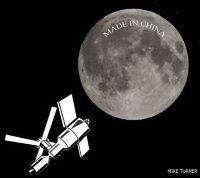
 September 2026, but Bill Nelson, it’s chief administrator until Donald Trump returned to the White House, is nevertheless confident that the US remains ahead in the “Moon Race” and will get there again before their competitors. There are, however, as Morelle noted, a plethora of nations and companies that also have the lunar surface in their sights in the contest for resources and
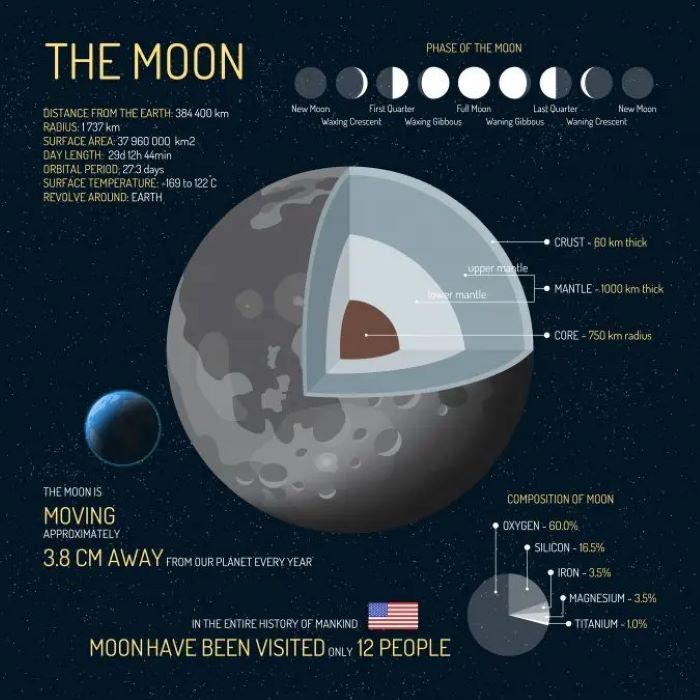
 space dominance. Although the terrain up there might look rather barren, she highlights the fact that it contains valuable minerals,
  metals like iron and titanium, as well as helium, which is used for everything from superconductors to medical equipment. There’s a clear risk that the tensions and rivalries already present on Earth might be replicated on the moon, especially as traces of water ice inside some craters have been detected, which could provide drinking water and be used to generate oxygen.
 According to the World Population Review, among the countries that have ambitions to land manned or unmanned craft on the moon by 2030 or to
 participate in joint missions are Canada, both autonomously or together with the European Space Agency (ESA) and Japan, Mexico, South Africa, South Korea, Sweden (alongside the US and Japan), Turkey and the United Arab Emirates. On 15th
 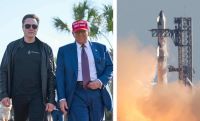 January, the BBC correspondent Kathryn Armstrong reported that two lunar landers built by the American Firefly Aerospace company and the Japanese “Ispace” had just left Earth
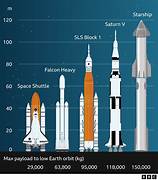
 aboard an Elon Musk-owned SpaceX rocket as part of a “rideshare” to the moon. As AP News has confirmed, SpaceX’s Starship is at the moment the biggest rocket (approximately 400 feet / 123 meters) available and is the one NASA will use for its astronauts later this decade, which might partly explain Musk’s current status as President Trump’s “best buddy”.
India’s success in landing it’s Chandrayaan-3 near the never previously explored lunar south pole in August 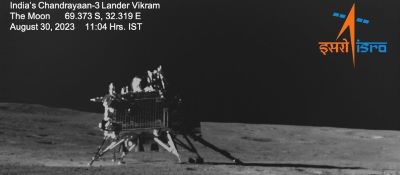 2023, has attracted particular attention, not least because it was achieved at relatively low cost. It aims to send a manned mission there by 2040, an orbiter to Venus and to start
 constructing its own space station. In the opinion of the business executive and baroness, Karren Brady, expressed in the Sun newspaper, the “vast sums involved” could be better spent on relieving the poverty of the millions of Indians who “have to
  survive on less than £5.43 per day”. She also queried whether UK taxpayers should continue to give an estimated £2.3 billion of aid to a government that prefers to spend its
 cash on outer space rather than helping its own struggling population.
The Observer’s Science Editor, Robin McKie, has portrayed the emerging situation as an “enormous moon land grab” and an “astronomical  clash between science and business”. The main uncertainty now revolves around whether a country can claim for itself the area where it has landed a craft, planted its flag and then set up some sort of lunar base. Gbenga Oduntan, Professor of Law at the University of Bradford emphasised in
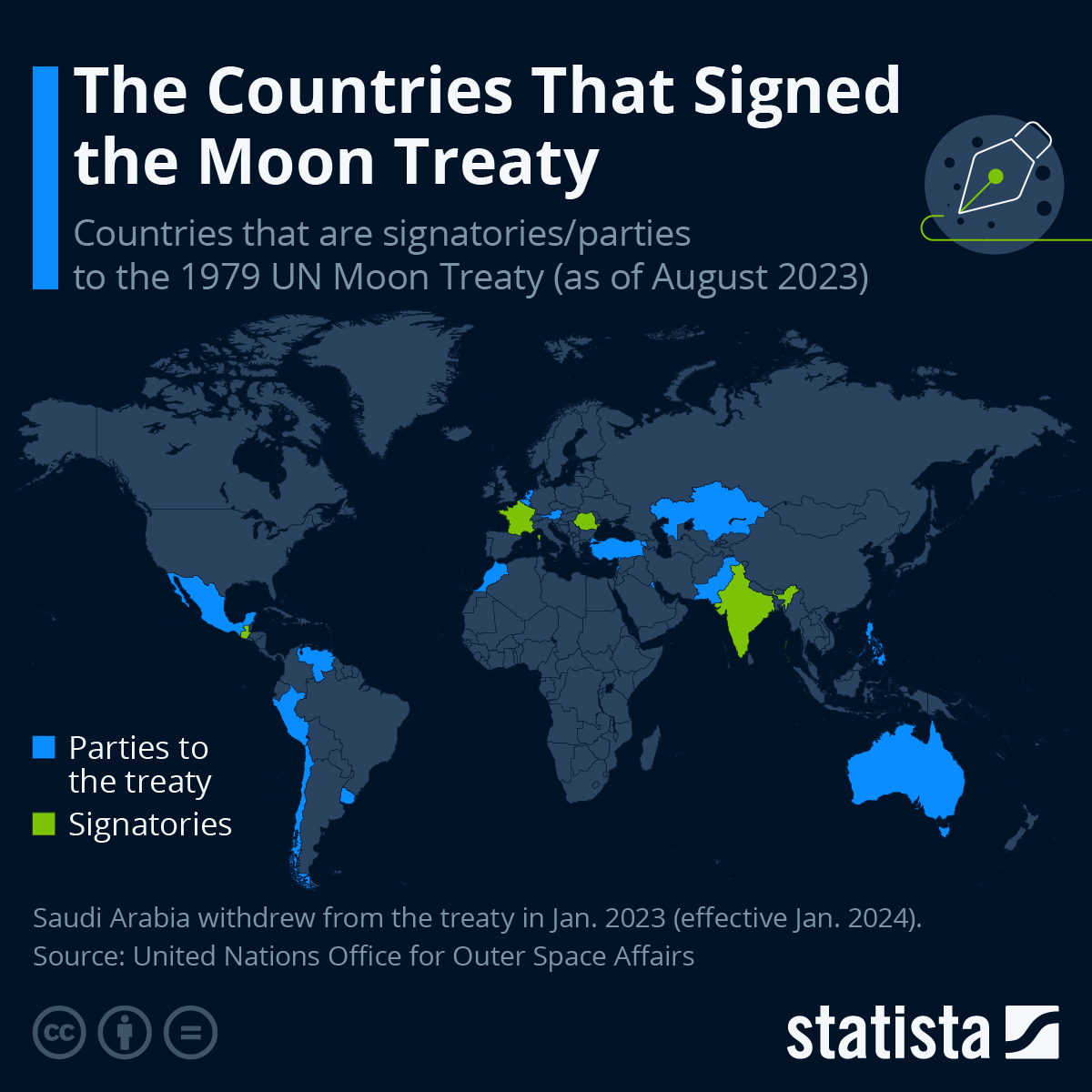 “The Conversation” on 3rd January that the Outer Space Treaty of 1967 stipulated that space should be free for exploration and use by all states and “not subject to national appropriation by claim of sovereignty”.
This was followed by the “Moon Agreement” of 1979 established by 17 nations, specifying that “neither the surface nor the subsurface of the Moon, nor any part thereof or natural resources in place, shall become the property of any state” Neither the US nor Russia or China, however, have signed this accord. In effect, suggests Morelle, whoever sets up a camp on the lunar surface can make their own rules and rebuff any challenges to their self-declared “zone of exclusion”, even if under international law they don’t 
 actually own it. While there’s plenty of room on the Moon, areas close to ice-filled craters are the “prime lunar real estate”.
So what happens, Morelle asks, if everyone wants the same spot for their future base? Or – a concern raised by Joanna Thompson, a contributor to the New York-based  “Live Science” online publication – a research team forbids anyone else from getting too close to their scientific equipment, such as rovers or stationary seisometers. Not an immediate legal issue yet, concludes Thompson – but it soon will be.