Adapting To Survive: The Continuing Resilience of the UK’s Fashion Industry:
“As the driving force behind LFW, we remain committed to fostering
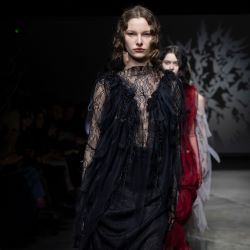
 creativity, championing sustainability and supporting the growth of the sector on the international stage”. With these words, the British Fashion Council effusively hailed the opening of the latest London Fashion Week (February 20th -24th) which featured stalwart BFC members such as Burberry, Erdem and Simone Rocha and showcased the collections of a wide range of “BFC NEWGEN” designers such as Genaro Rivas (Peru), Wanni Fuga (Nigeria), Paolo Carzana (Wales) and Pauline Dujancourt (France).
The mood of Caroline Rush, the BFC’s outgoing CEO was, however, somewhat more sombre. In an article for Elle magazine on 20th February on the challenges currently facing the industry, she acknowledged that “It is undeniably tough at the moment. Our community is under serious pressure and real threat”. She attributes the daunting state of the British fashion scene partly to factors such as the cost-of-living crisis
 which has seen a significant increase in energy, material and manufacturing prices and the continuing impact of Brexit.
 The main cause in her view, however, has been the abolition by the Conservative Government on January 1st 2021 of the VAT Retail Export Scheme which allowed foreign visitors to reclaim the tax they’d paid on goods bought while in Britain. For Rush and indeed most businesses catering for tourists, it’s imperative that this duty free arrangement should be reinstated. This coincides
 with the report by the McKinsey Global Fashion
 Index that the slowdown predicted in 2024 has now materialised as potential customers, due to the recent period of high inflation, have become increasingly price-sensitive.
Fashion executives, observed the 3dlook.ai contributor Luke Christou on 5th January, are thus anticipating a tough year ahead. To cope with this, they need to adapt to the trends reshaping the industry, especially the digital transformation of retail and the increased demand for personalisation through technology. The BFC is clearly acutely aware of this, which is why it  organised a discussion on the “Future of UK Retail” at the LFW Fashion Shop, 245 Regent Street, on 22nd February. The six-person panel, which included the
 designer Helen Kirkum, two Selfridges executives and the gallery director Adrian Gibson, focused particularly on how to encourage the public to return to in-store shopping rather than just buying their items online. As McKinsey has pointed out, this starts with having well-trained staff who are empowered to assist and inspire customers and remind them of the attractions of the “in-store experience”.
 Prior to its trade fair at the National Exhibition Centre (NEC) in Birmingham from 1st-4th February, the Spring Fair organisation emphasised that if UK retailers want to stay relevant in a competitive market, it’s essential that they incorporate “Virtual Reality” (VR) and “Augmented Reality” (AR ) into the services
 they are offering. VR enables customers to visit virtual stores, explore showrooms and make purchases without leaving their homes, while AR allows for virtual “try-on” using smartphones or smart mirrors and the ability to see not only how well the clothing fits but also how it changes with different colours.
 The Netguru commentator, Kamil Swigtkiewicz, in his assessment on December 4 of consumer behaviour trends for 2030, explained that most virtual fitting rooms work by using AR to scan a person’s body. When
 powered by artificial intelligence (AI), it calculates the shopper’s measurements, creates a full-body 3D model which is is then combined with radio frequency identification (RFID) that surveys the products they want to try on. Finally, the technology overlays the scanned products onto the 3D model so they can decide which one they want to choose.
 Swigtkiewicz cites as “a great example” of this system how the eyewear company Warby Parker’s app allows customers not only to try on different spectacle frames but also analyses their face shape and texture to help them make the purchase. He emphasises,however, that it’s vital for brands not to “over-personalize”, as consumers are increasingly wary about sharing too much information about themselves online.
 Spring Fair expects, meanwhile, that in 2025, there’ll be a rise of hybrid retail models combining in-store and online shopping: “The physical store will become an experiential space where consumers can touch and feel products, participate in exclusive events and enjoy personalised services, while doing the bulk of their shopping online,either by “click-and-collect” or having the
 product delivered to their homes”.
All this has necessitated a fundamental re-appraisal of how the UK fashion and apparel sector has functioned until now. This is 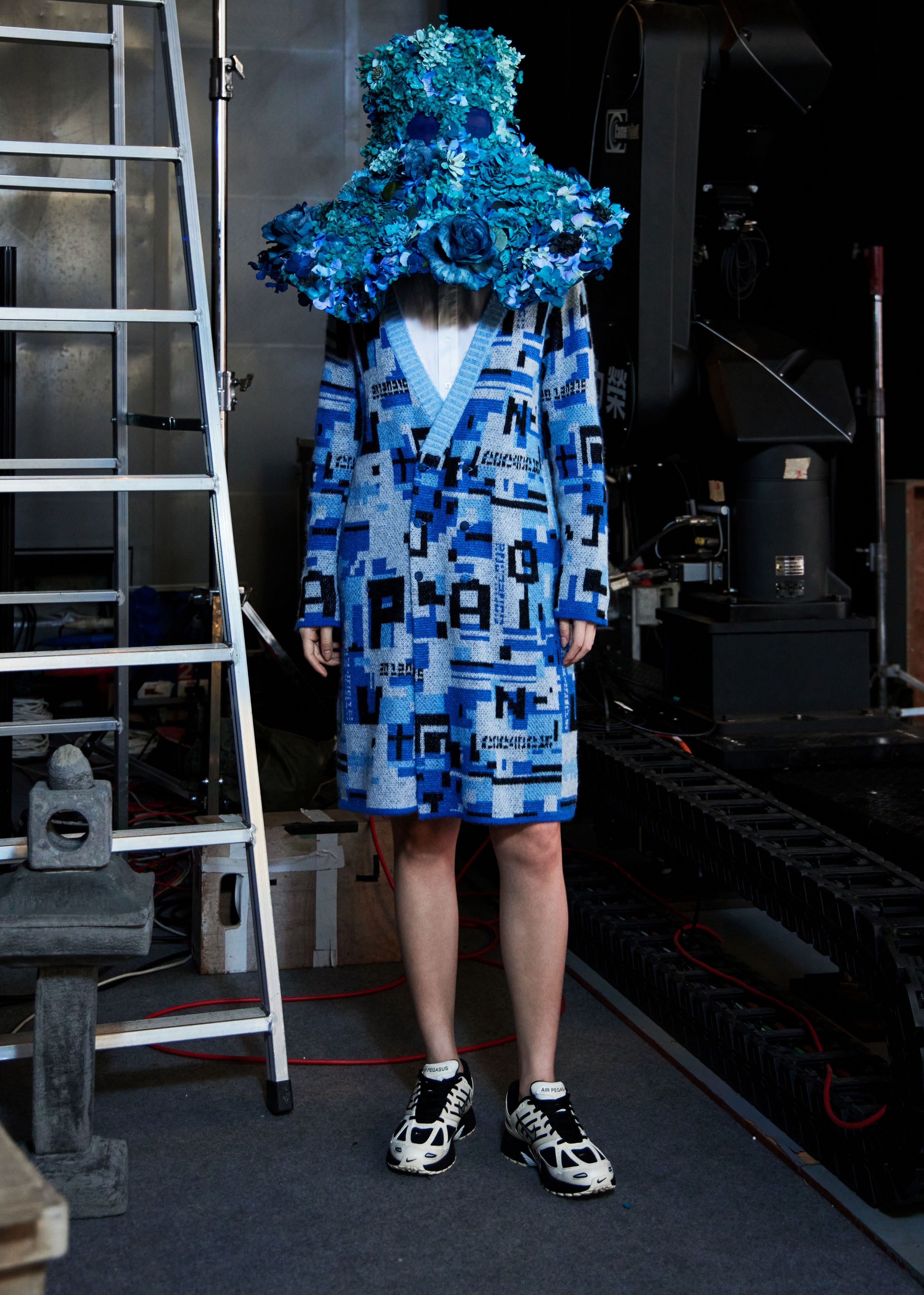 even more the case when, as the New Zealand designer Emilia Wickstead and her Serbian counterpart Roksanda Ílincic acknowledged to the Guardian fashion editor Jess Cartner-Morley in her report on 24th February that “LFW is going through a rough patch and fewer from the international industry are coming”. Which is precisely why Rush declared in the London Standard on February 20th that it’s a critical moment: “Talent alone is not enough. We need continued financial, commercial and cultural support to ensure London remains in the forefront of global fashion as a powerhouse of creativity for years to come”.