Regulated By The Highway Code: The Use Of Car Horns In The UK:
 “The busy streets, the shouts and the car horns: The perfect symphonic soundtrack
 to the city that never sleeps”. It’s with these euphoric words that the north-east England fiction writer, Tillie Cole, has professed her profound affection for New York. The American author, Holden Chase, however,
  pointed out in his travel blog on September 25th that although overseas visitors might find this “urban cacophony” attractive, under recently
 introduced legislation (sections 24-221 of the NYC administrative code) New York drivers now risk incurring a $350 fine and have points put on their licence (which would
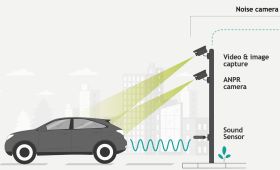
  increase their insurance premium) if they indulge in “unnecessary honking”. The declared objective is to create a more peaceful environment and reduce stress for both residents and commuters. To monitor decibel levels and catch offenders, automated noise cameras are being increasingly positioned around the city, issuing penalties of between $800 – $2,500 for excessive horn use.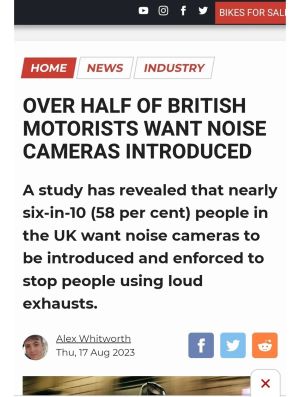
According to the “Intelligent Transport  Systems UK” website, a survey conducted on its behalf by the “Opinium” organisation has indicated that 69% of the public in Britain support the introduction of noise cameras. They were first installed in several London boroughs in 2021 / 22 and are now being trialled by many local authorities around the country who also have the option of the regulations already in force. On 15th January, for example, the Metro newspaper reported that the Tandridge
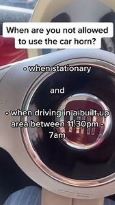 District Council in Surrey was considering imposing a £100 fine on “inconsiderate road users” who honked their horn too loudly. Despite complaints by some local people that this measure was “a bit harsh”, the UK Highway Code’s Rule 112 makes it clear that the horn should only be utilised as an “alert system for safety purposes” and when the car is moving, not when it’s stationary.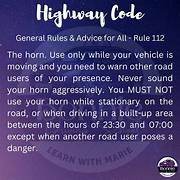
As Peter Bamford, the retail director of the “Mr Tyre” company has emphasised, any vehicle over 3 years old will fail its mandatory annual MOT  test if the horn is not working properly. He also advises that it’s illegal to “toot” your horn to greet someone you know, scare animals from the road, express outrage or annoyance at somebody’s behaviour, to hurry up other road users and between the hours of 11.30 pm and 7 am (except in cases of imminent danger). So if you’re collecting a colleague, friend or family member from their workplace or home, you shouldn’t sound the
  horn to let them know you’re outside: “If a police officer is nearby, you could end up facing an immediate “Fixed Penalty Notice” (FPN) of £30, rising to £1000 if you unsuccessfully contest
Nevertheless, observes Bamford, there are situations in the UK when using the horn is both acceptable and recommended, such as when a car is reversing out of a driveway and hasn’t seen you, to warn cyclists or pedestrians and when approaching a bend, junction or narrow bridge in a rural area. The sound should be somewhere between 100 – 100 decibels, depending on the vehicle model, must be continuous and uniform and can only mimic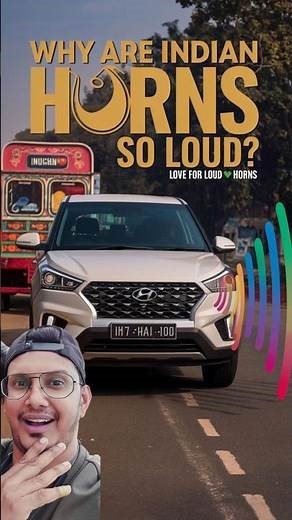 sirens, bells or gongs if it is a genuine antique.
 Around the world, however, according to Olivia Richman, a motoring contributor to the technology news-site, Slashgear, the permitted volume and frequency of car horns varies according to local culture and traditions. In Japan and Germany (she says) they are generally reserved for emergencies and excessive honking is regarded as disrespectful, whereas in Italy, Africa and many Latin America countries, it’s an integral part of everyday road expression and is treated as a “ friendly social signal” rather than aggressiveness. Statistics
  indicate that drivers in India use them 40 times more often than their European counterparts.
The Data Insight Market website calculates that the global car horn market, valued at $710 million in 2025, will grow by another 6.3% by 2033. That’s partly due to the increasing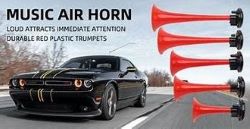 popularity of customizable ones that allow owners to choose different sounds and tones. Musical horns that play a short tune and omit the traditional honk are forbidden in the UK but there is a growing interest in them, noted the Alibaba Car Interior correspondent, Andre Silva on 28th January,
  particularly among truck drivers in North America, Europe and South-East Asia.
This trend, he adds, aligns with broader shifts towards personalisation in vehicle modification (similarly with unique number plates). They are available in several configurations, such as pre-programmed novelty single-melody ones playing “La Cucaracha” or “Dixie”, which are reliable, inexpensive to install but a bit repetitive or alternatives that offer 20-46 variations that enable the driver to switch constantly through the songs. At the same time, they have to be not only functional but also comply with local regulations.
 The Prime Minister of Cambodia, Hun Manet, however clearly doesn’t approve of musical horns. In March 2024, he banned them, claiming that videos had shown “inappropriate activity committed by some people, especially youth and children, dancing on the roadside to the melodies emanating from the trucks”. He ordered that they should be ripped out and replaced with the standard honking type.