Summer Vacations 2026: The Increasing Allure Of Greek Beaches:
 “There’s absolutely no reason to panic”. It was with these words that Kenton Jarvis, the CEO of the budget airline Easyjet, quoted by the Press Association journalists Neil Lancefield and
 Alexandra Snow on 21st May, attempted to reassure passengers worried about their flights. Easyjet customers, he insisted, should “book with confidence”. There would be no cancellations or fuel surcharges resulting from the oil crisis in the Strait of Hormuz. He did, however, acknowledge that reservations were lower than at the same stage in 2025 and that the airline had so far filled just 58% of its seats for the six-month period ending in September.
This is not entirely surprising. The limited budgets currently available to many families in the UK has meant that they are questioning whether hey 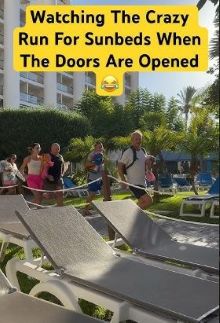 can really afford to go abroad this summer or, even if it’s financially possible, simply don’t want to submit themselves yet again to the stress of what the
 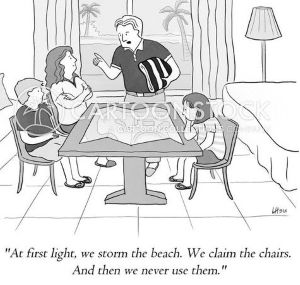 Britbrief Daily Digest has described as the “savage sunbed warfare” at their hotel in Tenerife or whichever resort they have chosen for their holiday.
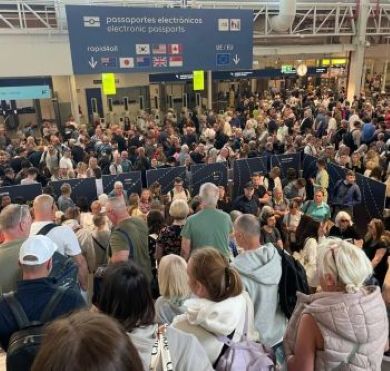
An additional deterrent factor has been the introduction by the European Union of its new “Entry Exit System” (EES) which came into effect on 10th April and has, as the “Which?” contributor Kate Pasola pointed out on 15th May, has created disruption and confusion at airports across Europe. All non-EU nationals, including UK passport holders since Brexit, on arrival in a Shengen country have now to provide the fingerprints of their right hand and a facial scan at one of the dedicated automated kiosks as well as answering questions about the reason for their visit, where they’ll be staying and how much money they are bringing with them.
 Pasola recommends that, when using an EU airport catering for a large number of flights to and from the UK and where long queues have been reported, such as in Lisbon, Milan, Berlin, Paris,
 Geneva, Bologna, Amsterdam, Krakow and many Spanish ones, it’s sensible to get there at least three hours before departure. According to the Mirror’s news reporter, Eliana Nunes, the Easyjet boss is highly critical of the “completely unacceptable” new arrangement which has caused dozens of his customers to miss their flights due to long border delays and should have been introduced (in his view) at a much quieter time of the year.
 The European Commission in Brussels claims the scheme provides additional security and enables them to monitor more precisely “who’s coming and going”. It also insists that individual EU nations are not allowed to apply their own interpretation of the rules or offer exemptions for specific nationalities. That’s exactly what Greece initially declared it would do for UK citizens, noted the EuroWeekly News correspondent Adam Woodward on 20th April, whereupon it was promptly admonished by the EU Commission.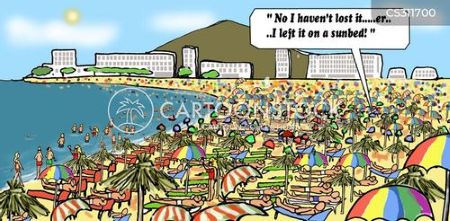
 Nonetheless, observed Biometric Update.com on May 19th, the Greeks will probably act as they want for the time being. The reason for this is the country’s rising popularity as a tourist destination.
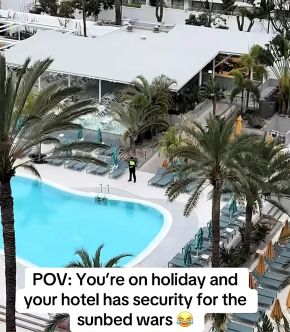
It appears that the battle for Europe’s summer tourists is no longer focused solely on sunshine and beaches but just as much on “smooth mobility and climate resilience”. The extreme weather conditions now being experienced by Spain, the flooding risks and “reduced holiday enjoyment” are together proving significant deterrents. The last issue is especially topical on the brink of the new season. On 10th May, the BBC journalist,Ewan Somerville, highlighted how some hotels and in Spain are “cracking down” on guests reserving sun loungers with towels after a court in Hanover awarded a German holidaymaker £850 against his tour operator because, although he got up at 6 am, they still failed to guarantee him one.  The Tenerife Forum commentator, Peter, has emphasized that the competition is especially intense in the south of the island, where some people will set their alarm for 5.45 am so they can lay a towel on a plastic recliner around the pool or on the beach before
 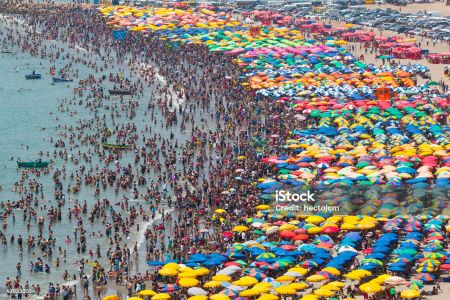 going back to sleep or to have breakfast. Managements prefer to avoid a confrontation but might impose a fine in excessive cases.

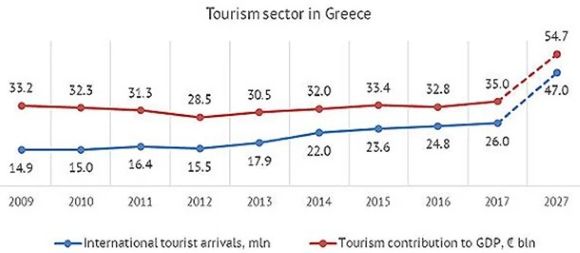 Despite (or because of) the growing enthusiasm for Greece, this is now happening there as well. Since 2024, the authorities have used drones to combat the “beach-hogging” practice and have stipulated that tables, parasols, deck chairs and sunbeds must be at least four metres from the sea.
A 64-year old Greek pensioner, Eugenia Rapti, told the Mirror that when they’d bought their summer home 40 years previously, the nearby Pefkochori beach was “empty and nice to lie on”. Not any more.