London Fashion Week AW22: An Abrupt Change Of Priorities:
1Granary Magazine.
For a brief moment, it felt as if the good times were back. The day after it had ended, the Guardian’s fashion editor, Jess Cartner-Morley, hailed the latest LFW (18 -22 February) as having been “shiny and happy”, with sequins and satin symbolising the new mood of hope. For her, the “pop of champagne corks reverberating through LFW” had been like an all-clear signal after the two years of masked models and socially-distanced audiences.
The five-day event was preceded on 17th February by a large gathering of luminaries from the fashion world, such as the designers Christopher Kane, David Koma, Henry Holland and Julien Macdonald, at the Bistrotheque in Bethnal Green. The occasion, co-hosted by the British Council (BFC), Clearpay (LFW’s Principal Partner) and the Russian model Irina Shayk , featured a live performance by the British singer and song-writer, Joy Crookes and set the tone for much of the subsequent schedule.
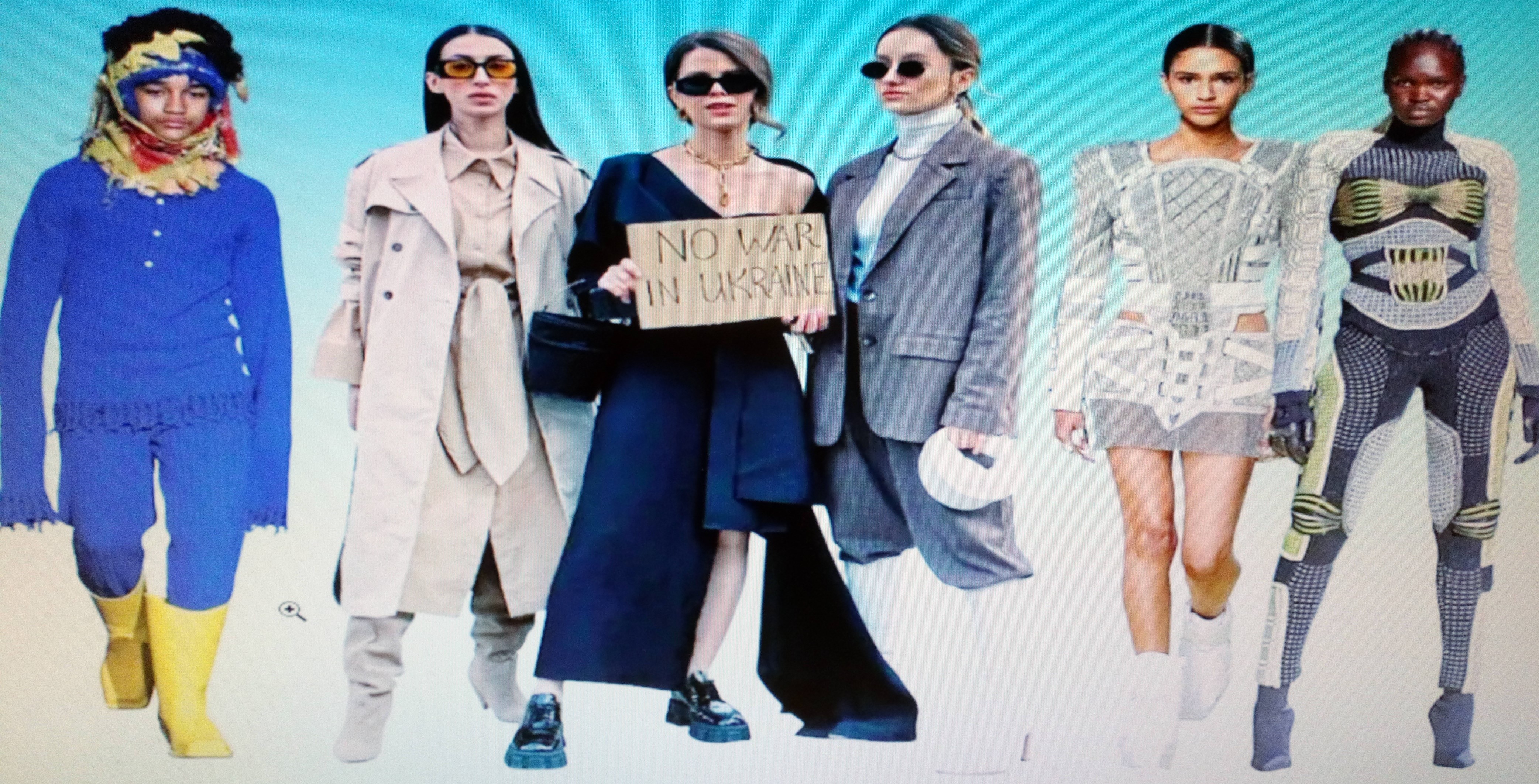
“No To War In Ukraine”: Evening Standard Fashion Photo.
The “Coming To America” haute couture presentation in Great George Street,Westminster, on 18th February, for example, began with a champagne reception and concluded with more drinks and a disc jockey. That same evening, attendees at the Nok Nok x5Eleven Penthouse Collection Showcase in Knightsbridge SW1 were invited to move on to Hanover Square where, until 5 am, there would be “live music,cool cocktails and lots of Rock N’ Roll”. Similarly, the Hip Curve show at the St. John the Baptist Church in Holland Road W14 the next evening was followed by an after-party with an ample supply of champagne.

Helen Anthony LFW AW22
On the 14th February, the Evening Standard contributor, Joe Bromley, helpfully provided a list of upcoming LFW cocktail parties, including one at the French Connection in Duke Street W1 and two at Salvatore Ferragamo in Old Bond Street W1 where the Italian jazz musician Noemi would be playing. “You don’t need to be a Vogue Editor (asserted Bromley) to be part of the extravaganza”.
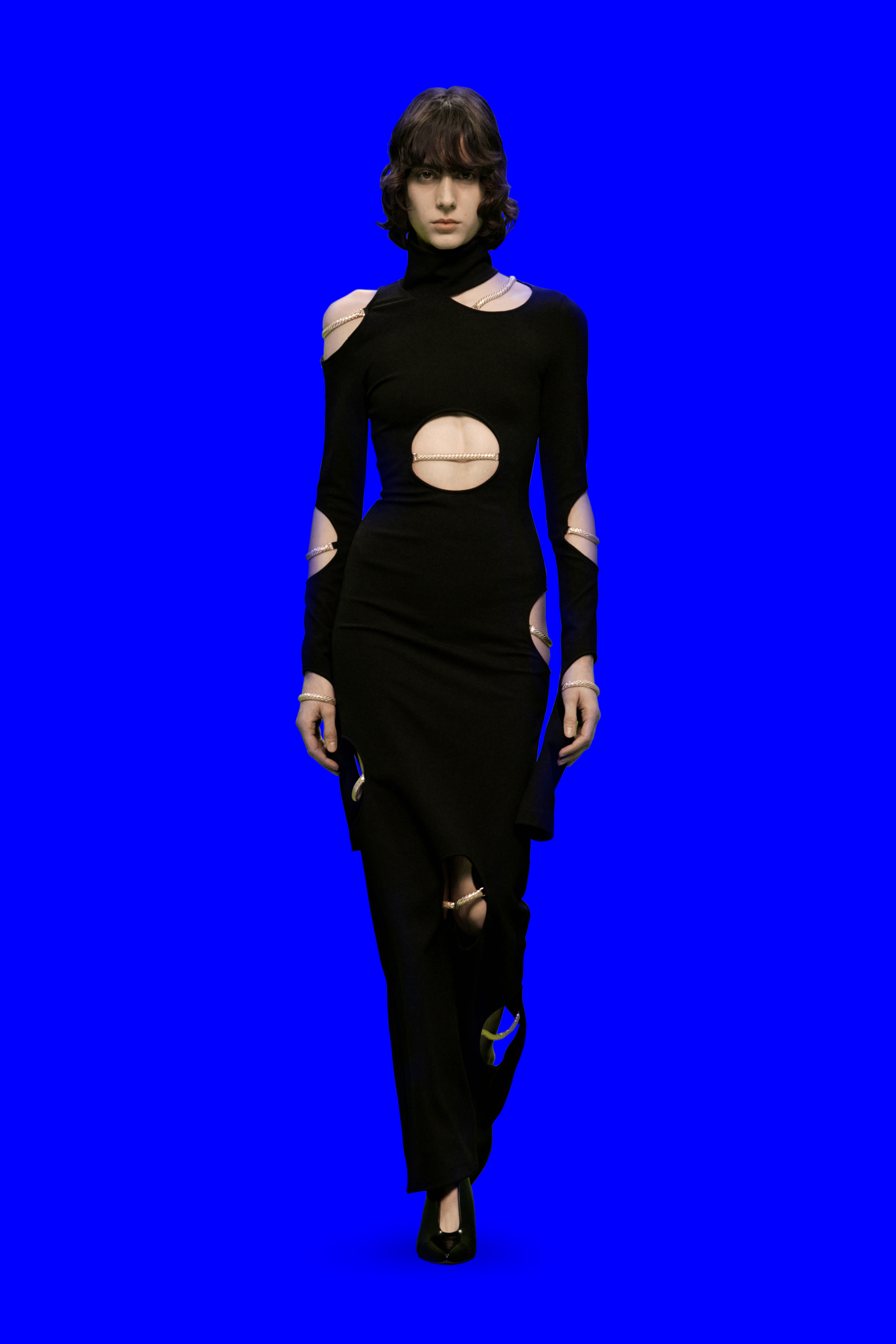
Christopher Kane LFW AW22
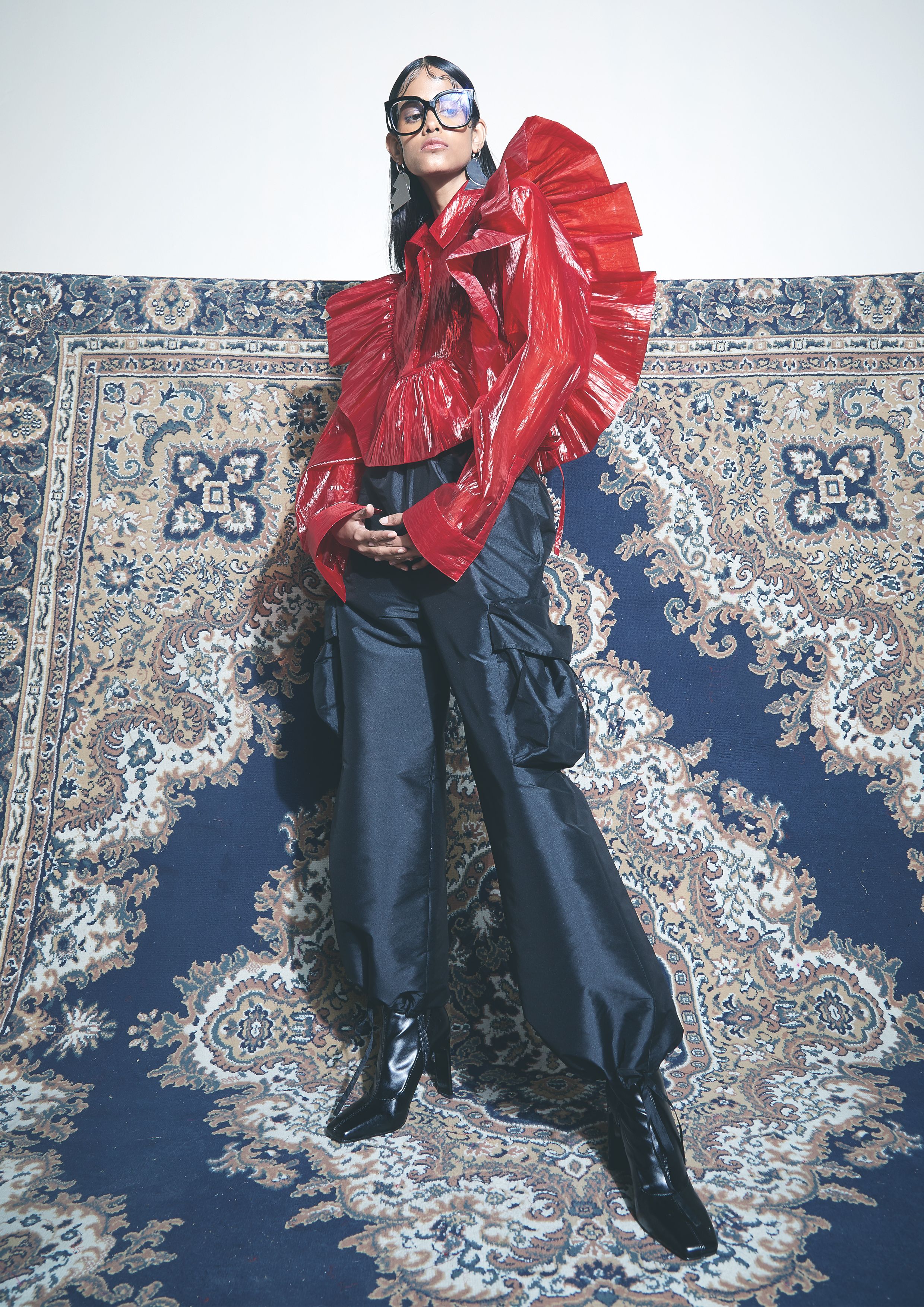
DHRUV KAPOOR LFW AW22
In a press release prior to the start of LFW AW (Autumn/Winter) 22, the BFC emphasised that it was more than just a business platform for over 129 designer brands to display their new collections but, equally significantly, constituted “a cultural platform for change”. It also confirmed that the Old Selfridges Hotel at 400 Oxford Street W1 would be the venue for a second season for the BFC Newgen designers.including Conner Ives (USA), Nensi Dojaka (Albania), Robyn Lynch (Ireland) and Supriya Lele (UK/ India).
Much of the optimism in the UK fashion sector engendered by LFW AW22, however, has evaporated since the Russian military crossed the Ukrainian border on 24th February. On the 3rd March, the BFC issued a statement exhorting everyone in their network to support the global campaign condemning the invasion. It stressed that this was aimed at the Russian Government, “not the teams of our designer members and patrons in Russia, or indeed russian colleagues and friends here, who may be fearful of facing discrimination for actions over which they have no control”.

Hip Curve LFW AW22
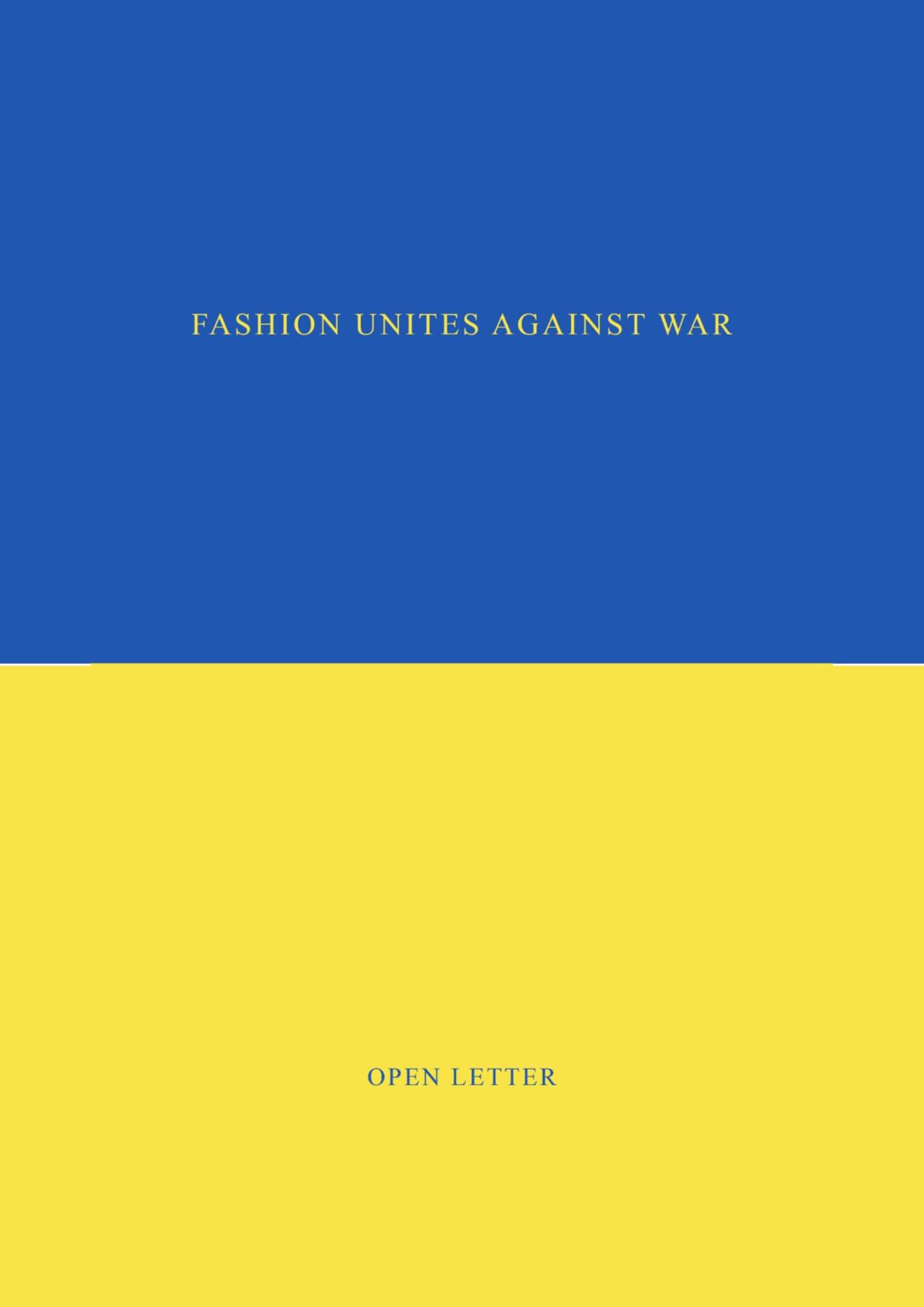
The same day, Cartner-Morley observed that there were growing calls for fashion labels to break their links with Russia. Furthermore, that the Ukrainian Olya Kuryshchuk, a Central St Martins graduate and editor-in-chief of the London-based publication 1Granary, had released an open letter asking “fashion businesses and leaders to stand together with Ukraine”. The letter has already been signed by more than 2,400 industry professionals, among others, Christopher Kane. the director of Harper’s Bazaar, Samira Nasra and the chief critic for US Vogue, Sarah Mower.

Hip Curve LFW AW22
On 4th March, the Guardian journalists Jane Clinton and Sarah Butler reported that the British clothing brands Boohoo and Asos and Sweden’s H&M had suspended sales in Russia, Burberry had ceased its shipments to that country and the Spanish fashion retailer Mango had temporarily closed its 120 shops there.
Meanwhile, the Evening Standard columnist Chloe Street has expressed her complete agreement with Kuryshchuk’s assertion that “Fashion Has Power”. She suggests that some of the major brands in Milan and Paris have been keeping unacceptably quiet and continuing as normal with their high-gloss catwalks because they fear alienating their wealthy Russian customers: “For an industry that generated £1.9 trillion globally pre-pandemic, silence is not good enough”. In Street’s opinion, the fashion world can and should deploy its immense and far-reaching influence to maximum effect in response to what has been inflicted on Ukraine.