Bad Vibrations: The Noise Problem Of London’s Underground:
 If you like to party until the small hours in central London, you’ll be delighted at the recent announcement by Transport For London (TfL) that the night service on the Jubilee Line will resume on May 21st. The dates for the restart of the Night Tube on the Northern and Piccadilly Lines, the Evening Standard transport correspondent, Ross Lydall noted on 8th April, will be confirmed “later this summer”. The newspaper’s editorial the same day hailed the development as “another sign that the capital is springing back to life” and as a welcome boost to revellers and businesses alike. However, people living
 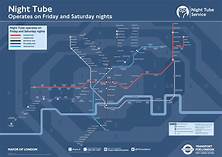 near or above where the underground trains run are likely to be rather less enthusiastic.
As the BBC journalist, Thomas Mackintosh, reported on 5th April, there has been a significant increase in the number of complaints about the noise and vibrations caused by the tube system. The worst offender is the Northern Line, followed by the Victoria & District Lines.
Several members of the London Assembly, such as the Liberal 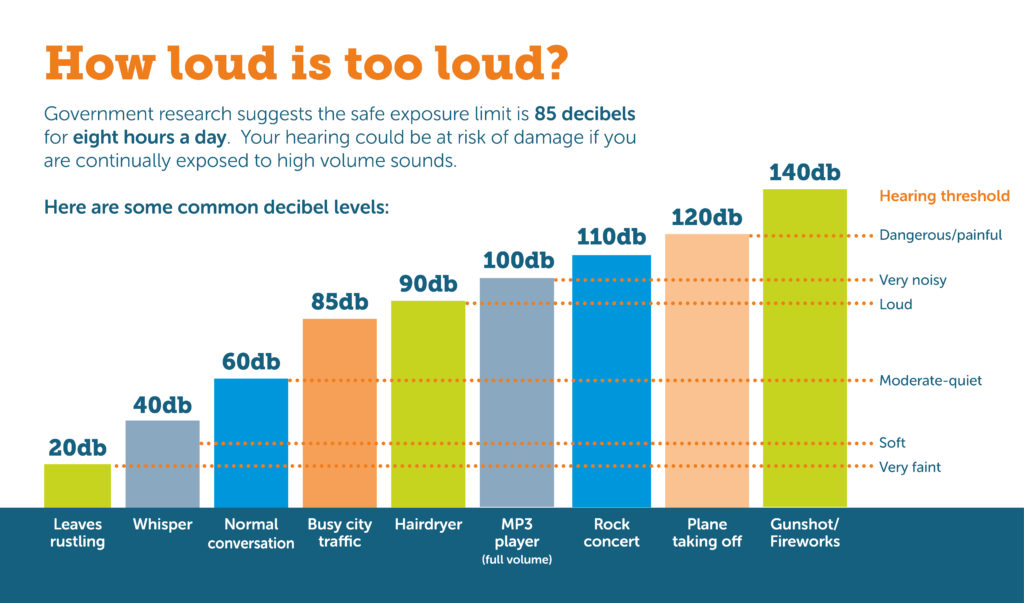 Democrat Caroline Pidgeon and the Green Party’s Caroline Russell, have expressed concern that the situation is having a serious impact on their constituents’ mental health, working lives and even their properties. In response, London Mayor Sadiq Khan has insisted that alleviating tube noise remains one of his top priorities and that TfL is committed to modernising , renewing and maintaining the rail tracks, by trialling the replacement of a track fastening product, reducing noise inside tunnels.
 The Sound Service Acoustic Insulation Company in Oxford emphasises that it’s difficult to effectively silence tube train noise as
 it’s predominantly low frequency, created by the air movement forced through the tunnels by the trains. The sound from the wheels on the track is then transmitted through the ground and up into the fabric of buildings. It’s inevitably more noticeable, they point out, at night when there are no normal household noises to help mask it: “ When a train is passing, if you put your hand onto a hard surface or wall, you should be able to feel the vibration emitted from the train”.
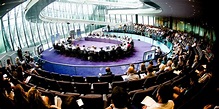
London Assembly In Session.
When these issues were raised with the London Assembly’s Environment Committee, it was pointed out that TfL has measured noise levels at 52 decibels inside homes, with it being even higher when two trains pass each other. This far exceeds the World Health Organisation’s (WHO) recommended average of 35 decibels for a reasonable night’s sleep. The result has been that some people have found the disturbance unbearable, moved out of their homes and are sleeping elsewhere on sofas: “Few of them have other accommodation or are able to sell or rent their noise-blighted homes. Some have lost income from room rental”.
 However, it’s not only the capital’s residents who are suffering from this. The Economist magazine has cited data collected by EAVE, a London-based firm that designs hearing-protection gear and whose CEO is the audiologist Dr David Greenberg, showing that noise inside Underground carriages often reaches 85 decibels. The NHS has calculated that any higher than this can be harmful, especially if exposure is prolonged. Moreover, EAVE found that on the Victoria Line, the city’s most-used route, there’s a five-minute section where noise levels average 90 decibels, about the same as a lawn mower and that the loudest journey through central London reaches a peak of 109 decibels, equivalent to a helicopter taking off.
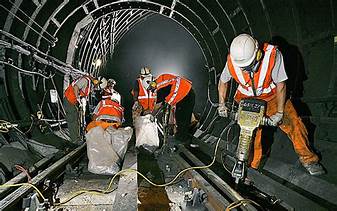
– Repair Work On London Underground Tracks
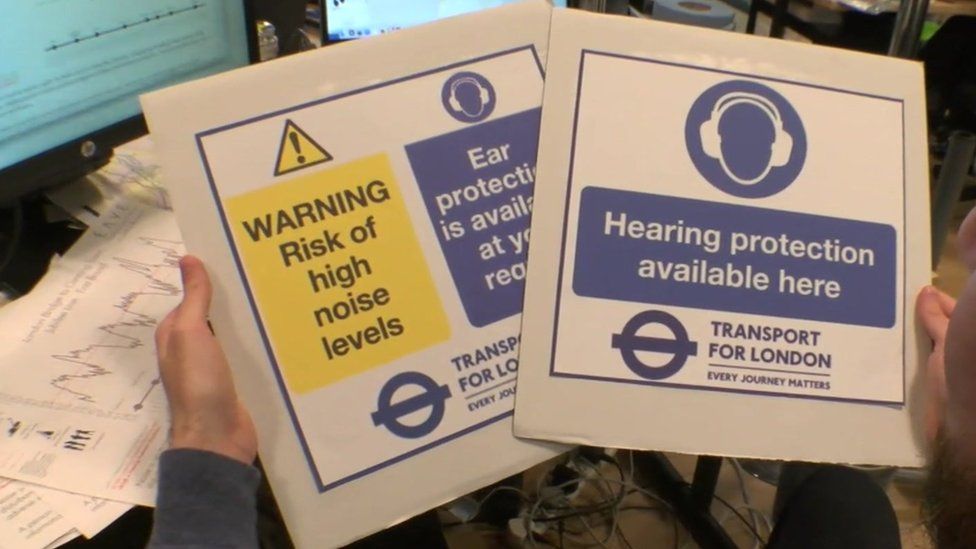
TfL London Underground Train Drivers’ Protest Posters.
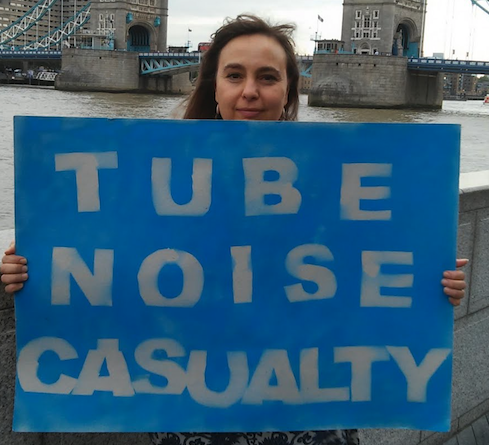
DR Luce Jacovella: Research Officer at Queen Mary, University of London.
Likewise, the “My London News” Health Correspondent, Lucy Williamson, has highlighted the “horrendous screeching noises” on the Northern Line, above all between Euston and Camden Town on the City branch where at times it peaks at 107.7 decibels – roughly corresponding to being within 1,000 feet of a jet aircraft about to depart. She attributes the louder noises on the Northern and Central Lines (102 decibels between Liverpool Street and Bethnal Green), to the fact that they are older and, for reasons of economy when they were being built, the tunnels have more curves and bends.
Although TfL is adamant that noise levels on the tube are safe, it may be waking up, observed the Economist, to the potential risks. When drivers threatened to strike over excessive noise, TfL agreed to give them ear defenders.