Back To Basics: Low-Cost Ways Of Keeping Warm This Winter:

(Martin Lewis: Money Saving Expert founder: How to reduce energy costs)

(Christmas-themed hot water bottle)
“Heat the human, not the home”. That’s the advice, cited by the Daily Mail journalist Isolde Walters on 30th October, offered by the Moneysaving expert.com founder Martin Lewis, to the many people across the UK who, for financial reasons, want to cut down drastically on their energy usage. Featuring prominently among his range of options is the “humble” hot water bottle, which – according to thehotwaterbottleshop.com -saw a decline in popularity in the late 20th century but has made a comeback in recent years. Indeed, as Walters also noted, sales of this product at British department stores have tripled (at John Lewis, quadrupled) as households look for alternatives to switching on the central heating.

(Harrods silk velvet hot water bottle)
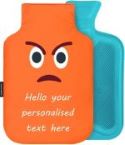
(Personalised hot water bottles)
 Although Martin Lewis estimates the price of a standard-size 1.5 litre hot-water bottle to be around £5.50, Walters points out that Argos sells them for £4.25 each. John Lewis has ones with covers for £25 and a silk velvet version with a removable lavender sachet is available at Harrods for just £130. Tests conducted by the “Which” consumer protection organisation on the top selling hot water bottles from Superdrug, Argos and Wilko, highlighted by its correspondent Joel Bates on 21st November, especially regarding how quickly they cool down, concluded that the best choice is the 1.7 litre item,
 in either red or blue, retailed by Superdrug for £7.99. The cup around the lid, emphasised Bates, is wide, making the bottle extra easy to fill and reducing the chances of any stray hot water landing on you or the floor. By
  contrast, the Sun columnist Jennifer Barton on 21st September expressed a preference for the “Cassandra”, which has a “ribbed surface on both sides” and is obtainable from Amazon for a “budget price” of £8.50.
There’s considerable debate, however, about whether it’s cheaper to use an electric
blanket rather than a hot water bottle. Ben Dhesi, the founder of Hugo Energy App, has calculated that a typical 150W electric blanket costs about 5.1p an hour to run,  based on
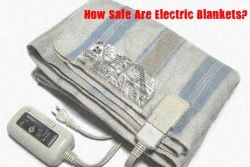 the Government’s current energy unit price guarantee of 34p per kilowatt hour (kWh). If you were to use it for eight hours a day, he states, that would cost you 40.8p or £12.40 per month. In comparison, for an average hot water bottle of two litres, you’ll need to boil a full kettle of water at a cost of 6.8p each time. Dhesi estimates that a hot water bottle should stay warm for about three hours, especially if it has a cover: “If you were to fill your hot water bottle three times a day, that would cost you 20.4p per day or £6.20p per month, 50% less than the expenditure for an electric blanket”.

This will be welcome news for those who agree with the view of Omar Green, the archive author at hotwaterbags.com, that the benefits of hot water bottles are not confined only to night-time but can also, for example, relieve neck discomfort resulting from sitting for a long time in front of a computer, enhance your body’s immune system while you’re watching TV, be the ideal combination with a sleeping bag when going camping and, if placed on a car’s dashboard, “will radiate heat throughout the vehicle”.
Dhesi does, nonetheless, acknowledge that “overall, electric blankets are likely to be more effective at keeping you warm as they can heat up a whole bed and won’t cool down like a hot water bottle will”. Martin Lewis’s data differs from Dhesi’s in that, although accepting that the initial expenditure for an electric blanket can be at least £18, he contends that the cost per hour to use it thereafter is only 3p compared to 7p per hour for a hot water bottle.
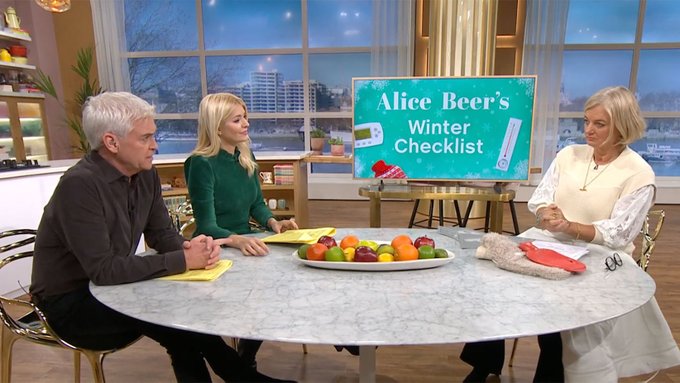
(Alice Beer on ITV’s “This Morning” programme)

(Eduard Penkalka: Inventor of the modern hot water bottle)
On 22nd November, the Mirror reporters Ella Bennett and Milica Cosic drew attention to the warning by the consumer expert Alice Beer the previous day on ITV’s “This Morning” programme that the public needs to be alert to the dangers that hot water bottles may pose if they burst, as this can cause serious burns. Also, that they should check when it was manufactured (not easy, as the date is difficult to find) and, if it’s had “normal usage”, it should be replaced within three years.
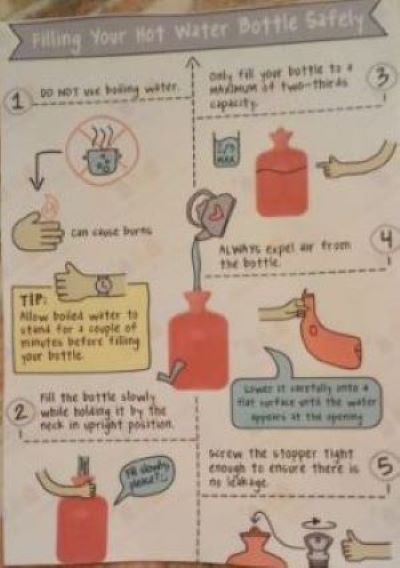
(The “Hot Water Bottle Shop’s” Safety Guide)
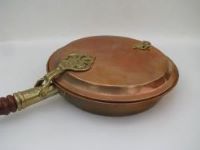
(16th Century-style bedwarmer)
Among the Hot Water Bottle Shop’s list of recommended safety measures are: Not using boiling water, holding the bottle in an upright position when filling it (only to a maximum of two-thirds), always expelling the air from the bottle before securing the stopper tightly to ensure there’s no leakage, not sitting or lying on the bottle and replacing it every two years because “rubber naturally deteriorates and this process can be affected by how it’s stored and used”.

(“Copper Foment Can” 1880 – 1930: Low Tech Magazine photo)
As “Low-Tech Magazine” has observed, it was in the early 16th century when, to warm their beds, people started to use portable brass or copper containers filled with hot coals enclosed in wood, ceramics or soft cloth to prevent skin burns. The modern design, manufactured in PVC or rubber, was patented by the Croatian inventor Eduard Penkala in 1903.