Is January Really The Worst Month In Britain?
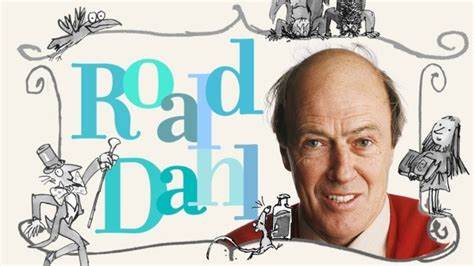 “If I had my way, I’d remove January from the calendar
 altogether and have an extra July instead”. This was how Roald Dahl, the renowned British novelist and poet, viewed the first month of the year. The American author, Melody Beattie, by contrast, has rather more enthusiastically proclaimed the New Year to be “like a chapter in a book, waiting to be written” and Evoke magazine’s Irish correspondent, Claire Murrihy, has pointed out
  hat, at least until October or November, we don’t have to start worrying again about what gifts to give our friends and family for Christmas. Dora Weithers, a commentator for holidappy.com, acknowledges that some individuals love January because they welcome the lull that follows the hectic holiday season, whereas others díslike the efforts they have to make to begin all over again.

 January, observes the “Almanac” publication, was named after the Roman god Janus, the protector of gates and doorways, with two faces,one looking into the past, the other with the ability to see into the future, hence a fitting symbol for the start of the year. Research conducted by the Netherlands-based Franco-Dutch airline, KLM, however, has indicated that one quarter
  of people in Britain experience “January Blues” and regard it as a particularly bleak period. The top eight reasons the 2,000 UK adults questioned gave for feeling this way were, first on the list, lack of money
 after overspending during the festive season (48%), the weather (40%), the dark nights (39%), lack of daylight (37%), the magic of Christmas is over (32%), going back to work (31%), having overindulged during Christmas (24%) and the pressure of trying to keep to new year resolutions (16%). In an attempt to improve their mood, 23% of those surveyed had already booked a holiday.
 By contrast 20% of London’s residents assert that for them it’s the best month of the year. This clearly, however, doesn’t include the Metro columnist Emily-Jane Clark: She just wants to hibernate in her pyjamas until February, but can’t because she’s got lots of “boring things” she has to do, such as submit her tax return by the end of the month, give her house a good clean after Christmas and sort out her neglected finances. Even worse, she finds that social media platforms such as
 Facebook and Twitter are full of advice about diets, enrolling at a gym or staying sober. Indeed, the YouGov data journalist, Peter Raven, on December 22nd cited statistics published by his organisation revealing that 10% of people in Britain said they planned to give up alcohol at the beginning of the year.
 As the Yahoo!news reporter, Jessica Knibbs, noted on 9th January, all this
 despondency supposedly culminates on the third Monday of the month, this year 16th January, known in the UK as “Blue Monday”. This terminology was devised by the psychologist, Cliff Arnall, on the basis of “various factors”, among them debt levels, temperatures & weather conditions, days until the next Bank Holiday, how long until the next monthly salary and the average hours of daylight. Knibbs cites Dr Dean Burnett, a professor at Cardiff University’s division of psychological medicine and clinical neurosciences, as describing the formula as “rubbish” and Blue Monday as “nonsense”.

(Cliff Arnall – Psychologist: Inventor of “Blue Monday” terminology )
 The Surrey Comet newspaper has likewise dismissed the concept as a “myth”. It originated, they emphasise, from a commercial idea first conceived by the holiday agency Sky Travel in a 2005 press release. There’s “no scientific logic behind it” and the objective was simply to encourage potential customers to pay in advance for low cost holidays at a time when many of them were tending to stay at home due to having spent so much during the Christmas season. Even Arnall himself has since then retracted the idea, acknowledging that it “isn’t particularly helpful” and that he was paid to have his name and expertise associated with the agency’s publicity campaign.
 Although the Stylist contributor, Lauren Gedl, admitted on 4th January that she’s a
 fan of this month, she’s careful to mention this discreetly as it’s invariably greeted with “a wave of
  audible groans and derision”. For her, it provides a chance to introduce new habits, ditch old ones and so can be like a trial period for a new lifestyle: “Just because everyone else hates it, doesn’t mean it’s inevitably bad”.
 Nonetheless, when she states that she doesn’t want to downplay how difficult some people find
 this time of year, perhaps she has in mind the Citizens Advice Bureau statistics released on January 10th regarding households struggling with skyrocketing bills and having to choose between heating and eating, the estimated 3,000 rough sleepers on the streets of London, as well as the conflicts and uncertainties which face the world at the outset of 2023.