London Boroughs Challenge Mayor’s Emission Zone Expansion:
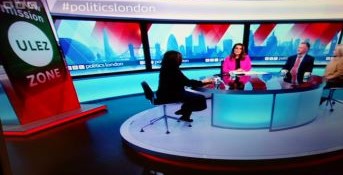
(London Politics Programme – BBC TV 1 – 22nd January 2022
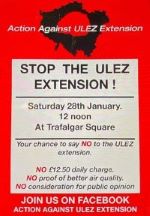
“It may improve air quality, but the Mayor’s charge on polluting vehicles is meeting some resistance”. This observation by the BBC reporter Tim Donovan on the channel’s “London Politics” programme on Sunday 22nd January somewhat understated the extent of the challenge to Sadiq Khan’s plan to extend the current “Ultra Low Emission Zone” (ULEZ) from the north and south circulars to the whole of Greater London as from Tuesday 29th August 2023.
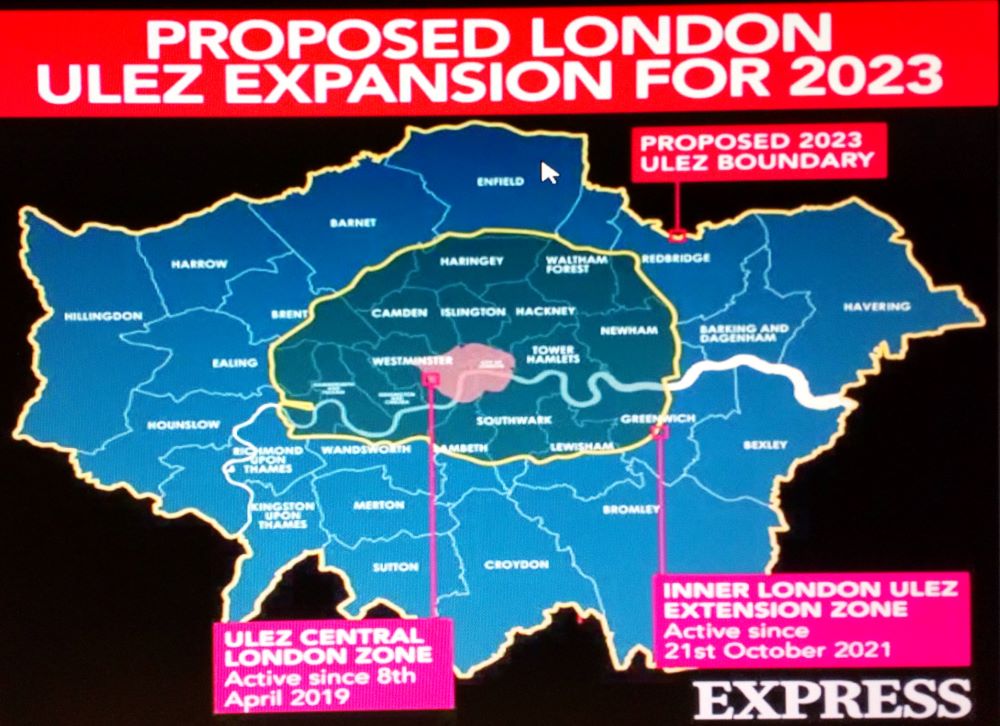 The Mayor has justified this decision, announced on 25th November last year, on the basis that it will tackle “the triple threats of air pollution, the climate emergency and congestion”. From the date of implementation, drivers of older cars that do not comply with either Euro 5 (diesel) or Euro 4 (petrol) emissions standards will have to pay £12.50 a day to use their vehicle to drive into or within the new zone. The objective, as the Deputy Mayor for Environment & Energy, Shirley Rodrigues, emphasised on the “London Programme”, is to bring
  more clean air to the five million residents in outer London. She was supported by the Labour MP for Croydon North, Steve Reed, who suggested the Conservatives in the London Assembly should reflect on the impact their opposition to the proposals could have on people’s health in the remaining part of the capital not yet covered by ULEZ “Protecting lives”, he declared, ”comes first”.
 The Mayor of Croydon, Jason Perry,however, takes a completely different view. In
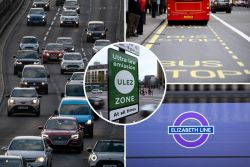 a statement published on his website on 21st January, he pointed out that, for many of his constituents, their car is their only reliable option for getting around as the public transport services are far inferior to those available in inner London. Moreover, he considers it will be “deeply unfair” to punish those who cannot afford to buy a more modern vehicle when families and businesses are already struggling financially due to the increased cost of living.
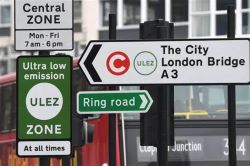 As the Evening Standard’s Transport Editor, Ross Lydall, noted on 23rd January, several London boroughs – among them Croydon, Bromley, Bexley, Hillingdon, Harrow, Richmond and Sutton – are considering taking legal action, in addition to refusing to allow Transport for London (TfL) to install cameras and signs on their roads. TfL has responded by insisting that it has the power to locate the majority of the 2,750 enforcement cameras on top of traffic lights without needing the approval of borough councils.
 The scheme has also been denounced by a range of other sources.
 The Daily Telegraph columnist, Tara Thorpe, has dismissed it as having “nothing to do with air quality – it’s a naked money grab” and Brian Gregory, policy director at the Alliance of British Drivers, likewise feels that the Mayor is just looking to “fill the enormous hole in his budget by any means he can”. The Auto Express contributor, Mike Rutherford, contends that the reason the Mayor doesn’t ban “the villians” (old cars and vans) completely is because “he wants those £12.50 per day fees”.
 Nick Bowes, Chief Executive of the research organisation Centre for London, recommends that both ULEZ and the “outdated” Congestion Charge should be replaced by a toll system whereby road-users pay according to the distance they travel, which – as the Green Party London Assembly member Sian Berry agrees – could significantly reduce traffic congestion. Furthermore, the fact that London’s Tube, bus, Overground, Elizabeth line, DLR (Docklands Light Railway) and tram fares will jump by an average of 5.9% from March 5th, a substantial increase reported by the Metro journalist, Olivia Stringer, on 18th January, would appear to risk undermining the whole purpose of the expansion scheme.
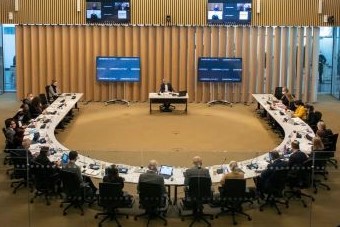
(London Assembly in session with Mayor Sadiq Khan)
 Meanwhile, as was also highlighted on the “London Programme”, the Mayor has been accused of manipulating the ten-week consultation process. According to the Conservatives, when it became evident that at least 62% of respondents were opposed to the scheme, his officials spent thousands of pounds of public funds on a digital marketing campaign aimed at younger people through Snapchat and Instagram,on the assumption that this age group would be more supportive due to their concerns about air quality and climate change. The Mayor has insisted he has nothing to hide.

 Stuart Masson, editor of the “Car Expert” website, has alerted owners of non-compliant cars to the “inevitable reality” that their vehicle is rapidly losing value and that they should try to sell it to someone beyond London, where they won’t be taxed every day for driving it. This doesn’t of course, he remarks, solve the pollution problem – it just pushes it from London to the rest of the country. Masson predicts that the Mayor’s next step will be to target Euro 5 petrol cars. Then all diesel cars. And the current £12.50 charge “will for sure creep up to £15 a day, then towards £20”.
 Like any politician, Masson declares, Sadiq Khan knows that taxing motorists is
 easy and lucrative. However, “at least most governments have the good taste to apply more tax to the most expensive cars and wealthiest owners”. The Mayor of London, on the other hand “has chosen to tax the less well-off who can’t afford a new car”.