Wimbledon Tennis Club’s Expansion Scheme Faces Determined Local Opposition:
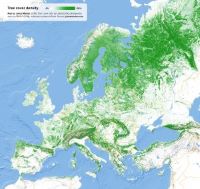
European Tree Cover Graph
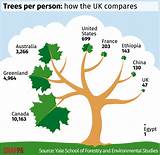
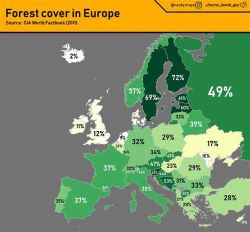 How many trees are there in the UK? The Woodlands website has calculated the number to be about three billion. That’s around 45 per person, increasing to 400 per individual in Scotland because it’s more sparsely inhabited but has almost half Britain’s trees. Despite these impressive-sounding statistics, as Mary Gagen, a Professor of Physical Geography at Swansea University, has pointed out on “The Conversation”, the UK is one of the least densely wooded nation’s in Europe, with 13% coverage compared to the European Union average of 38%. Furthermore, it has what she depicts as “an unhealthy tree-felling habit”, with up to 60 of them being chopped down each day to make way for buildings and infrastructure.
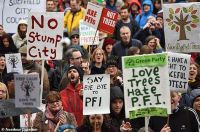
Protests against tree-cutting in Sheffield
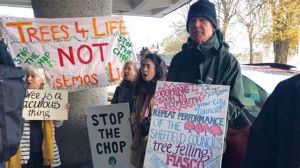
Protests against tree-cutting in Plymouth
Gagen’s calculations in fact appear to considerably underestimate what’s really happening. Sheffield Council, for example, is currently embroiled in a controversy over a 25-year £2.2 billion contract it granted to a private company, Amey, to “upgrade the condition of the city’s roads, pavements, streetlights and bridges”, resulting in 5,600 trees being removed , provoking public protests and arrests. This has led , on 1st April, to the resignation of Bryan Lodge, the councillor in charge of cutting them down. A similar situation has arisen in Plymouth, where the municipal head, Richard Bingley, has left his post following criticism of his decision to authorize the removal of 110 trees as part of a £12 million city centre regeneration scheme.
 In the Sunday Times on March 26th, its polemical columnist Rod Liddle, lambasted the proposal of the Greater Cambridge Partnership (GCP) to build “a fatuous green bus lane” by paving over Coton Orchard, a 100-year collection of more than 1,000 apple, pear and plum trees, strawberry fields and vines”. The previous Sunday, on the 19th March, the Observer columnist, Henry Porter, had likewise fulminated against “the massacre of our sylvan treasures”, declaring that city dwellers should be able to properly defend their trees”.
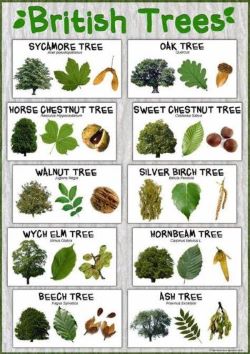 Indeed, as Gagen has pointed out, many British streets were intentionally designed by Victorian planners to be full of big trees, much to the benefit of the 84% of the population who now live in urban areas. A survey conducted for Wales online has revealed that many regions of the country renowned for their natural beauty actually possess less tree cover than the largest UK cities, with Cornwall having just 5%, Suffolk 8% and Norfolk 12%, compared to London (20%), Manchester (19%), Leeds (17%) and Newcastle (16%). Surrey tops the “leafy list” as the greenest part of England with 31% tree cover but “at the bottom end of the scale, surprisingly, is the Lake District with only 0.13% of its natural landscape covered by trees”.
The Woodlands organisation has noted that although the Conservative Government at the last election in 2019 made a commitment to plant 30 million new trees every year, “even if they manage to do this for the next 10 years it will still add only 10% to the UK’s tree cover”. Kelvin Archer,who is responsible for the Woodland Trust’s forests from the Scottish border down to the Midlands, has emphasised to Claire Marshall, the BBC’s Ecology and Rural Affairs Correspondent, that climate change is also an increasing factor in toppling or weakening thousands of ancient oaks and yew trees: “Storms that are normally only seen in north-east Scotland are now hitting Northumberland and much of Cumbria”.
 Trees are also very much a focus of the fierce dispute swirling around
 the Wimbledon Tennis Club’s (AELTC) plans to expand onto the 73 acres of Wimbledon Park which it bought from Merton Council in 1993 and are directly opposite the current stadia complex. The Capability Brown Society (CBS), in its campaign to protect and preserve Wimbledon Park, has highlighted Merton Council’s stipulation at the time of the purchase, that it should be kept as an open space for leisure and recreational purposes only.
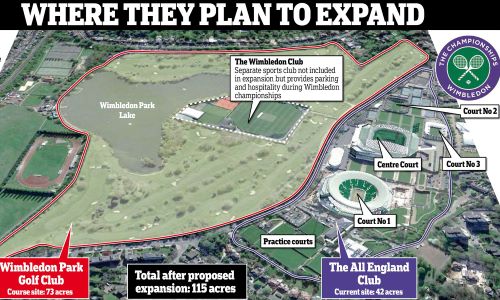 In 2021, however, observes CBS, the AELTC, having paid £65 million to buy the golf club that had been using the land, applied for planning permission to create a vast development next to its existing site, which will include an 8000-seater stadium the size of a block of flats, 38 new tennis courts and a 30,000 square foot maintenance building, meaning 50 acres of the park will be built upon. Moreover, contends the CBS, 54 cubic metres of earth will be excavated , 300 trees will be felled and another 500 uprooted and moved.
The Wimbledon Society is similarly extremely unhappy about the potentially significant environmental impact of such a huge project, the ensuing major traffic disruption and the construction noise which will be inevitable throughout the eight-year building phase”.
The AELTC has characterised such claims as overstated and insists it will “double the number of trees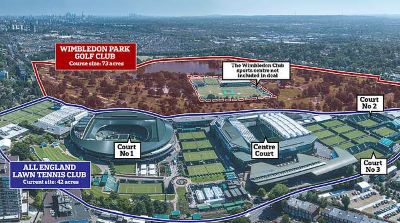 on the site, planting around 1,500 British grown trees of diverse species chosen for their ecological and heritage value and their resilience in the face of pests, diseases and climate change”.
A decision by Merton Council on the AELTC application is expected to be made in the last week of April