“We’re Managing All Right Here, But It’s Chaos Out There”: The UK’s View Of Current Global Events:
 “People in Britain are happy with their lives but not the state of the world”. That’s the conclusion from
 research conducted for the Guardian newspaper and cited by it’s social affairs correspondent, Robert Booth, on 6th July. Although many of those questioned agreed that recent years have been especially traumatic, with everything that’s happened – Brexit, the pandemic, the vaccines, “partygate” ( former Prime Minister Boris Johnson’s Downing Street festivities during covid), then
  Ukraine and the cost of living – the study suggests that 70% of UK residents are “just getting on with their daily activities, worrying less about what they cannot control, are personally optimistic and in fact that 90% of them feel absolutely fine”.
As was evident on 11th July, however, Booth’s colleague, the Guardian’s economics commentator, Richard Partington, doesn’t entirely share this 
 interpretation. He emphasized that, although the UK’s hottest June ever resulted in an upsurge in the purchase of swimwear, beach towels, garden furniture and barbecue food, this was accompanied by growing anxiety over the pace and scale of global warming. Furthermore, with everything becoming more expensive, as many as two in five customers are choosing more “yellow-sticker” short-dated food and drink items in supermarkets to help their finances go further.
An analysis by Office For National Statistics (ONS) on public opinions and social trends in  Great Britain between the 14th – 25th June has enumerated the main concerns among adults across the country. Top of the list were the 62% who reported that their outgoings and overheads had increased significantly compared to the previous month. This was attributed by 96% to the escalating prices of food in the shops , the rise in gas or electricity bills (62%) and fuel (34%). Another 43% reported that they were struggling to afford their rent or
  mortgage (up from 30% in June 2022) and 2% admitted that they were behind with their payments. The other important
  issues highlighted by the ONS were the future of the National Health Service (NHS) and the backlog in hospital appointments due initially to the pandemic but latterly to the strikes by doctors, nurses and radiologists (82%), the condition of the economy (77%), as well as mounting apprehensiveness about climate change and the environment (60%).
 All this does appear to explain why the UK has slipped down from 15th place in 2019 to 19th in the World Happiness Report (WHR) 2023 published by the World Economic Forum (WEF). The USA is now at 15th position, above
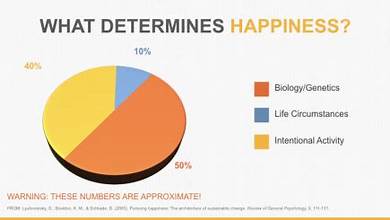 Germany (16th), Belgium (17th) and the Czech Republic (18th) but below Australia (12th), Canada (13th) and Ireland (14th). Finland is again top of the rankings, as its has been for the past five years and is well ahead of its nearest rivals, fellow Nordic countries Denmark and Iceland.
The WEF has acknowledged that both the index and its definition of “happiness” have been criticised on the basis that, in the case of Finland, for example, “satisfaction with their lives” would have been a more 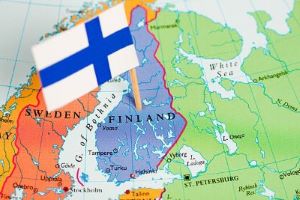 accurate description. Indeed, as the Finnish writer Frank Martela, has pointed out in the Scientific American magazine, although Nordic countries
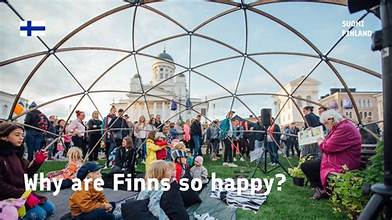 predominate on factors such as GDP (Gross Domestic Product) and freedom from oppression, “if you look instead at how much positive emotion people experience, then suddenly Latin American countries such as Paraguay, Guatemala and Costa Rica become the happiest countries on earth”.
The Business Insider contributor, Beatrice Nolan, observed on June 10th that many people she interviewed in Helsinki expressed surprise that they are still the first and are exasperated and even annoyed by the global perception of them as “happy”. A better word to describe Finns, she was told, would be “content”. That’s partly because, suggests Nolan, they are “less dramatic” in their aspirations regarding wealth, but also the result of one of the most robust welfare systems in the world. Healthcare and education are free for all residents and if someone loses their job, the State will help them out until they find a new one: “Thus there’s less preoccupation about money than in somewhere like the US or UK”.
On a rather more encouraging note, an international survey conducted across 29 countries, highlighted by the Observer columnist, Mark Townsend, on 17th June, has found that people in Britain have the third most enthusiastic views regarding refugees, just behind Spain and New
 Zealand : 56% believe they make a positive contribution, compared to 39% in France and less than 33% in Belgium. Attitudes towards the European Union (EU) have also mellowed considerably since the Brexit Referendum on 23rd June 2016. According to the YouGov organization, 58.2% of residents in Great Britain would now vote to rejoin the EU , not least because many of them have more trust in the European Commission than in the current UK government.