Life Without A Fridge-Freezer: The Spiralling Cost Of “White Goods” in the UK:
 If you’re moving into new accommodation, what are the basic commodities you need to
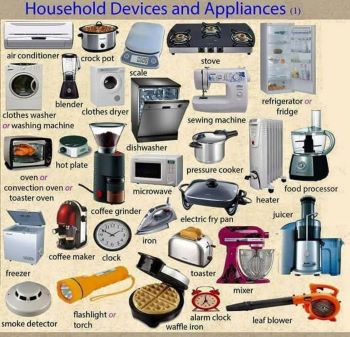 bring with you or purchase if you don’t already have them? For anyone who’s not completely sure, the Sofa & Carpet Specialists ScS, whose HQ is in Sunderland, north-east England and has 98 stores around the UK, has provided a checklist of what they consider to be the most essential 87 appliances and utensils for all homes.
 Although items such as a kettle, pots and pans, cutlery, tables & chairs and a bed are obvious necessities for almost everyone, ScS’s proposed inventory goes far beyond
 these. Kitchens, they declare, should have a toaster, microwave, washing machine, tumble dryer, a fridge-freezer and a dishwasher. The living room, in their view, won’t be complete without a TV, a coffee table and of course sofas and rugs, a selection of which is available from their company. If you have a garden, or access to one, then you’ll also require a lawnmower, some spades and a rake. Furthermore, contends ScS, a household can barely function properly without a vacuum cleaner, an ironing board, an alarm clock and a toothbrush holder.
The ScS recommendations, nonetheless, are quite modest and restrained compared to those advocated by thespruce.com website. It seems they can’t imagine the daily domestic routine without a blender, a rolling-pin, a spice rack, a panini press and
 a waffle maker plus a whole range of other exotic artefacts. Neither ScS nor The Spruce, however, appear to question whether the newly arrived occupants will be able to afford all this equipment on top of their mortgage payments or rent and the expenses they’ll have accumulated during the transition from their previous lodgings.
 As the Guardian’s economic correspondent,Richard Partington,
 has observed, it’s not just supermarket groceries that have risen in price. He’s cited Office For National Statistics (ONS) data indicating that the cost of refrigerators, freezers and fridge-freezers has increased by 18%, cookers by 12.3% , carpets and rugs by 10.7%. The BBC’s business reporter, Daniel Thomas, has likewise highlighted research conducted by the product comparison service Price Runner indicating that between January 2020 and February 2022 many white goods and gadgets became 50% more expensive, with washing machines going up by £152 and a tumble dryer up by £70.
 On 23rd June, Chris Choi, the consumer editor for ITV News, reported that an
 investigation by the Pro Bono Economics (PBE) organisation has revealed that 1.2 million people in the UK live without at least one major appliance. As a pensioner in Brentwood, Essex, told him, because she didn’t have the funds she needed to buy a cooker, she had to manage without one until a reconditioned model was acquired for her with the help of a local charity.
 According to the Talker News.com contributor Charlie Bayliss on 18th
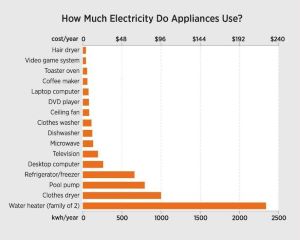
 September, due to the cost of living crisis and in order to raise cash, nearly one out of ten of the population in Britain has been obliged to sell either their car (24%), coffee machine (23%), television (20%), fridge (14%), freezer (13%) or washing machine (11%). Devices which have been retained are being used a lot less to reduce energy bills, especially ovens (42%), kettles (26%) and dishwashers (25%).
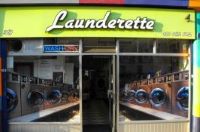 The PBE categorises the estimated 50,000 households (130,000 adults and children) without either a washing machine or fridge-freezer as being in
 “appliance poverty”. They emphasise that people in that situation often have to rely on fast food or takeaways for their meals and to either handwash their clothes or make frequent, costly trips to a local launderette. Hence, on the basis of HM Treasury’s well-being evaluation guidance, their life satisfaction level would improve significantly if they were able to obtain or were provided with these two vital pieces of domestic hardware.
 Although the Department of Work & Pensions confirmed in
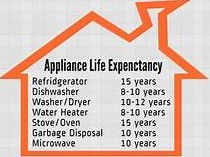 September that an additional £852 million has been made available via the Household Support Fund to County Councils to help people in their areas struggling with “inflationary challenges”, the PBE has noted that not everyone in financial difficulties is eligible for these grants. There are, fortunately for them, several alternative non-governmental sources of assistance, the details of which feature on the website of the London-based Turn2us charity organisation.
“Wavelength”in Cambridge, for example, arranges donations of TVs, radios and laptops “to enable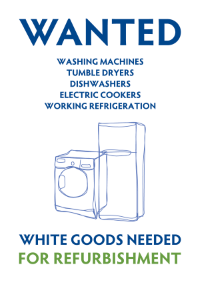 individuals cut-off from society to reconnect with the world”, the “Essential
  Living Fund” operated by “Glasspool” in east London offers small grants for white goods and clothing such as school uniforms and the “Lighthouse Project” in Middleton, Greater Manchester, aims to supply “affordable refurbished appliances” to those on low incomes who have no other means of acquiring them.
 Glasspool, however, warns prospective applicants that, while they can request a maximum of three items, in most cases they are only able to assist with one, apart from exceptional cases such as replacing defective or dangerous flooring that presents a “trip hazard” to the fragile and infirm or paying for the TV licence for those unable to do so themselves.