Under Scrutiny: The “Excessive Earnings” Of The UK’s Top Bosses:
 “Is it OK that executives are paid so much even in a cost-of-living
 crisis?” This was the question posed by the HR Grapevine contributor, Serena Haththotuwa, on 2nd January. By the end of last year, she noted, the average annual salary for FTSE 100 (Financial Times Stock Exchange Index) CEOs had risen to 118 times more than what the average UK worker receives – a huge disparity considered by many HR (Human Resource) practitioners as “completely inappropriate”.
 Paul Nowak, the general secretary of the TUC (Trade Unions Congress), cited
 by the Guardian’s Wealth Correspondent, Rupert Neate, on 4th January, was far more outspoken, lambasting what he depicted as “obscene levels of pay inequality”. While working people have been forced to suffer the longest wage squeeze in modern history, he declared. “City bosses have been allowed to pocket bumper increases and bankers have been given unlimited bonuses”.
 Data provided to Neate by Luke Hildyard, the director of the High Pay Centre (HPC), has indicated that the CEOs of Britain’s biggest companies made more money by lunchtime on 4th January than the average worker would earn in
 the entire year. Similarly, partners at the “magic circle” of law practices and the “big four” accountancy firms only needed to work until 8th and 16th January respectively to do the same.
The ICAEW (Institute of Chartered Accountants in England &Wales) has observed that of the 58 UK companies who increased their CEO’s pay in 2022, the largest percentages awarded were at the energy company Centrica (413%), the engineering Smiths Group (307%) and the Auto Trader Group (230%). 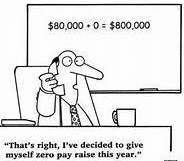 Alexander Pepper, Professor of Management Practice at the London
 School of Economics & Political Science, has acknowledged that many people will be surprised by this trend when the government is urging pay restraint to help control inflation. In the opinion of the HPC, when so many households are struggling with living costs “it’s surely not desirable or sensible for companies to prioritise a half-a-million- pound pay rise for executives who are already multi-millionaires”.
 Another contentious issue is the practice of
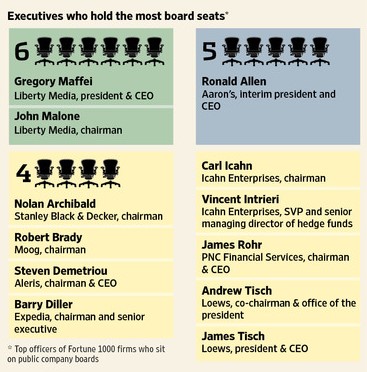
 “overboarding”, which Sean O’Neill, a specialist in investor relations at the Corporate Governance Institute, defines as occurring when one person sits on too many company boards and so doesn’t have sufficient time to properly fulfil their duties to each organisation. As the Financial Times
 correspondent, Anjli Patel has pointed out, although having several board positions simultaneously can be extremely lucrative, due to factors such as climate change and conflicts around the world, the workload is increasing and company board meetings are often far more frequent.
On 3rd March, the Sunday Times journalists Oliver Shah and Harry Yorke, assessed the problems that can arise when a pricey executive moves on from several companies in succession,  allegedly without having achieved any notable results at any of them. They focused in particular on the controversy around Nick Read, now the Post Office CEO, who (they say) took a bonus of almost £300,000 while boss of the convenience store group Nisa, even though it was making a loss at the time, then ran the Birmingham-based Extra Supply consortium, which went bankrupt in 2018. Since joining the Post Office, he’s demanded increases to his base salary and short-term bonus plus a “meaningful” retention payment, which together would amount to more than £1 million.
 A little further down the pay scale from the CEOs, even
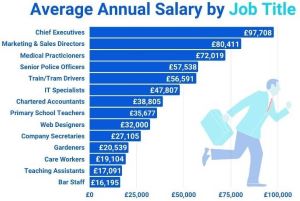
 employees officially classified as “high earners”, so the Guardian columnist Jedidajah Otte reported on 5th March, are barely coping with the current economic situation. He highlighted as an example the case of Scott, a software engineer from Leicestershire who, despite having an annual gross income of £74,000, finds that he and his family “are lucky to have £300 remaining” from their monthly expenses for their mortgage, energy bills, grocery shopping and his student loan repayments. His predicament extends to many others in similarly well-paid occupations such as public relations and communications directors (£79,886 pa, based on Forbes.com calculations) pilots and air traffic conrollers (£71,676 pa), financial managers (£70,000 pa), specialist medical practitioners (£66,031 pa), head teachers and principals (£66,014 pa).
 An analysis by the Nimblefins advisory website of information about family finances available from the Office of National Statistics (ONS) has indicated that the top 10% highest earning households spend around £5,800 on food and drink each year, with 32% of this going on dining out. This compares with £3000 pa for those with disposable incomes of less than £11,000 pa, with 84% of their consumption being at home.
 Nimblefins furthermore estimates that UK residents typically need around £628 per week (£2,700 a month) to cover living expenses such as food, clothes, transport to and from work or school – but that costs are much higher if they rent or have a mortgage rather than owning their home outright. Then
 there are their bills for gas, electricity, television and broadband services,mobile phones and (still for many homes) landlines.
While the CEOs can undoubtedly manage fine with all of this, the less well-off are struggling to do so.