Buying But Not Owning: Britain’s “Antiquated” Property Laws:
 “It’s an outdated feudal concept that needs to go”. That’s what the
 current Housing Secretary, Michael Gove, told the Sunday Times in January last year. However, as the newspaper’s journalists Harry Yorke and Melissa York disclosed on 24th March, due to fierce resistance from (among others) pension funds and the British Property Federation
 (BPF), he’s now had to backtrack on his commitment to introduce a radical leasehold reform bill. This would make it easier and cheaper for people to buy the freehold of the premises where they live and would also reduce to zero the increasingly onerous “ ground rent” they have to pay.
 The Guardian columnist Julia Kollewe noted on 10th February that
 there are an estimated ten million residents in England and Wales who have the illusion they’ve “purchased” their home, but in reality the building or land where it’s located is owned by someone else, namely the freeholder who is also their landlord. Furthermore, as Government data has indicated, the number of premises in this category has increased from 4.65 million in 2019-20 to 4.98 million in 2021-22. About 70% of these are flats, the rest (1.5m) houses, with the highest proportion being in London and the north-west. Kollewe pointed out that it was in the 1990’s when property investors realised they could make money from buying freehold titles and pushing up ground rents.
So what’s the difference between the two arrangements? As the Daily Mail correspondent, Myra Butterworth, has explained, a freehold and the land on which it stands, is completely yours and you can do what you want with it, but if you have a leasehold, it’s only “yours” for an agreed period of time. When the lease expires, the place reverts back to the ultimate owner. While living there, you’re usually free to carry out minor works such as painting, decorating, or kitchen and bathroom refits, but for major structural changes you’ll need the permission of the freeholder.
Ben Mayfield. A lecturer in law at Lancaster University, has queried on “The Conversation”, how it’s possible to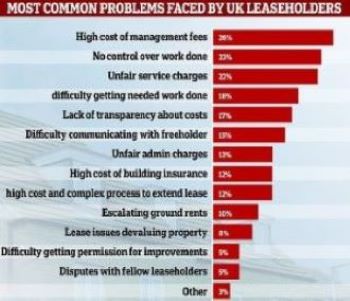 buy something and yet still not own it? The BBC News Producer, Phil Hendry, has observed that it’s a format which dates back hundreds of years to an era of lords, landowners,peasants and serfs, yet despite having been virtually phased out in most former British territories (except Hong Kong) or never having existed at all in many countries nevertheless continues to play a significant role in the English, Welsh (but not Scottish) property markets.
Apart from it being a formula now widely regarded as anachronistic, the two most contentious aspects of leaseholds are the service charges and the ground rents. The first are supposed to cover the cost of the building insurance and general maintenance, organised by the freeholder’s managing agent but financed on a shared basis by the incumbent leaseholders who, (according to “Ideal Home”) routinely complain they are being overcharged for repairs which are delayed, inadequate or not carried out at all.
 Even more controversial are what Kit Sproson, a commentator for the Money Saving Expert organisation, depicts as the “extortionate amounts” now levied for ground rents which were once “nominal” but have become so
 expensive that it’s almost impossible for the leaseholder to re-mortgage or sell the property. One outraged resident from Tonbridge, Kent, told Kollewe that “it’s literally like giving somebody money for nothing” and indeed an investigation by the Competition and Markets Authority (CMA) in 2019/20 cited by the Evening Standard contributor India Block on 27th March concluded that ground rents are “neither legally nor commercially necessary” and that there’s “no persuasive evidence that consumers receive anything in return”.
 Inevitably, as Kollewe emphasises, it’s the UK’s biggest landowners
 who benefit most from this “two-tier system”. Prominent among them are King Charles, the crown estate (which belongs to the reigning monarch), the Duke of Westminster’s “Grosvenor Property Group” which still owns much of central London, the Church of England and the Duke of Bedford, whose assets include Woburn Abbey. The lifespan of a lease can be anywhere
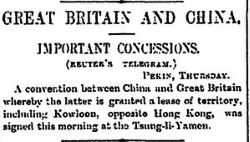 between 99 and 150 years, but (declares Sproson) it’s important to understand that you’re essentially just a tenant of the freeholder for that period, which was why the British Government had to hand Hong Kong back to the Chinese on July 1st 1997 when the 99-year lease agreement signed between the two countries on June 9th 1898 came to an end.
 Both Sproson and the the Ideal Home reporter Tamara Kelly warn that if you wish to extend
 your lease, as is your legal right, you should do so before the remaining period falls below 80 years. That’s because the nearer the expiry date, the less it’ll be worth. If you want to sell it, any potential purchaser will have problems obtaining a mortgage for a property with limited time left on the lease.
Hence, it makes financial sense to take action before this happens: On average, calculates Kelly, a 90-year lease will cost around £8,000 to extend whereas for a 60-year one this will rise to more than £30,000.