End Of An Era: The Imminent Demise Of The UK’s Conservative Government:
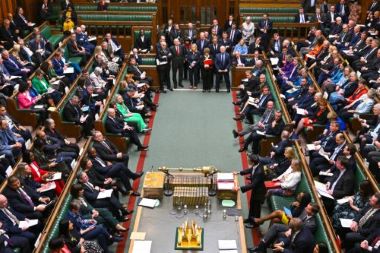 “Why on earth would anyone become a British MP?” This
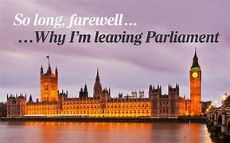 was the question posed by the Economist magazine on March 4th, So far, ninety-five current members, it observed, had decided they no longer want the job, hence won’t be candidates at the next UK general election, which must take place at the very latest by 28th January 2025. The majority of this “exodus”, as the Guardian’s political correspondent, Eleni Courea , noted on 18th February, are “high-profile ex-cabinet ministers” such Sajid Javid (ex-chancellor), Ben Wallace (ex-Defence Secretary) and Chris Grayling (ex-Transport Minister) but also include the former Prime Minister, Theresa May.
 Many of them are leaving to avoid the embarrassment of losing their seats
 in what the opinion polls predict will be a “landslide” for the Labour Party, led by Sir Keir Starmer. The justice minister, Mike Freer, has attributed exhaustion and the constant abuse he receives as his reasons for quitting.
The Economist, while acknowledging that being an MP is a “hard job”, pointed out that there’s no shortage of aspirants vying to be among the 650 who’ll be entitled to sit in
 the next Parliament, despite the many thousands of pounds of their own money they’ll have needed to spend on campaigning. The requirements are that they need to be a citizen of the UK, the Republic of Ireland, or from a Commonwealth country with indefinite leave to remain in Britain, over 18 years of age, to have been selected by their party as the candidate for the constituency they wish to represent or stand as an independent, not bankrupt, never convicted of treason or insane (though it’s not too clear how this is judged or by whom)
 The Spectator’s Assistant Editor, Isabel
 Hardman (also author of “Why We Get The Wrong Politicians) has queried, similar to the Economist, why “anyone normal would want to be an MP”, citing the case of Heidi Allen, a Conservative then Liberal Democrat MP, who resigned from Parliament after just four years (2015-2019) declaring that “nobody in any job should have to put up with threats, aggressive emails, being shouted at in the street, sworn at on social media, nor have to install panic alarms at home”.
 Dr Ruth Fox, Director of the Hansard Society for Parliamentary
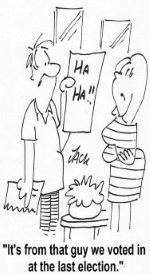 Democracy, has admitted in her “Survival Guide For New MPs” that a career demanding up to 69 hours dedication per week can have a “gruelling impact” on work-life balance, critically undermine family relationships and attract a level of public vitriol to which many new MPs find difficult to adjust, It also means that they are down near the bottom of the public trust table, along with bankers, estate agents and 2nd-hand car salesmen.
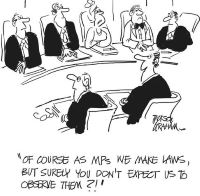 The comment by the American satirist, H.L. Mencken that “a good politician is as unthinkable as an honest burglar” is just one example of the scepticism traditionally associated with this profession. The 44-year-old leader of Canada’s Conservative opposition party, Pierre Poilievre, has reputedly declared that “Any politician promising not to raise your taxes is like a vampire promising to become a vegetarian”, hence it will be instructive to see how he (like Sir Keir Starmer in the UK) deals with this issue if, as anticipated, he beats the current Prime Minister,Justin Trudeau, in next year’s election.
 On 18th April, the Evening Standard’s political editor,
 Nicholas Cecil highlighted an “exclusive survey” conducted on its behalf by the global market research organisation, Ipsos, This indicated that 42% of adults in Britain want the election to be held before the end of June (the preference for Labour supporters), 10% in July or August and 23% in September or October (the choice for the Conservatives in the hope that the economy might have
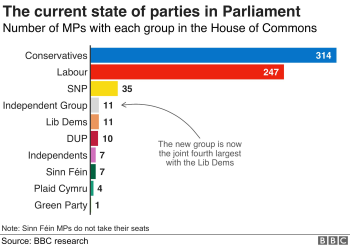
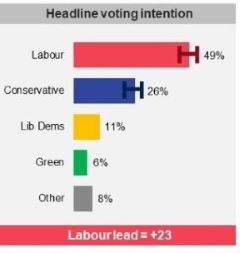
  improved by then). Both the Ipsos results and statistics published by BBC News on 27th March confirm that Labour retains a “commanding lead” of 20% – 25% over the Conservatives, followed by “Reform UK” (formerly the Brexit Party) on 12%, the Liberal Democrats with 9%, the Greens 6%, the Scottish National Party (SNP) 3% and Plaid Cymru (The Party of Wales) 1%.
 Despite all the “detrimental consequences” of becoming an MP depicted
 by Dr Ruth Fox, there are consolations as well. On 1st April their annual salary was increased by 5.5% from £86, 584 to £91,346. They can also claim expenses for the cost of running an office,employing staff, having somewhere to live and travelling between Parliament and their constituency. Serving as an MP, the chair of the Independent Parliamentary
  Standards Authority (IPSA), Richard Lloyd, has declared, “should not be reserved to those wealthy enough to fund it themselves”. The Prime Minister receives an additional £75,440 on top of his MP salary and cabinet ministers an extra £67,505each. Anyone ceasing to be an MP after the next
  election will receive “severance pay” (sometimes dubbed “Golden Goodbye) for four months instead of the current two to cover the finances involved in closing down their offices, returning equipment and managing the departure of their staff who, along with their employer, have suddenly become redundant.