Election Aftermath: The UK On the Brink Of A New Era:
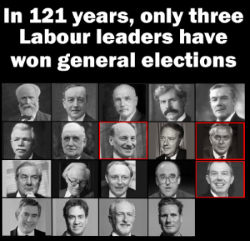
 “All great changes are preceded by chao”. This observation by the Indian-American author and alternative medicine advocate, Deepak Chopra, is undoubtedly shared by Sir Keir Starmer, the Labour Party leader and Britain’s probable next occupant of 10 Downing Street. Indeed, Starmer’s campaign has focused almost
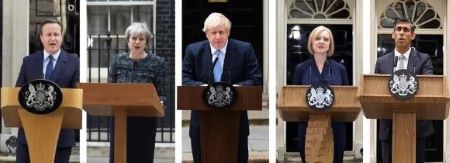 entirely on what he considers to have been the hugely damaging impact of the Conservative’s economic policies over the past 14 years and the stability that he declares he will by comparison provide to a country that has had five prime ministers in just the last eight years.
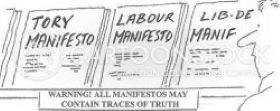
 Most political pundits and opinion polls have acknowledged for many months that Labour has been almost certain to win. The bigger question has been what their majority in Parliament will be and what they’ll do with power once they’ve got it. On this, there is rather less consensus, not least because Starmer has been notably reticent in specifying what he’s offering as an alternative. His manifesto,
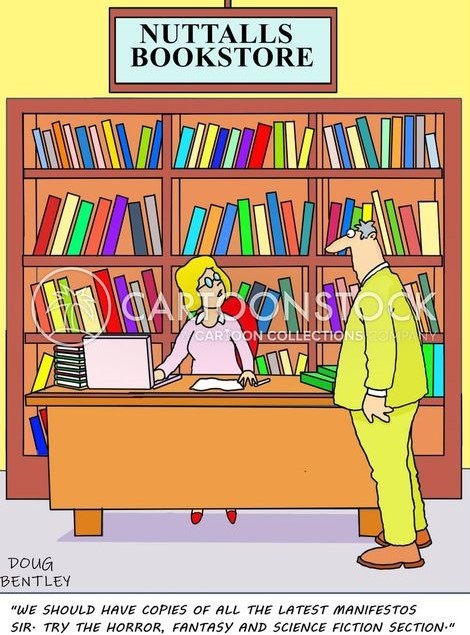
for example, was depicted by the Financial Times correspondent, Martin Wolf, as being “very dull and not revealing very much”.
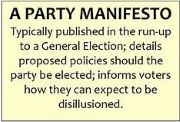 In Labour’s favour, however, as the Guardian’s economic editor, Larry Elliott, emphasised on 24th June, expectations among the public and their faith in politicians are at such a rock bottom level that no-one ís anticipating very much. The contrary view, expressed by the Evening Standard columnist, Matthew d’Ancona, on 18th June, is that “an all-powerful Starmer” with a large majoríty will come under immense pressure to be very radical, very quickly, especially from the left-wing of his Party. In such a “jaded political landscape”, asks d’Ancona, how will he manage the revived dreams óf the nation and will he be able to?
 Elliott also noted that the Labour Party has been painting the bleakest possible picture of the UK’s economic situation precisely so it can blame the Cónservatives for any tough decisions it has to make if it becomes the government . On the 25th June, he cited the “withering assessment” by the director of the Institute For Fiscal Studies (IFS). Paul Johnson, that the two main parties have participated in a “conspiracy of silence” by
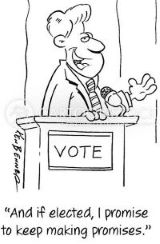 being so evasive about the major decisions that need to be taken regarding health, defence, welfare, ageing, low growth, the energy crisis and the choice between
  higher taxes or worse public services. The manifestos, he declared, have told the voters more about what they wouldn’t do rather than what they would. Even Kate Andrews, the economic editor of the right-wing “Spectator” magazine, has acknowledged that Labour’s inheritance will be extremely challenging due to the public debt being around 100% of GDP and Britain’s current stagnant economy.
 The concern among many Labour supporters, highlighted by the Observer’s election reporting team on 16th June, is that Starmer’s careful campaign strategy, which has resulted in him
 being dubbed “Captain Cautious” by journalists such as Janan Ganesh of the Financial Times, could come back to haunt him if he gets the keys to Downing Street. He’ll face the “terrible reality” of pressures such as councils going bankrupt and university finances and social care services in crisis, so how will the change he’s been promising be delivered and exactly where will the money come from?
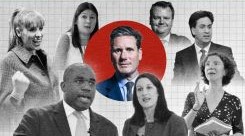 According to the Observer, Starmer believes he can achieve much
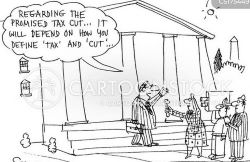 higher economic growth by relaxing planning rules, building more houses and implementing innovative industrial and green energy projects. Many financial experts, however, are unconvinced that this will be enough and view as paltry the revenue that Labour say they will raise from sources such as taxing people with non-domiciled status, putting VAT and business rates on private school fees and reducing tax avoidance.
 The solution advocated by many leading economists was encapsulated in the front page headline of the Observer’s 23rd June edition: “Starmer’s growth plan doomed without access to EU markets”. The Labour leader, nonetheless, has been adamant that he won’t be taking the UK back into the single market or customs union.
Meanwhile, a YouGov survey published in May by it’s Head of Data Journalism, Matthew Smith, has indicated that 43% of people in Britain believe the NHS will improve under Labour, as will social care provision (37%) and the overall standard of living (37%). It also points out that the public is divided in its views on the economy: 33% think it’ll get better with Labour, 31% that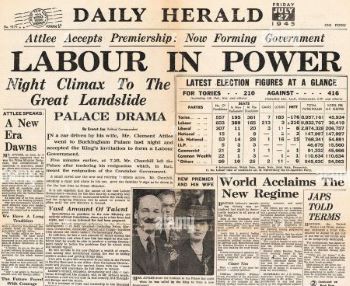 it’ll get worse. They’re rather less optimistic about issues such as the UK’s reputation around the world (26% better, 28% worse), defence (14% better, 30% worse) and small boats with immigrants crossing the English channel (11% better, 32%
  worse, 37% no discernible difference from the previous government).
All the signs are, suggests YouGov, that although the public has not been particularly inspired by Labour and support for the party remains “lukewarm”, there’s a strong desire to see the unpopular Conservatives removed after 14 years in power (including among 48% who voted for them in 2019), it’s time for a change and Labour are considered to be the preferable available alternative.