Private Or Public? The Future Of Britain’s Bus Services:
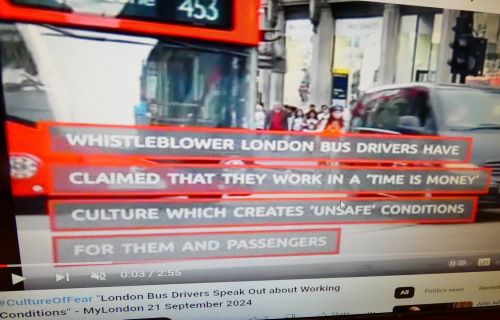 “Many of us feel ignored and treated like cattle”. That’s how one London bus driver characterised to the MyLondon contributor Adam Toms on 22nd September what their job ís really like. We’re constantly under pressure, he declared, to keep to unachievable timetabling targets, so anything that might detract from this, such as toilet, rest and meal breaks, traffic congestion, driving safely, taking care with other road users, not breaking speed limits, is regarded with strong disapproval and can even result in them being “harassed or sacked”.

Nick Owen
 The comments about the allegedly “inhumane” working conditions and “unjust culture” were replicated by a former driver on the BBC’s London Programme on Sunday 29th September, who pointed out that the temperatures inside the cabs can vary from freezing in winter to a stifling 40 degrees during a hot summer, when there’s a real risk that they could become exhausted and drowsy while at the wheel. The MyLondon “whistleblower” claimed that on one occasion, he was instructed to continue driving his bus down Oxford Street despite the fact that it had serious technical faults. Nick Owen,TfL’s director of buses, rejected all the allegations made on the London Programme about his organisation.
 It’s thus not a complete surprise that bus drivers in some parts of the UK are considering taking industrial action. In both London and Northumberland, offers of a 4% pay increase have been resoundingly rejected as unacceptable, especially as “energy bills and mortgages
 have gone through the roof”. In the capital, if a strike ensues , it will affect 70 routes, including those providing services to Chiswick, Brentford, Acton, Ealing,Putney and Hammersmith.
 The “We Own It” (WOI) campaigning website attributes this situation to the fact that the sector is dominated in Britain by what it portrays as the “Big Five” bus
 companies which carry 70% of the country’s passengers and whose owners are: (1) Arriva: “I Squared”, a firm registered in the Cayman Islands (2) First Bus: Institutional investors, including Schroders plc (3) Go-Ahead: the Australian Kinetic Holding Consortium and the Spanish Global Inversiones Infrastructure (4) National Express: US banks such as J P Morgan Chase and now part of the Mobico Group (5) Stagecoach: Deutsche Asset Management (DWS) & Deutsche Bank.
 The WOI list doesn’t include London United, part of the French state-owned RATP Group which, as the Unite Union’s general secretary, Sharon Graham, has noted in her support of the capital’s 1,600 drivers demanding an improvement in their pay and conditions, had a turnover of 6.5 billion euros in 2023.
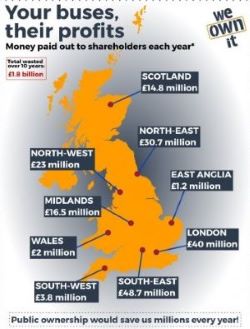 So what happens to the fares paid by these companies’ passengers? According to the online job agency Indeed, the average base salary in the UK for a bus driver is £13.71 per hour, though it’s a bit higher in London (£18.17 ph), Edinburgh (£17.98 ph) and Bristol (£14.29 ph) and lower in Sheffield (£13.47 ph) and the West Midlands town of Walsall (£13.35ph). The majority of the profits, say WOI, go to shareholders around the country, who receive (for example) £40 million each year in London,
 £48.7 million pa in the South-East, £30.7 million pa in the North-East, though just £14.8 million pa in Scotland.
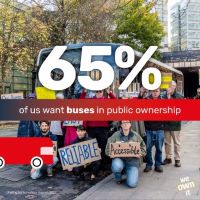
This echoes the current controversy over the dividends paid out by the water utilities and the bonuses awarded to their executive directors. WOI estimates that a return to public ownership (which it strongly advocates) would save £506 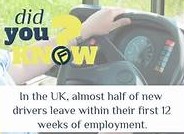 million per year which could then be invested in developing better bus networks, lowering fares and paying for 1,356 new electric buses. A survey it has conducted around the nation has indicated that 75% of those questioned want buses and trains to be brought back under state control, thereby reversing the “wild west free market” created by de-regulation in 1985.
The new Labour Government is clearly well aware of the growing public antipathy towards the relatively small cabal of entrepreneurs who have benefited most from the privatisation of essential services such as water, energy and
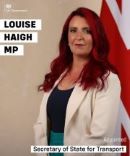 transport. Which is why, on September 9th, the Transport Secretary Louise Haigh, presented to Parliament legislation which will put control over bus routes, fares,timetables and standards back in the hands of local leaders, thereby enabling them “to deliver services in a way that suits the needs of their communities”. This will in effect validate the measures already taken by the Greater Manchester Mayor, Andy Burnham, in September 2023, with Liverpool and West Yorkshire following his lead and the authorities in South Yorkshire, the West of England and Glasgow considering doing likewise.
 The employee discontent within the private bus company industry has inevitably
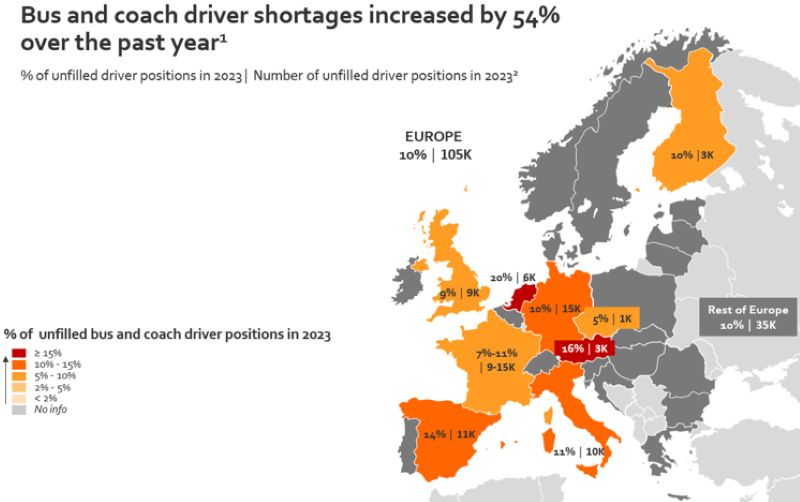 resulted in a shortage of drivers. The Confederation of Passenger Transport (CPT) has estimated the current “vacancy rate” to be around 6.5% and has published guidance for
  its 900 trade association members on how to improve their recruitment and retention policies. This isn’t a problem restricted to the UK. The World Transport Organisation (IRU) has calculated that over 80% of European bus and coach operators are facing severe difficulties in filling driver positions and are lacking 105,000, a number forecast to increase to 275,000 in the next five years.