Not Just For The Rain: The Multiple Uses Of The Modern Umbrella:
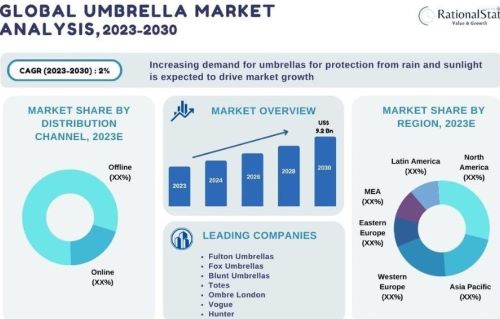 “The only bad umbrella is the one you forget at home”. This quote from the Brora luxury scottish cashmere company about an item whose global market value is predicted by Data Intelo to reach $75 billion by 2028 tells only part of the story. A survey of 2,000 UK adults cited by the Blackpool Gazette correspondent Richard Jenkins has indicted that it’s one of the possessions that people are least careful about, leaving
 them on buses or trains, in shops, restaurants, cafes or after a meeting in an office. A fifth (18%) of those questioned admitted that they had broken it (due to opening it “too vigorously”) or mislaid it after using it just once, 14% had ruined it by sitting on it, for 10% it had been damaged by their pet, but 85% attributed the demolition of their umbrella to a strong wind having blown it inside out.
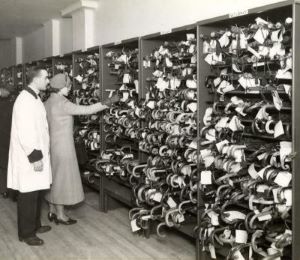 <<< (London Transport Lost Property Office)
The study calculates that a tenth of the British population will lose or break at least ten umbrellas during their lifetime, though this doesn’t include all the ones deliberately discarded (around one billion worldwide each year) because they only perform their job for a very short period of time. Indeed, most umbrella purchasers are well aware, as the Victoria & Albert Museum’s waste consultant Mark Howells has noted, that many of the ones we buy and use are fairly cheap (around £5 – £20) and so not designed to last.
This of course is an ideal scenario for the manufacturers and exporters. Statistics issued by the Observatory
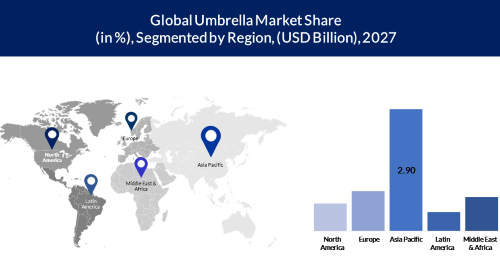 of Economic Complexity (OEC) have confirmed that China is the main source , with sales worth over $3,07 billion per annum, followed by Germany ($83.4 million pa), Netherlands ($75.5 million pa) and Cambodia ($55 million pa). The top importers are the USA ($680 million), Germany ($267 million), Japan ($233 million), South Korea ($196 million), France ($179 million) and the UK ($121 million).
 Although umbrellas as we know them today were devised by the 19th century British industrialist, Samuel Fox, the basic style (deduces blisstulle.com) was probably conceived
 by the Chinese over 4,000 years ago and appeared during the same period in Egypt and Greece, mainly to provide shade from the sun. The BBC correspondent, Justin Parkinson, has investigated the various attempts to improve the current familiar version. There are undoubtedly, as the Data Intelo’s 2024 Report points out, incentives for innovation, especially as nowadays they’re not only used as protection against the elements, but as a fashion statement at
  occasions such as weddings or sports events and by many organisations as a
 promotional tool.
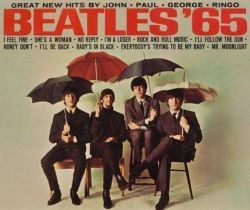
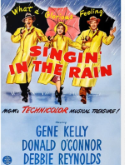
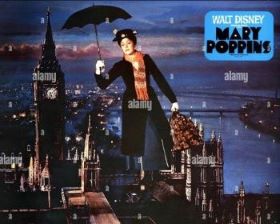
They’ve also featured in a wide variety of movies, notably “Singing In the Rain” (Gene Kelly 1952), “The Umbrellas of Cherbourg (Catherine Deneuve: 1964) “Mary Poppins” (Julie Andrews: 1964), “Yellow Submarine” (The Beatles: 1968), “Blade Runner” (in which a “Lambrella” with a light-up shaft was used: 1982), “Batman Returns” (Danny de Vito as “The Penguin: 1992) and perhaps most famously of all, “The Avengers” TV series (1961-1969: secret agent John Steed portrayed by British-American actor Patrick Macnee)
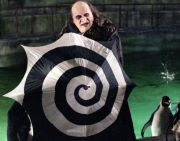
Danny de Vito as “The Penguin”:
 Meanwhile, there’s a radical reassessment under way regarding the umbrella’s design and function, partly because there’s an inherent risk in the way they are structured: If the metal ribs that hold the fabric in place are dislodged during a storm, the spokes can inadvertently cause eye injuries either to the owner or a passer-by. Justin
  Parkinson has highlighted one pioneered by the Dutch company, Senz, that has a lop-sided shape to make it more aerodynamic and able to resist winds of up to 100 km/h (62 mph) and models they’ve developed that “open and shut automatically and can be attached to bicycles”. The UK inventor Stephen Collier, has likewise created the helmet-shaped “Rainshader”, “tested to withstand a force-seven gale”.
 The first choice in the Camping and Caravanning Club’s list of the best umbrellas for
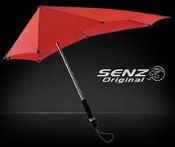 2024 is the “Blunt Metro” for its “remarkable resilience against 55 mph winds and rip-resistant 37-inch canopy”. (Price: £70). At number 2, the “Fulton Stormshield” made with “class, craftsmanship and 100% polyester” (£20 – £30). Third: The “reliable and uniquely-shaped Senz Long” (£60.90).
However, although the mix of materials used in the production of these and  “conventional umbrellas” make them durable and affordable, they pose (declares the “eco-friendly French apparel brand Beau Nuage”) several environmental challenges: the polyester and nylon are non-biodegradable, broken umbrellas are not recyclable, so contribute to the “throwaway culture” and the handles, tips and other components are often made of plastic, which is now acknowledged to be a leading cause of ocean pollution.
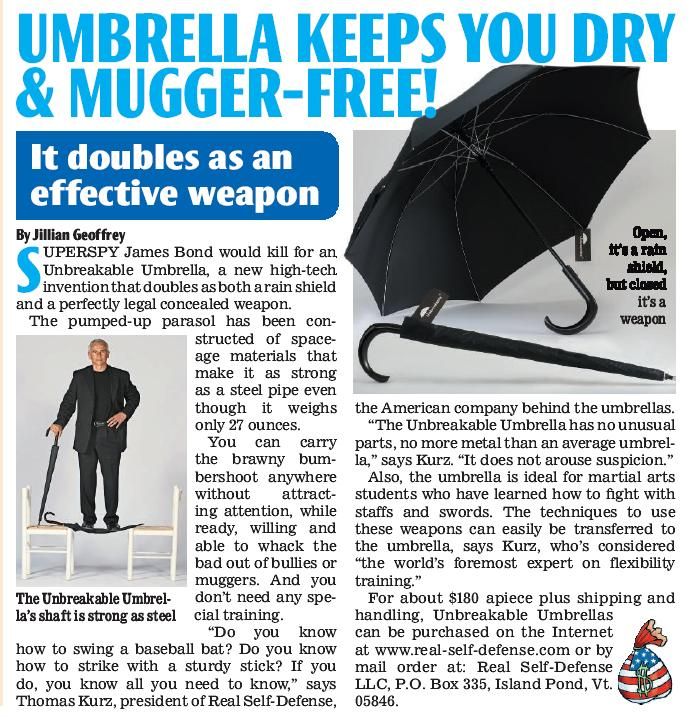 There’s another benefit with umbrellas, proclaims the “generational survivalist”
 Jeremy Bowyer, that most people don’t usually consider. They provide, he asserts, “a legal and subtle way of repelling potential physical threats and can be carried anywhere without attracting attention”. He advocates particularly the 90 cm “Security Self-Defence Umbrella City-Safe” which, in his view, is perfect for blocking attacks and taking defensive action in confined spaces, such as
 on public transport. Additionally, it can be utilised as a shield to protect against pepper spray, makes the user invisible to street cameras and has “ a beautiful German hardwood handle assembled in the USA”. Another option proposed by Bowyer is the “UZI Fibreglass Tactical Automatic Umbrella”, which has an “aggressive tip” and so is ideal in a dangerous situation.
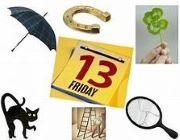 The best-known superstition about umbrellas is that opening one indoors
 invariably brings bad luck, similar to broken mirrors and black cats. The “Mental Floss” contributor Ellen Gutoskey, traces this back to ancient Egypt, when it was believed that to do so would anger the sun god, Ra and generate negative consequences. In Egypt today, it’s apparently considered disrespectful to even bring an umbrella inside a building.