“Patient Information Leaflets”: Why Much Of The Public (Almost) Never Read Them:
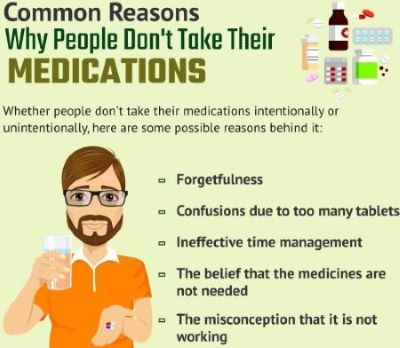 How many people have the time or inclination to study the guidelines provided in the box when they collect their tablets from their pharmacy? Not many, according to a recent investigation led by the Kent Surrey Sussex Academic Health Science Network (KSS AHSN) and cited by the Pharmaphorum online publication. This indicates that less than half (47%) of the respondents questioned in England have even looked at the “patient information leaflet” (PIL) which, as required by the MHRA (Medicines & Healthcare Products Regulatory Agency), has to accompany whatever has been prescribed by their GP (General Practioner). Instead, almost three-quarters (77%) go to internet sources such as Google and social media in order to understand their treatment.
 It’s thus evident , declares Pharmaphorum, that the drug manufacturers need to reconsider exactly how
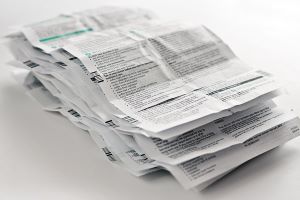
 they’re providing their product details. The MHRA stipulates that a PIL must be readable and easy to understand, include guidance as to safe use and statutory warnings regarding any potential risks, such as in the case of anything containing paracetamol. The Pharmaceutical Journal acknowledges that instead, a large proportion of the public view them merely as “screwed-up pieces of paper with small print and unintelligible, scary text, which is partly why they give them such scant attention.

The other reason, as Professor Sir John Tooke, the Head of the School of Life & Medical Sciences at University College London, pointed out to the BBC when he was chairman of the Academy of Medical Sciences, is that there’s too much focus on the potential side-effects of medicines and not enough on their benefits. The likelihood of an adverse reaction occurring, declares Tooke, is rarely explained, but is often just labelled as “possible” or “potentially serious”.
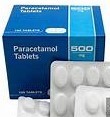 For example, the leaflet inside a box of paracetamol will highlight the chance of it
 causing pancreatitis or hepatitis without clarifying the extent to which this could really happen. They simply aren’t written from a consumer’s prospective, he emphasises, and so inevitably make people unnecessarily uneasy and anxious about consuming their doses, which is probably why fewer than 50% continue with the drugs their doctors have told them they need to take.
The National Library of Medicine, based in Bethseda, Maryland, USA, has similarly highlighted a German survey which found that a quarter of participants were so unnerved by the negative data that they stopped taking their medication altogether. This isn’t, however, just a European or American issue. The South African “MP Update” website is forthright in its criticism of a situation whereby patients are confronted with overly technical language, opaque acronyms, lengthy paragraphs, tiny font sizes and confusing statistics. Most people, it notes, when unwell don’t have the energy or focus to decipher the
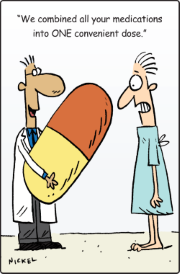 dense medical jargon. “It almost seems that the intention of these documents, written by pharmaceutical companies, is to obscure rather than clarify”.

One obvious solution, in the opinion of the Pharmaceutical Journal, is for PILs to be reformulated with better design and layout, as both are central to enabling the reader to find their way around, in addition to “electronic options” being considered. Simon Zedlewski, content manager for datapharm.com, is convinced that a “true digital approach” should now be adopted, not least because it would benefit the environment by removing the need for physical leaflets. Currently, he observes, all medicine packs contain a paper PIL, which means that there are over 100 billion of them in circulation globally every year, “equating to around 9 million trees or enough energy to fuel 50,000 homes annually”.
 On 10th January, Jade Williams, a contributor to the European
 Medical Journal (EMJ) revealed thatmajor changes are under way within the European Union (EU) to make PILs more accessible, sustainable and effcient in order to ensure that medicines are used correctly. It’s proposed that the transition to ePIs (electronic product information) will be fully operational within four years of the entry into force of the revised General Pharmaceutical Law. The aim is to eventually phase out paper leaflet completely.
 It’s not only PILs, however, that many people in the Britain find tedious and just not worth the effort.
 On 8th August, the BBC’s technical correspondents Michael Dempsey and Will Smale queried whether most consumers these days bother to look at the instruction manual when they purchase a new electronic device. The answer for one in five UK residents, they concluded, is a “resounding no” Casper Herzberg, CEO of the industrial software firm Aveva, told the BBC that he completely understands why many people promptly store them away in the kitchen drawer.
 This does, though, have consequences. On 13th January, the Daily Mail
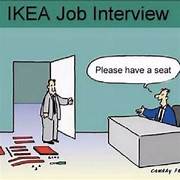 journalist Lucy Brimble reported that, almost half of the 2000 adults questioned in a UK poll don’t know how to use their home appliances. For 28%, their washing machine is the most baffling item, so 47% use the same programme every time and 21% struggle to understand the timer settings on theirovens. The descaling process on the coffee machine, the the vacuum cleaner’s filter cleaning system, the tumble dryer and the dishwasher are also the source of considerable stress. The fear is that misusing them will cause major damage and put them permanently out of action.
*** CLICK TO VIEW VIDEO OF PATIENT ATTEMPTING TO READ THE INFORMATION LEAFLET FOR HER PRESCRIBED MEDICINE:***