The Return Of Direct Booking: Consumers Defy The Online Agencies:

 “Brokers are sharks and you have to be always prepared for the worst”. The American entrepreneur, Ryan Serhant, clearly knew exactly what he was talking about when he made this comment: he’s the CEO of his own “vertically integrated mega property company”. Although he may have been referring more to investment intermediaries in global trading markets, his views will
  have resonated with anyone who feels they have been misled (deliberately or otherwise) by the third-party supplier they used for travel, car hire, entertainment or hospitality purposes.
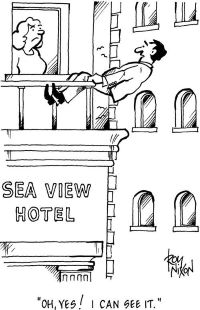
In two recent examples, a contributor to reddit.com was aggrieved that the “Sea View Room” she had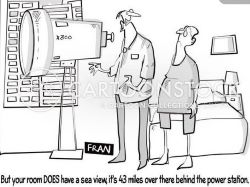 booked through hotels.com turned out to have frosted windows looking out on to a noisy street and in April, the Daily Mail’s deputy travel editor, Hayley Minn, highlighted the case of two girls whose anticipated picturesque vacation accommodation in Portugal, which they had reserved with loveholidays, was “actually positioned in front of two urban buildings” and they had to lean precariously over the balcony to get a glimpse of the sea.
Experiences such as these has inevitably led to doubts as to whether online travel agencies 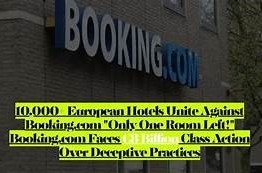 (“OTAs”), even the best-known ones such as Booking.com and Expedia, can really be trusted to provide the best deals. Indeed, an analysis published in February by “bookbetterdirect.com” comparing the prices of 300 hotels across 15
 countries concluded that 59% of the time, direct bookings were cheaper and in the case of Europe, the percentage was even higher (65%). “Stop wasting your time searching on the internet”, they proclaimed, “Skip the Middleman”. They also note that many hotels are now themselves “fighting back against OTA commissions ( 15%-30% per booking) that eat into their profits”.
 In its assessment of “Who’s Really Winning The Battle”, the Aiosell website amplifies on this by pointing out that hotels are increasingly concerned that
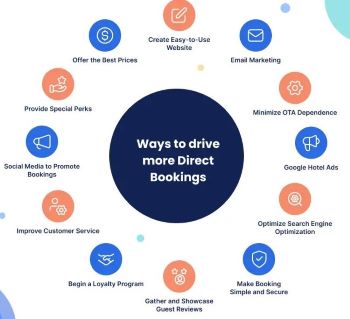 they no longer have full control over the information available about them, are having to charge more than they wish due to the amount they have to pay the
OTAs and that this arrangement inhibits the development of strong client relationships. Likewise, the advantage for guests bypassing intermediaries is that they can get access to exclusive offers,  loyalty programmes and a more personalised customer service. Furthermore, adds the pointsguy.com, revising travel dates or cancelling them altogether is much easier with an airline, hotel or car rental company themselves than with a third party, who might have more restrictive policies and are likely to exact an additional fee. The consumer protection organisation “Which” is especially insistent that online agencies should not
  employ tactics designed to pressure people into booking more
  quickly, for instance by giving a false impression of limited availability of the rooms at the hotel selected.
According to the Quartz Mountain holiday destinations guide, the travel intermediaries business market, which includes services such as price comparisons, restaurant reservations and cruise bookings, is expected to reach $899.7 million by 2033. A search on Google or Yahoo for a hotel in either the English south-coast city of Brighton or in Paris will produce almost identical results, with Booking.com invariably at the top of the page and Expedia, Airbnb, Trivago and Tripadvisor all also jostling for a presence. Data available from the Electroiq IQ science, technology and electronics platform has confirmed t
 hat Booking is indisputedly the most visited tourism website in the world, with more than a billion room nights reserved through it in 2024, 80 million days of car rentals facilitated and 50 million airline tickets sold. It has become, declares Electroiq IQ, the sector’s “mighty force”, acquiring the ownership of brands such as Priceline, Agoda, Kayak and OpenTable and
 obtaining more than three times the average monthly traffic of their close competitors, Tripadvisor and Airbnb.
However, as Nico Mensink, a correspondent for the Dutch digital newsletter Hotel VAK, reported on 10th September, over the past few years, Booking.com’s tactics have been under a “magnifying glass” from European regulators and competition authorities. Of  particular concern has been the “strangulation contract” whereby hotels undertook to offer the lowest online price guarantee through Booking and not undercut this on their own websites, thereby depriving themselves of the freedom to set their own rates. Although this practice was banned as from 2024 by
 Brussel’s Digital Markets Act (DNA), because, observes Mensink, Booking has established a dominant
 market position by being Google’s largest online advertiser, there’s no real alternative for smaller hotels despite the “excessive commissions” they are obliged to pay the company.
The travel trade of course is not the only commercial activity where great care should be taken when choosing an  intermediary. The Citizens Advice consumer expert, Jane Parsons, recommends only buying a ticket for a concert, a festival such as Glastonbury or a Premiership football match
 either from the event’s official seller or from the venue itself. Genuine sources will be members
  either of the Society of Ticket Agents and Retailers (STAR: eg: The Royal Albert Hall, Wembley Stadium, Ticketmaster) or the Association of Secondary Ticket Agents (ASTA: eg: Viagogo, Stubhub, Seatwave). In Parson’s opinion, if the deal being offered seems unrealistic, then avoid it altogether.