Where To Take a Vacation in 2026: The Attractions, Illusions & Risks:
 “I hate holidays and never want to go on one again. They are an absolute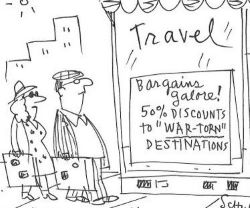
nightmare”. When the British journalist Ariane Sherine made this declaration in the Metro newspaper on November 6th, she admitted that she was
perplexed as to why so many of her compatriots “can’t wait to pay through the nose to get stressed in an airport and then fly huddled in a cramped  metal can for several tortuous hours before invariably arriving late at their destination. where they are fleeced by the taxi driver and accommodated in a bog-
standard hotel with terrible decor”. Yes, she adds, the weather in other countries might be better than in the UK, but it’s “quite nice here as well in the summer “, which is when (she contends) most people go abroad, often to where there are now dangerously high temperatures. Ruben Arribas, a contributor to
  the Gamin Traveler destination guide, agrees with Sherine that visiting new places, although often celebrated for its enriching experiences “is not without its downsides”: High costs, unrealistic and inflated expectations, overcrowding, journey fatigue and (increasingly) hostility from local communities. Is it truly worthwhile every time, he asks, or have we all just been sold an appealing delusion?
 However, as the Guardian’s consumer affairs correspondent, Sarah Marsh, noted on 3rd
 January, none of these concerns appear to have deterred the large numbers of Britain’s “winter-weary” population from already planning their “sunny breaks”. That date is known in the travel industry as “Sunshine Saturday” as it’s traditionally the busiest annual moment for bookings. Indeed, the Civil Aviation Authority (CAA), which also runs the Air Travel Organisers’ Licensing (ATOL) scheme which provides protection and reimbursement for customers if their tour operator goes out of business, has predicted that 4.5 million people – 5%
  (200,00) more than in 2025 – will this month confirm their holiday trip reservations for later this year.
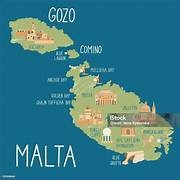
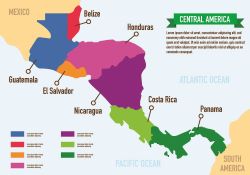
According to the Daily Mail’s Senior News Reporter, Elizabeth Haigh, there’s been a significant increase in online search traffic for Bermuda, Malta’s “quieter sister island”of Gozo, the Greek island of Crete as well as Sri Lanka and the Central American nation Costa Rica, the last two indicating a continuing shift in demand towards “long-haul” locations. Tenerife, nonetheless, observes Marsh, has reclaimed the top spot for 2026, while Egypt, Dubai, Malta and the Canary island of Fuerteventura have all climbed up the rankings.
 Sea, sun and sand, The Independent columnist, Natalie Wilson, emphasised on 13th January, are however not the only factors which need to be taken
 into consideration: Before leaving for the airport, you should check that your passport and travel insurance are still valid and that you’re going somewhere that the FCDO (Foreign, Commonwealth and Development Office) deems to be safe. While they accept that
 “only you can decide whether you should travel to a country or stay there”, they do maintain on their website a substantial and constantly updated list of the “ones to avoid” due to armed conflict, military coups, civil unrest, disease outbreaks or natural disasters. There are currently 12 nations classified by the FCDO’s as “definitely don’t go there”: Afghanistan, Belarus, Burkina Faso, Haiti, Iran, Mali, Niger,
 Russia,
South Sudan, Syria, Venezuela and Yemen. There are another 42 where the advice is not to travel to parts of that country (such as  within 10 km of the India-Pakistan border and Kashmir or to the Russian-controlled Transnistria area of Moldova) and a further 16 where only “essential travel” should be contemplated (for example, 5km from the Mexican-Guatemalan border and the Southern Highland provinces of Papua New Guinea).
The FCDO acknowledges that circumstances can change quickly and that they will remove advice against travelling somewhere as soon as the situation there improves. Natalie Wilson points out that anyone ignoring the FCDO’s recommendations is likely to have their travel insurance nullified 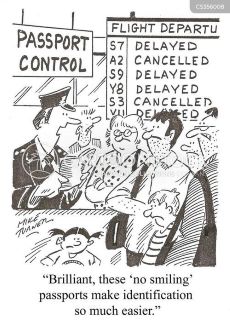 and they may not receive UK consular support if an emergency occurs.
In a survey conducted in the UK by the Forbes Advisor service, 54% of respondents disclosed they’ve sometimes gone abroad without first taking out travel insurance and 11% stated that they’ve never done so. The Avanti Travel Insurance company attributes this partly to the fact that it’s become much more expensive – mainly, they say, due to higher global medical fees and frequent travel disruptions arising from extreme weather conditions and strikes by airport staff, pilots and flight controllers resulting in delays and cancellations. The cost of travel insurance, say Avanti, varies according to your age, health condition, how long you’ll be away, destination and the value of the possessions you’re taking with you.
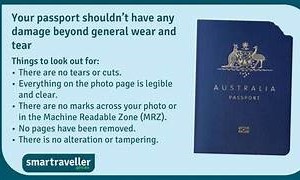 Meanwhile, wherever you’re going, make sure your passport is in good shape. If it’s damaged or torn in any way, warned the tourism correspondent Julia Brookes in the Sunday Times on January 4th, the border officials of many countries, among them Canada, Australia, the USA, Turkey, Vietnam and Indonesia, will refuse you entry.