Professionals Not Required: The Resurgence Of DIY In UK Households:
 “Start doing things you think you cannot do”. The main purpose of this “powerful
 exhortation” by Eleanor Roosevelt, the US First Lady from 1933 – 1945 (according to the Socratic Method website) was to encourage individuals to rise above their self-imposed limitations. It seems unlikely nonetheless that, during her twelve-year resídence in the White House, she needed to heed this advice herself by replacing an electrical socket or
 fixing the plumbing for one of the presidential sinks.
 This contrasts markedly with the situation currently faced by many households in Britain who, as the Sun journalist Anna McGovern pointed out on 5th February, are having to deal with broken domestic items themselves rather than pay someone else from outside to do it for them. Although saving money is clearly the biggest motivator, with 52% using their own tools to reduce costs, a survey conducted by the Gorilla Glue company, an American brand of polyurethane
 adhesives based in Sharonville, Ohio, has discovered that for 72%, achieving something they thought would be too difficult for them had engendered a sense of pride and 40% had also acquired new skills in the process. Thomas Sutton, the company’s UK Marketing Director, was quoted by the Metro newspaper on 6th February as applauding the fact that people are at least attempting to mend possessions such as toys, picture frames and
  even their vacuum cleaners. T
The Daily Star columnist, Oliver Lewis, the same day sounded a more cautionary note. Certain tasks, he emphasised, are generally regarded as exceptionally demanding, especially replacing roof tiles (65%), patching a leaking roof (62%), problems with guttering (51%) and changing a plug socket (35%) while one of the main deterrents is concern about making mistakes. The Britwealth property consultants are adamant that anyone with “Do-It-Yourself” (DIY) ambitions should first make a
 “brutally honest assessment” of their own capabilities and to be realistic about the time they have available. Apparently simple DIY projects, they observe, often take much longer than anticipated, particularly when unforeseen
  challenges occur.
Hannah Healey, senior researcher and writer for the Which? Consumer protection organisation, agrees. While some people, she notes, have no difficulty changing a washer on a tap, for others it can lead to a “DIY disaster”. Trying to plumb in an appliance (for example a washing machine), rewire a light-switch, replace a fuse for an oven, unblock drains, pipes or a toilet, among many other similar tasks, can cause a complete calamity if you don’t really know what you’re doing. Jobs that Healey considers most DIY beginners should be able to do include painting and decorating, taking draughtproofing measures, cleaning carpets and sofas, re-grouting tiles or resealing around a sink, bath or shower, putting up pictures or shelves and applying plaster where there has been minor damage.
Data provided by the DIY Statistics UK 2026 Report published on March 7th by Ben Dracup, the Search Engine Optimizing (SEO) Manager with Minty Digital, has 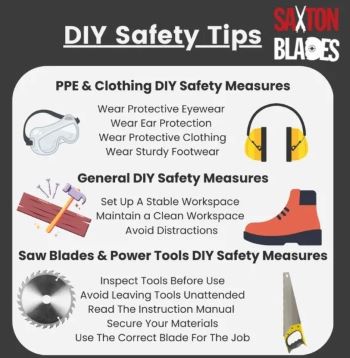 indicated that 68% of UK adults have tried some form of DIY over the past year, mainly for financial reasons and that only 25.2% of consumers employ professionals to carry out the work. Home owners aged 50-64 spend the most on home improvements at £52.10 per week, the 30-49 year-olds £44 pw and those 75 or over £33.10 pw. Almost 7 million of them plan to renovate their properties by 2027, with interior decorating being the most common DIY activity, 23% aiming to install a new kitchen, 21% to upgrade their bathroom and 21% to lay new flooring.
Although Dracup depicts the UK as a nation of D IY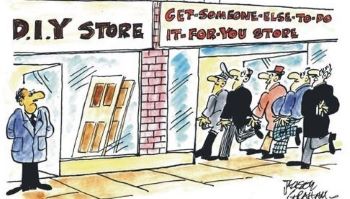 enthusiasts, he also highlights the fact that 30% of the country’s adults (approximately 15.9 million people) didn’t finish the DIY job (80% of them involving painting and decorating) they’d embarked on over the previous twelve months, mainly due to lost motivation (35%), not enough time (28%), they’d realised (24%) they lacked sufficient skills to complete what they’d
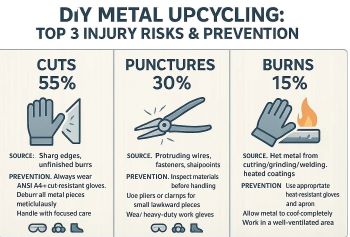
 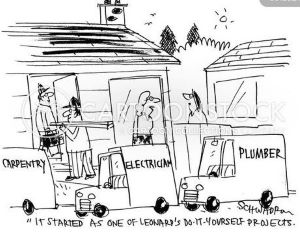 started or didn’t understand the instructions and 3.4 million couldn’t continue because they’d injured themselves, 31% from electric shocks and 19% by falling from a ladder.
In this category, 36% had sought medical attention, either by visiting their doctor (GP) or going to Accident & Emergency (A&E) at a hospital and 24% had been forced to take time off from their employment to recover. In the opinion of 85% of professional tradespeople, DIY videos online are responsible for a large proportion of their call-outs being to rectify damage caused by homeowners unrealistically inspired by social media platforms such as Instagram (24%), Facebook (23%), Pinterest (16%) and TikTok (8%).
 Dracup anticipates, on the basis of the latest available Mordor
 Intelligence projections, that the UK DIY and decorating industry will generate an estimated total revenue of £30.8 billion by 2030. This is clearly excellent news for the leading UK retailers of home improvement products, B&Q, Kingfisher, Wickes and the sofa sellers DFS, all of whom, as the Business Live contributor Mark Sweney
 observed on 29th December, have already benefited from the closure of their main rival, Homebase. in November 2024.