UK Festive Traditions: Taking Precedence Over Financial Caution:

Asking guests for a contribution to Christmas dinner is the ultimate breach of hospitality etiquette. But when the total cost of opening your hone for a full day of celebrations hits over £500, how much generosity can a single host realistically afford?” This view, expressed by Tommy Johnson, the e-commerce manager at the Homefire Fuel company and cited by the Daily Express journalist Paul Jeeves on 27th November, reflected the controversy that arose when Whitney Marie, a mother in Rotherham, South Yorkshire, revealed on TikTok that she’d be charging each family member £20 each to attend the “beautiful and amazing meal” she’d be preparing for them. Her elaborate spread, she explained on the social media platform, would include multiple meats, various vegetables and all the customary trimmings that would be expected for the occasion.

The online response, as the BritBrief website noted, was sharply divided. There was inevitably some criticism, but Whitney also received considerable support from others with similar economic pressures, highlighting the difficulties many UK households face in continuing to maintain “social norms” while simultaneously navigating the cost of living crisis. In fact, the Homefire analysis suggests that even £20 won’t be nearly enough and that hosts such as Whitney will be effectively subsidising every single guest by more than £50, covering everything from the turkey, napkins, crackers and wine down to the often-forgotten energy bill for the use of the oven, dishwasher and heating.


While we don’t believe you should stand at the door with a credit card machine (declares Johnson) we hope these figures will engender an honest conversation”. The supermarkets say they offer a far more economical solution. According to the NetVoucherCodes contributor, Elle Macsymons, on 20th November, Aldi claim they can provide a traditional Christmas dinner with enough food for 6-8 people for just £31.73, followed by Lidl (£33.22), Asda (£39.73), Morrisons (£41.88), Tesco (£52.13), Iceland (£52.20), Sainsburys (£60.39), Waitrose (£77.50) and M&S (£80.95).

Figures published by the Finders research organisation indicate that the total expenditure on gifts in Britain this Christmas will be £26.7 billion, a decrease of £1.9 billion (7%) compared to 2024, which does suggest that shoppers are being more frugal with their money.

In the Finders survey, 36% of respondents acknowledged they’ll probably be going out less, 34% will be buying fewer clothes and 27% “will skip a Christmas getaway” this year. Despite this, Charlotte Forbes-Rees, a retail analyst for the Agriculture & Horticulture Development Board (AHDB), predicted on 1st December (based on YouGov / AHDB data) that 80% of those questioned will nonetheless be organising gatherings of the same size or larger than in 2024 with six or more guests and that 68% are determined to do whatever is necessary to thoroughly enjoy the festive period. In other words, they are ready to “prioritise taste and tradition over budgetary constraints”.

As the New-York based blogger, Corine, has pointed out, there’s been a noticeable shift in seasonal shopping habits, not only due to Black Friday and Cyber Monday, but because online sales now account for over half of UK festive spending, which is when people are especially hunting for bargains. However, young workers in Britain, she observes, try not to accumulate excessive credit card debts that they’ll then struggle to clear in the new year and those in their 20’s and 30’s, for similar reasons, are more likely to avoid luxury items for friends and family and focus instead on smaller gestures such as handmade cards and gift vouchers.


So what will be on the menu for the main meal on 25th December (Christmas Day in the UK)? Dylan Difford, a data correspondent for YouGov, emphasised on 28th November that “turkey still rules the roost” for 57% of those around the table, though 24% will opt for chicken or beef, 15% for ham and 13% for vegan or vegetarian alternatives. Lamb (8%), Duck and Salmon (both 4%) and Goose (3%) are much further down the list.

According to a Statista Consumer Insight investigation highlighted by the Digital Phablet commentator Rebecca Fraser on 17th April, the UK is the world’s “sweet tooth capital”, where 52% of the population relishes candies and chocolates, thereby providing a robust market for confectionery products. There are similar but slightly lower trends in several other European countries, notably Germany (51%), Italy (43%) and France (39%), but it explains why figgy or sticky toffee puddings, turkish delight, yule logs, cheesecake, stollen, trifle, gingerbread and mince pies, are all among Britain’s top festive desserts, often accompanied by custard. However, the AHDB / YouGov report shows that over a third of UK households also plan to eat more savoury items during the holiday period than they normally would, especially cheese, with Cheddar, Brie and Stilton being the dominant brands.


Filed under: Society | Posted on December 15th, 2025 by Colin D Gordon | No Comments »

Colgate v Sensodyne: The Evolution Of Oral Hygiene In The UK:

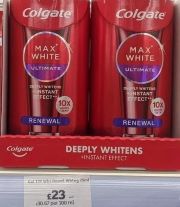
Toothpaste isn’t exactly a high-tech industry. It’s just fluoride with an abrasive, some detergent and flavourings. Cheaper brands are just as good as the expensive ones”. This was the indignant reaction of one shopper in Birmingham, quoted by the Daily Mirror’s regional content editor Howard Lloyd on 17th November ,who denounced being asked to pay £23 for a tube of Colgate Max White Ultimate at a local supermarket as “blatant profiteering”. Another one, a nurse, described £20 for Oral-B whitening as “extortionate”, declaring that a maximum of £2.50 was her limit and that she couldn’t see what was so special about the product that it should cost that amount.

The “Which” consumer protection organisation analyst Anna Studman, has likewise queried whether “splashing out”so much on a “premium paste” is worthwhile when standard versions are available for far less. As she observed, although companies in this sector are constantly bringing out new, higher-priced, formulas that make big promises for our dental hygiene, the overall benefits may only be marginal.

All this coincides with growing concern regarding many of the ingredients in popular, widely-used cosmetics. On 17th October, for example, the Guardian columnist, Julia Kollewe, highlighted the legal action instituted by thousands of people against the US pharmaceutical company, Johnson & Johnson, because (they claim) it has knowingly sold baby powder containing asbestos-contaminated talcum in the UK. The previous Sunday, her colleague Linda Geddes had questioned the safety of some of the gel polishes used in nail bars around the country, especially the chemical TPO (Trimethylbenzoyl dipenylphosphine oxide) and Hema, which can apparently cause rashes, itching, blisters and changes in sensations in the fingertips.

Much to their displeasure, several of the leading toothpaste companies have this year become the focus of similar attention and responded (according to Oskar Thorvaldsson, owner and CEO of Nutritional Supplement Manufacturers Inc) with “cease-and-desist” letters from their lawyers. In particular, they will not have liked the scathing captions featured in an article by the News Target contributor Cassie B on May 14th, among them “Brushing With Poison” and “A Toxic Cocktail In Your Bathroom” which revealed the “staggering results” of an investigation conducted by the independent US testing organisation “Lead Safe Mama”. Their analysis of 51 toothpastes, many of them manufactured by household names such as Crest, Colgate and Sensodyne, found that 90% include lead, 65% arsenic, 47% mercury and that 35% are contaminated with cadium, hence (despite their alleged denials and refusal so far to issue recalls) apparently exceed recommended World Health Organisation (WHO) and Environmental Protection Agency (EPA) levels.

As “Which?” has pointed out, toothpaste is something we use every day, yet few people give much thought to the contents. Among the ingredients listed in small print on the reverse side of a tube of Colgate “Maximum Cavity Protection Calcium Boost”, for instance, are Sodium Lauryl Sulfate, Phosphate Dihydrate and Anthole, substances that, along with artificial dyes, sweeteners and chemicals such as triclosan can (states “Which?”) irritate the mouth, disrupt hormones or cause allergic reactions. Their “expert verdict” on two of the brands they assessed was that Oral-B’s assertion that it “soothes gums” is misleading and that Sensodyne’s claims about its “deep repair” product, though it may help with sensitivity, is mainly marketing terminology unsupported by clinical evidence.

The Global Data and Industry Today websites have noted that the UK toothpaste market’s steady growth can be attributed to the increasing demand for natural formulations. It’s value is forecast to reach more than £1050 million by 2035, which is why competitors such as Colgate-Palmolive, Unilever, Procter & Gamble and Haleon (the makers of Sensodyne, Corsodyl and Aquafresh) are now introducing fluoride-free and herbal variants.

This coincides with what the global environmental action group WRAP has hailed as a “monumental development” during this year’s Recycle Week (22 – 28 September). From now on, the 252 million tubes of toothpaste sold annually in the UK will be made of high-density polyethylene instead of aluminium and plastic, which means they will all be technically 100% recyclable. WRAP is aiming to extend their campaign to the wide range of other household items such as shampoo, aftershave and perfume bottles, aerosols and yoghurt pots that eventually end up in landfills instead of being recycled.

WRAP estimates that millions of us brush our teeth twice a day. Dr Asha Ramesh, a medical contributor to Dentaly.org, recommends that this should take at least two to three minutes as any less doesn’t provide enough time to clean every surface of every tooth properly. However, data provided by the dental accountants Hive Business, cited by Dr Ramesh, indicates that 70% of people who only brush once a day do so in the morning rather than the evening and that 39% of 25 to 43-year-olds in the UK admit to brushing less than once a week.

Meanwhile, according to Nina Norman, the editor of Paminy.com, one of the most common arguments between couples is whether the tube should be squeezed from the bottom, the middle or top. The solution, she suggests, is for them to use a toothpaste dispenser or for each to have their own separate tube.

Filed under: Healthcare | Posted on December 6th, 2025 by Colin D Gordon | No Comments »

The Return Of Direct Booking: Consumers Defy The Online Agencies:

Brokers are sharks and you have to be always prepared for the worst”. The American entrepreneur, Ryan Serhant, clearly knew exactly what he was talking about when he made this comment: he’s the CEO of his own “vertically integrated mega property company”. Although he may have been referring more to investment intermediaries in global trading markets, his views will have resonated with anyone who feels they have been misled (deliberately or otherwise) by the third-party supplier they used for travel, car hire, entertainment or hospitality purposes.

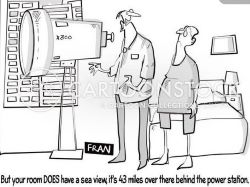
In two recent examples, a contributor to reddit.com was aggrieved that the “Sea View Room” she had booked through hotels.com turned out to have frosted windows looking out on to a noisy street and in April, the Daily Mail’s deputy travel editor, Hayley Minn, highlighted the case of two girls whose anticipated picturesque vacation accommodation in Portugal, which they had reserved with loveholidays, was “actually positioned in front of two urban buildings” and they had to lean precariously over the balcony to get a glimpse of the sea.

Experiences such as these has inevitably led to doubts as to whether online travel agencies (“OTAs”), even the best-known ones such as Booking.com and Expedia, can really be trusted to provide the best deals. Indeed, an analysis published in February by “bookbetterdirect.com” comparing the prices of 300 hotels across 15 countries concluded that 59% of the time, direct bookings were cheaper and in the case of Europe, the percentage was even higher (65%). “Stop wasting your time searching on the internet”, they proclaimed, “Skip the Middleman”. They also note that many hotels are now themselves “fighting back against OTA commissions ( 15%-30% per booking) that eat into their profits”.

In its assessment of “Who’s Really Winning The Battle”, the Aiosell website amplifies on this by pointing out that hotels are increasingly concerned that they no longer have full control over the information available about them, are having to charge more than they wish due to the amount they have to pay the


OTAs and that this arrangement inhibits the development of strong client relationships. Likewise, the advantage for guests bypassing intermediaries is that they can get access to exclusive offers, loyalty programmes and a more personalised customer service. Furthermore, adds the pointsguy.com, revising travel dates or cancelling them altogether is much easier with an airline, hotel or car rental company themselves than with a third party, who might have more restrictive policies and are likely to exact an additional fee. The consumer protection organisation “Which” is especially insistent that online agencies should not employ tactics designed to pressure people into booking more quickly, for instance by giving a false impression of limited availability of the rooms at the hotel selected.

According to the Quartz Mountain holiday destinations guide, the travel intermediaries business market, which includes services such as price comparisons, restaurant reservations and cruise bookings, is expected to reach $899.7 million by 2033. A search on Google or Yahoo for a hotel in either the English south-coast city of Brighton or in Paris will produce almost identical results, with Booking.com invariably at the top of the page and Expedia, Airbnb, Trivago and Tripadvisor all also jostling for a presence. Data available from the Electroiq IQ science, technology and electronics platform has confirmed that Booking is indisputedly the most visited tourism website in the world, with more than a billion room nights reserved through it in 2024, 80 million days of car rentals facilitated and 50 million airline tickets sold. It has become, declares Electroiq IQ, the sector’s “mighty force”, acquiring the ownership of brands such as Priceline, Agoda, Kayak and OpenTable and obtaining more than three times the average monthly traffic of their close competitors, Tripadvisor and Airbnb.

However, as Nico Mensink, a correspondent for the Dutch digital newsletter Hotel VAK, reported on 10th September, over the past few years, Booking.com’s tactics have been under a “magnifying glass” from European regulators and competition authorities. Of particular concern has been the “strangulation contract” whereby hotels undertook to offer the lowest online price guarantee through Booking and not undercut this on their own websites, thereby depriving themselves of the freedom to set their own rates. Although this practice was banned as from 2024 by Brussel’s Digital Markets Act (DNA), because, observes Mensink, Booking has established a dominant market position by being Google’s largest online advertiser, there’s no real alternative for smaller hotels despite the “excessive commissions” they are obliged to pay the company.

The travel trade of course is not the only commercial activity where great care should be taken when choosing an intermediary. The Citizens Advice consumer expert, Jane Parsons, recommends only buying a ticket for a concert, a festival such as Glastonbury or a Premiership football match either from the event’s official seller or from the venue itself. Genuine sources will be members either of the Society of Ticket Agents and Retailers (STAR: eg: The Royal Albert Hall, Wembley Stadium, Ticketmaster) or the Association of Secondary Ticket Agents (ASTA: eg: Viagogo, Stubhub, Seatwave). In Parson’s opinion, if the deal being offered seems unrealistic, then avoid it altogether.

Filed under: Travel | Posted on November 6th, 2025 by Colin D Gordon | No Comments »

The Future Of British Fashion: New Strategies For Challenging Times:

We know you love fashion: That’s Why You’re Here. Right?” The media release from the British Fashion Council (BFC) prior to the latest London Fashion Week (18th – 22nd September) was as always extremely exuberant and forward-looking. “With a packed schedule (it proclaimed) we’ll be celebrating Britain’s bold voice through designers who have helped shape the world stage while also welcoming new talent to write the next exciting chapter”.

Veteran journalists reporting on the event were, nonetheless, acutely aware that, despite the hyperbole, the UK sector faces a battle to maintain its global status. Although the Guardian’s fashion editor, Jess Cartner-Morley, highlighted on 20th September the fact that the industry contributes £68 billion to the country’s economy and supports more than one million jobs, she also quoted the BFC’s new CEO, Laura Weir, as acknowledging the “herculean” task posed by the repercussions from Brexit, Covid, the cost of living and the rise of Milan and Paris as “luxury superpowers that have sucked the lifeblood from the catwalks of London and New York”.

Despite the government pledge in June that the DCMS (Department of Culture, Media & Sport) will more than double it’s support for the UK’s creative industries, Weir has been told that there’s little money available, so is focusing on luring the famous brands back to London and looking beyond the capital for the next generation of British design talent. This correlates with the observation by the Sunday Times Style magazine editor, Laura Atkinson, in it’s 14th September edition, that “the north” is also having a major influence, thanks to emerging designers such as the Sunderland-born Louise Trotter (Bottega Veneta’s new creative director) and Liverpool’s Steven Stokey-Daley.

It’s not just the traditional catwalks, though, that are having to cope with the changed economic environment. As the Guardian’s business correspondent, Sarah Butler, pointed out on 5th

photo: Umberto Fratini / Gorunway.com

September, fast-fashion retailers such as Asos and Boohoo are now facing much sharper competition from Zara, Vinted, Next and especially from the Chinese company Shein, due to its “mastery of social media” and low prices. Shoppers have less to spend, notes Butler, so are giving more priority to holidays, music festivals, phone bills and streaming services instead of fashion items.

However, there were plenty of positive aspects to LFW SS26. Cartner-Morley described September as a “powerful month for fashion, a sunrise for new trends, high-noon for shopping and the peak season for glossy magazines”. She also hailed the fact that, unlike Milan and Paris, which are both dominated by male directors, LFW is a “matriarchy” where the “headline acts” were all women: Simone Rocha, Emilia Wickstead, Rosanda Ilincic and Edeline Lee.

Furthermore, the six-day event featured a wide range of eye-catching and often spectacular Shows, prominent among them Apujan (Taiwan) at 8 Northumberland Avenue, Pearl Academy (India), Art Hearts Fashion and Vinz World (all at St John’s Church, Hyde Park Crescent), Fashion Scout’s “One’s To Watch” at the Protein Studios in Shoreditch, the Prophetik Runway at the Tower of London, UDGN’s “Cultural Threads” SS26 at Ladbroke Hall and the Gee Gee Collection at the Conduit Club in CoventGarden.

The catwalks of course can’t take place without the models, which is why agencies such as Volkova and Jimmy Choo were casting around for suitable candidates during the months preceding LFW SS26. . Any girls presenting themselves forinterview with Volkova had to be at least 16 years old and 173 cm or more tall, with “natural makeup, straight hair.leggings and a T-shirt (preferably black, without patterns) or other clothes that emphasised their figure”. The minimum age for boys was 18, with a height of at least 185 cm. The Jimmy Choo Academy’s emphasis was on aspiring models being “comfortable with runway and editorial photoshoots, hence confident and expressive with a strong presence”.

The main fashion news prior to LFW SS26 was that the British-American media executive Anna Wintour will be stepping down as editor-in-chief at American Vogue, a position she’s occupied since 1988, though she’ll remain as the editorial director for the magazine and its 28 other editions around the globe. This in turn has focused attention on the announcement by the Disney Company that a sequel to the 2006 film “The Devil Wears Prada”will be released in cinemas on Friday 1st May 2026. One of the most enticing aspects of this, according to the BBC’s entertainment reporter, Steven McIntosh, on 2nd July is that Meryl Streep will reprise her role as the “wicked fashion editor Miranda Priestley”, whose character has generally been perceived as being based on Wintour, who herself has recently acknowledged the similarities.

Whether Anne Hathaway will appear in “Prada Part II” is apparently still uncertain, but her performance in the original highlighted the extent to which fashion magazine editors are dependent on their assistants. They’re the ones, declared the Sunday Times columnist Emma McCarthy on 14th September, who are having to keep up with the latest trends and so will know what will be in style next season. They’re also likely to be much better dressed than their boss.

Filed under: Media, Society | Posted on October 3rd, 2025 by Colin D Gordon | No Comments »

Tattoo Trends In The Modern Era: Where Visible Ones Are Still Prohibited:

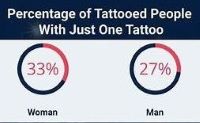
I promise you that the time will come, if you have tattoos, you will regret your actions. They cannot be washed off. They are permanent . Only by an expensive and painful experience can they be removed”. This disapproving opinion expressed by George B Hinckley, a religious leader and author from Salt Lake City, Utah, however, is clearly not shared by a large proportion of his compatriots, 32% of whom, asTattoospots.com note in their 2025 survey, have at least one. Moreover, although modifying or getting rid of them altogether can still cost around $463 per session in the USA and £300 in the UK, the laser procedures involved are becoming more efficient and cheaper.

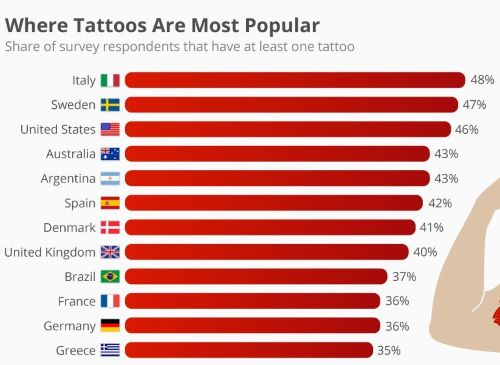
As Tattoospots emphasise, the industry has become a prominent feature of the fashion and entertainment sectors, is projected to generate $4.83 billion worldwide by 2032 and consists of three segments, temporary, permanent (the most popular) and cosmetic (such as eyebrow and eyeliner enhancements). The market, however, is dominated not by the US but by Európe where, as thismakestattoo.com notes, Italy is recognised as the most tattooed country globally, with 48% of the population having at least one, followed by Sweden (47%), the USA (46%), Australia and Argentina (43%), Spain (42%), Denmark (41%) and the UK (40%).

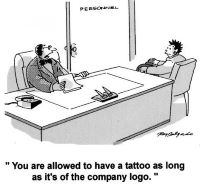
A YouGov study, cited by the organisation’s data journalist, Isabelle Kirk, has indicated that two-thirds (64%) of people in Britain don’t consider visible tattoos to be unprofessional, for instance on police officers or teachers, except if they are on their face or neck. Indeed, 42% don’t think teachers should have any visible tattoos at all, though 75% find it perfectly acceptable for mass-market retail staff, budget airline employees and firefighters to do so, which is perhaps why Virgin Atlantic became the first UK airline to allow its cabin crews to display them. The Company Data website estimates that there are 3,371 tattoo studios in the UK, the largest number being in London (289), Birmingham (208) and Manchester (157), though Blackpool has been designated by The Mirror newspaper as England’s “tattoo capital”.

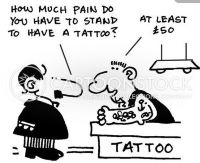
The most popular simple design in the UK is apparently an angel or a bee, whereas in the USA it’s the butterfly. The best locations on the body are said to be the shoulder, upper arm,the back (top & centre) behind the neck, the upper rib cage, the inner forearm, the upper thighs and the calves, because that’s where they “age well”. The Fleetwood Tattoo Co. in Essex emphasise that their prices vary according to the intricacy of the work involved as well as the skill and time required. For a small tattoo (1-3 inches), they charge £50-£150, a medium one (4-6 inches) £150 – £400 and a large one (such as full sleeves or backs) £500 – £2000 or more associated with it.

According to research conducted by “Tattoo Pathway” in 16 countries, 47% of people questioned (61% of whom were under the age of 25) have experienced tattoo regret at some stage, 33% immediately after getting it done, 56% within a few weeks and 72% within the first year. The main reasons are because they feel differently about its meaning, are not happy about where it was put on their body, how it looks technically and it’s not what they expected. A contributing factor, suggests Tattoosafe.org.uk, could be that “21% of customers are intoxicated whilst being tattooed”.

Tattooed British Tourist Refused Entry To Dubai: June 2025

Some nations have very strict policies regarding tattoos, which is why travel.com advises “well-inked” tourists to check first whether this could result in their visa application being rejected. Iran, Turkey and North Korea prohibit them entirely, while Sri Lanka, Thailand, Vietnam, Japan and even Denmark all have restrictions on their visibility. On 22nd June, the Metro correspondent,Ryan Prosser, reported that a British passport-holder, Jordan Howman, was “devastated” after being refused entry to Dubai because of his face tattoos.

Filed under: Healthcare, Society | Posted on September 16th, 2025 by Colin D Gordon | No Comments »

Ear Care: The Phenomenal Growth Of The Global Hearing Aid Market:

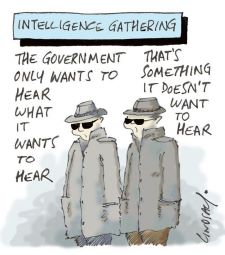
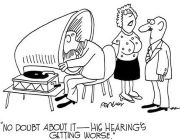
People only hear what they want to hear”. When the Brazilian songwriter and novelist, Paul Coelho, made this remark, the implication was that, for most of us, if we don’t like or agree with what the other person is saying, we’ll stop listening to them. The Boots pharmaceutical chain, by contrast, offers a rather more sympathetic interpretation. “Selective hearing”, they suggest on their website. though it may appear to be a sign of disrespect, is often just a defence mechanism to protect our brain from too many auditory stimuli, enabling us to block out sounds, noise or speech that we deem less important at that moment.

However, Boots then add, if you suspect that your symptoms may indicate a hearing loss problem, you should get this verified by a professional. This of course is one of the services they provide, firstly as an initial 15-minute test, then a much longer one of 75 minutes if they consider you might need a hearing aid. The average cost of one of their devices, according to the “Which” consumer protection organisation, is around £2,914.

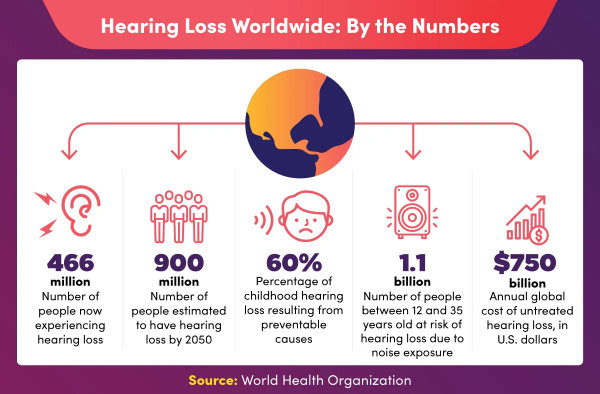
Statistics cited by the editor of Electro IQ, Rohan Jambhale, show that the global hearing aids market will increase in size from $15.11billion this year to $29.58 billion by 2032, a compound annual growth rate (CAGR) of 10.19%. This correlates with the prediction that by 2030 there will be 509 million people around the world with hearing loss and 711 million by the end of 2050. The worst sufferers are in India (100 million), China (96 million), Indonesia (18.5 milllion), the USA (15 million), Pakistan (14.5 million) and Brazil (13 million).

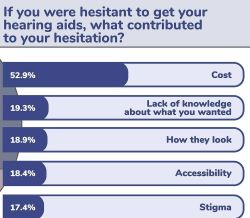
According to hearingaid.org.uk, figures available from the national hearing charity RNID, reveal that approximately 18 million people in Britain are affected by this impairment, especially 50% of the over-50s and 80% of the over-70s. Despite this, only about two million individuals in the country utilize hearing aids, mainly due to the stigma associated with them, lack of information about the range of options and the perception that they are ineffective and / or too expensive.

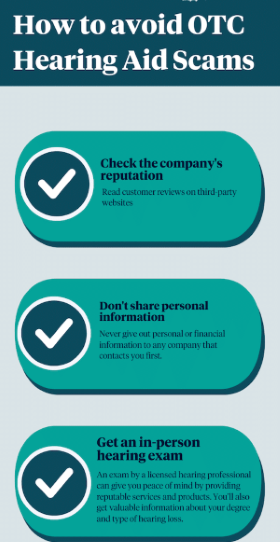
On 8th July, Joanna Pearl, a health researcher for “Which”, following a recent survey conducted by the organisation, published a list of the prices charged for a pair of hearing aids by some of the other UK retailers: Hidden Hearing (£3,720), Bayfields (£3,353), Amplifon (£2,850), Specsavers (£2,143). Hidden Hearing are currently promoting a model which is neither “in nor behind” the ear, but is “discreetly attached to the arm of your glasses” (if you wear them). Pearl emphasises that “price isn’t everything” and that it’s equally important to ensure that you receive “good aftercare so the aids are adjusted well for you”. Furthermore, thoroughly research the alternatives before buying one, don’t be pushed into changing it after just one year (they have a three-to-five-year life expectancy) and check whether there’s a warranty to cover repairs or replacing it if it gets lost.

As the consultant ear surgeon at Thornbury Hospital, Sheffield, Wale Olarinde, noted on 4th February, the most common cause of hearing loss is “Presbyacusis”, which afflicts mainly older adults. There are, though, he declares, other significant factors, such as working in noisy environments (construction, factories, the music industry), frequent exposure to loud concerts, nightclubs or sporting events) and prolonged use of headphones at high volumes.

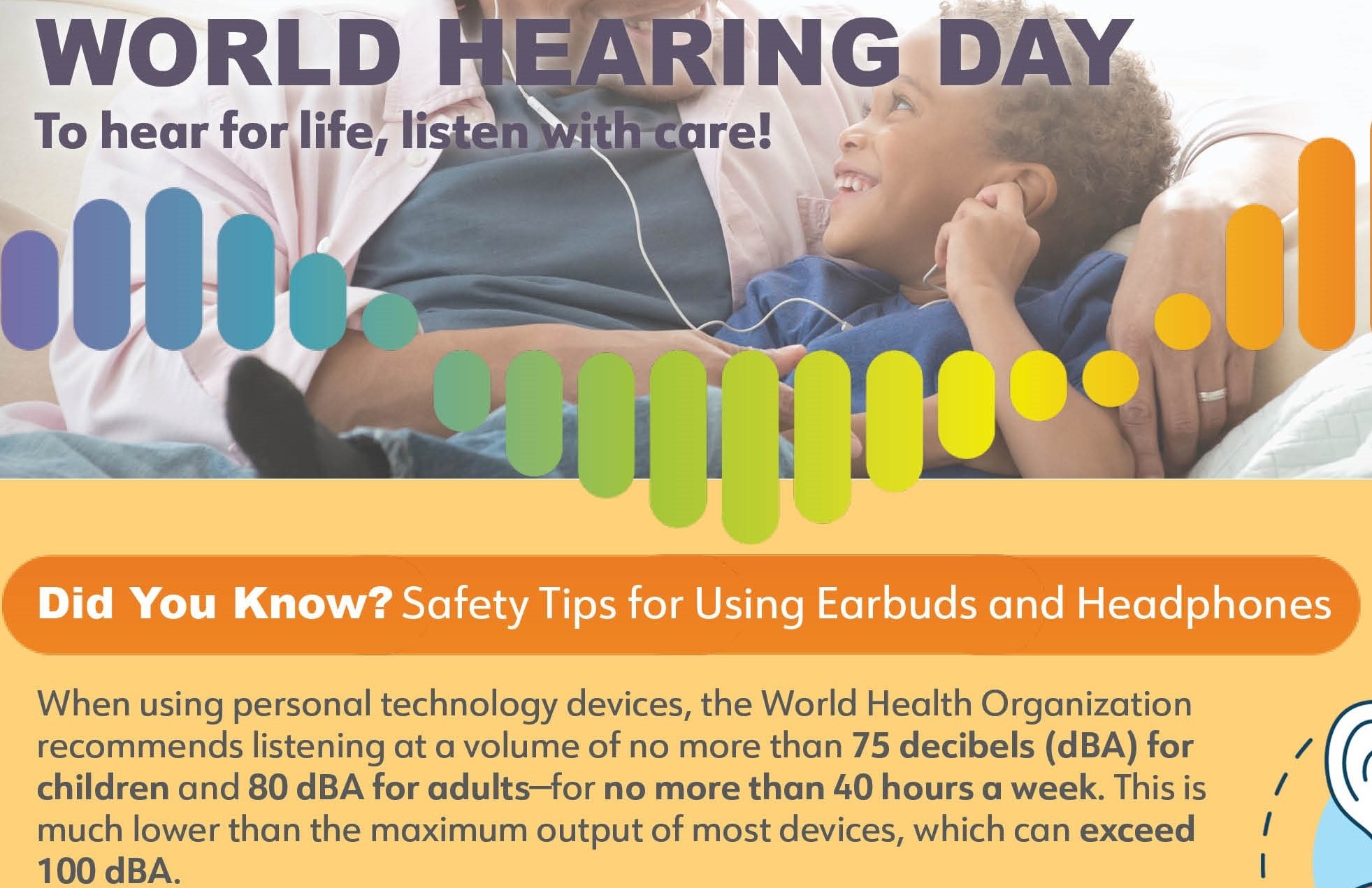
This last issue has become the focus of considerable debate, mainly because, as the Lebara correspondent, Kaushal Vijay, observed on November 27th, mobile phones have become such an integral part of our daily lives for both communication and entertainment. In 2024, the World Health Organisation (WHO) warned that more than one billion people worldwide are at risk from “unsafe listening”.

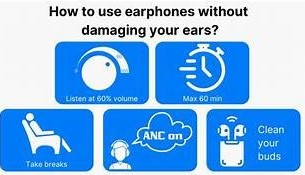
Hence, notes “Which?”, the National Health Service (NHS) advises listening with no more than 60% of the maximum volume on the device and not to use earphones or headphones continuously for more than an hour at a time, taking a break of at least five minutes every hour. Dr Lorenzo Picinali, an audio design expert at Imperial College London, considers that even 60% could already be too much.

Any ear discomfort caused by the electomagnetic radiation emanating from your phone can be considerably reduced, points out “mobiletechaddicts.com” by not holding it too close toyour head, but preferably at a distance of 30-40 centimetres. They recommend instead taking and making calls with the “speaker” mode or using a “hands-free” device, though acknowledge this can be impracticable in public spaces or on the underground. “Which” advocates acquiring headphones with good sound clarity and secure acoustic seals around the ears, so that way you won’t have to raise the volume to high to listen to music.

Calculations by the “finder.com” contributors Matthew Boyle and Sophie Barber, issued on July 4th, indicate that almost 99% of UK residents aged 16-54 currently own a smartphone and 82% of the over 65’s. Of these, 48% have an Apple phone and 51.5% an Android one, their monthly mobile data usage is approximately 9.9GB, they spend an average of 3 hours and 21 minutes on their device each day, and 93% can now access either a 4G or 5G network.

Filed under: Healthcare, Society | Posted on August 22nd, 2025 by Colin D Gordon | No Comments »

Unwanted Postal Deliveries: The Hidden Costs Of “Free” Gifts:

You don’t need a degree in psychology to understand that we humans adore getting something for nothing”. When the Slovak writer, Frantisek Markovic, made this observation on the Forbes global media company’s website, he also pointed out that companies, especially the major international ones, are well aware of this. That’s why, in their quest for ever-higher profits and expanding their businesses, part of their marketing strategy is to offer “freebies” to attract and then ensnare new customers.This does, however, notes Markovic, involve “invisible price structures” that mean someone else somewhere will eventually have to pay for these goods.

The “ultra-fast fashion” online Chinese retailer, Shein, whose headquarters are now based in Singapore has, for example, been accused by the European Union of indulging in practices which mislead consumers and are in breach of EU law. Among the alleged infringements, as the Retail Insight Network observed on May 27, are presenting false discounts, employing pressure selling tactics, using deceptive product labels and concealing their contact details. Shein were ordered to respect EU rules and trading standards or face heavy penalties. Since then, nonetheless, as the Euronews correspondent, Estelle Nilsson-Julien, reported on 4th July, France’s Directorate for Competition, Consumer Affairs and Fraud Prevention (DGCCRF) has fined Shein 40 million euros for deceptively claiming price reductions (none at all for 57% of their products, marginally less for 19% and an actual increase for 11%).

In the UK, the Labour Government is proposing to review the “de minimis” arrangement whereby small parcels worth less than £135 from Chinese e-commerce giants such as Shein,Temu, Alibaba and the TikTok Shop, as well as from Amazon, can enter the country without incurring import taxes. According to Theo Paphitis, the owner of Rymans and Robert Dyas, cited by the BBC News correspondent Faarea Masud on 24th April, the competition from this influx of cheap goods is having a devastating impact on the British retail sector.
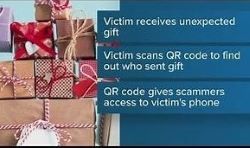
Exactly what then happens to all these parcels once they’re in Britain is of increasing concern to consumer protection organisations such as “Which?” and “Action Fraud”. Many of them, it seems, are being dispatched without charge to homes across the country even though they haven’t been ordered by any of the residents. “Which?” has calculated that more than one million households in the UK have been the victims of what has become known as a “brushing scam”. As the “watchyourpocket” website emphasised on January 17th, although the concept of receiving free items may seem harmless or even lucky, the scheme is not at all innocent. On the contrary, they say, it’s part of a much larger fraud operation designed to steal sensitive information and exploit unsuspecting victims.

Which?” statistics indicate that 63% of recipients questioned kept the product, 18% threw it away and 16% gave it away to a friend or family member. Although the merchandise delivered might appear to have come from organisations such as Shein or Amazon, in fact it’s more likely to be from a third-party seller using the names and addresses they’ve improperly obtained to post fake, positive reviews online of the fictitious purchases so they can boost their ratings, look like a very successful legitimate enterprise and so generate real sales. “Which” highlights the fact that the scammers are conscious that Amazon’s ranking system gives priority to products with ostensible high transaction volumes and glowing (albeit invented) comments. Hence, it’s essential for them to have a presence on the first two pages of the relevant section of the Amazon platform as potential purchasers rarely search any further.

Amazon say anyone receiving an unsolicited package with their company logo on it should contact their customer service immediately. With Shein, that’s more difficult as they appear to have reduced their functioning email addresses to just one, support@shein.com. Meanwhile, Royal Mail takes the view that there’s nothing they can do to stop the packages arriving, even if it’s on an almost daily basis. Their role and duty, they insist, is to consign them to the address specified as they’re not in a position to judge whether they’ve been genuinely ordered by the person living there.

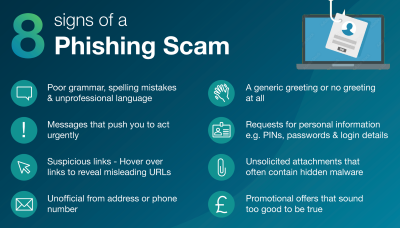
If you’ve been targeted in this way, it’s crucial (declares“watchyourpocket) to take immediate protective action. Never, it advises, scan the QR code on the package as this could then lead to a “phishing” site designed to steal your bank account, credit card and identity data as well as installing malicious software on the device you’ve used. Change your main. passwords in case they might have been compromised. When there’s a brand name on the package (such as Amazon or e-Bay) report the incident to them if there’s a contact link available.

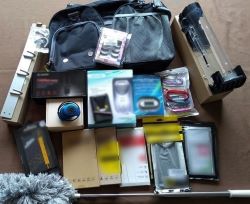
Don’t open it, but just write “Return To Sender” on it in red ink and put it back in the nearest post box. It can still take time to stop them coming. In the case of Teresa Martin, a retired teacher from Swindon in Staffordshire, it was seven months and 50 parcels, even though she notified Amazon after the first one arrived. There was nothing useful in them, just items such as false eyelashes, a bath mat, watch straps, food tongs, a face mask and an electronic soap dispenser. Neither she nor Amazon were ever able to find out who had sent them.

Filed under: Society | Posted on August 5th, 2025 by Colin D Gordon | No Comments »

“There’s No Place Like Home”: Except For Those Who Don’t Have One:

What’s the nicest word in any language?” For the american writer and journalist, Laura Ingalls Wilder, best known for her children’s books, there’s just one answer: “Home”. The British actor, Frank Dillane, who’s starred in, among others, the Harry Potter film “The Half-Blood Prince”, agrees. Not having somewhere safe and secure to live, he’s declared, is like being in a post-apocalyptic world and banished to the outskirts of society”.

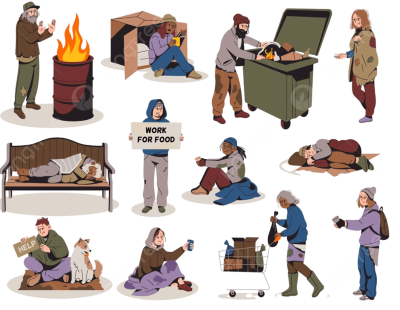
Statistics made available by the House of Commons library on 7th March, indicate this was precisely the situation for 4,667 people in England in the autumn of 2024, a 20% increase on the numbers “sleeping rough” in 2023 and 164% more than those doing so in 2010 Of these, 28% were in London or the south of the country, 83% male, 63% UK nationals and 16% from the European Union.

This isn’t, though, just an issue in Britain. The Euronews correspondent, Paul Hackett, has pointed out that a recent report by FEANTSA (the European Federation Of National Organisations working with the homeless) estimates there are currently at least 900,000 subsisting nightly on the streets across the EU, a population comparable to a city like Marseille or Turin, representing an increase of 40% since 2023. The official definition for anyone in these circumstances varies, depending on the country. In France, it’s applied to the estimated 333,000 individuals (60% men, 40% women) who spent the previous night in a place not intended for habitation, such as a pavement, tent, car, park or wood, a place of public transport or emergency accommodation.

In Greece, according to the OECD (Organisation For Economic Co-operation & Development), it covers any resident legally in the country (so not migrants) who has insecure access (or none) to adequate housing with basic services of water and electricity. A rather harsher approach has been adopted by Hungary’s Prime Minister, Viktor Orban and his ruling Fidesz Party. Since 2018, homelessness there has been designated as an offence, so the 1,500 people calculated to be sleeping on the streets of Budapest every night are considered to be criminals.

This has also, in theory, been the official position in Great Britain for the past 200 years. The initial purpose of the Vagrancy Act 1824 was to stop ex-serviceman who had become homeless after the Napoleonic Wars from begging in public for alms or “charitable contributions”.It was also aimed at punishing “every person wandering around and lodging in a barn, outhouse, a deserted or unoccupied building, in the open air, under a tent, or in a cart or waggon”. The earlier 1547 version had decreed that any able-bodied person not in employment could be branded with a “V” for “vagrant”.

Although, as The Conversation UK website has observed, parts of the Act, such as forbidding “fortune telling”, have been repealed over the years, the police in England and Wales still have the power to impose £1000 fines on anyone caught begging or sleeping out. The “Big Issue” magazine has emphasised that neither this method nor locking up homeless people solves the root causes of why they are on the street in the first place. The previous Conservative Government’s proposed replacement legislation, which nevertheless would controversially have allowed homeless people to be arrested or fined for exuding “excessive odour”, failed to get through Parliament before the General Election on 4th July 2024.

Angela Rayner, Labour’s Deputy Prime Minister and Housing Minister, has now confirmed, as reported by the BBC’s political correspondent, Joshua Nevett on 10th June, that the government plans to abolish the Vagrancy Act in the spring of 2026. What Rayner has described as “a cruel and outdated law” will be replaced by new legislation targeting organised begging by gangs and trespassing with the intention of committing a crime as well as making an extra £233 million available to provide alternatives to rough sleeping. Matt Downie, the CEO of the national homeless charity “Crisis” has hailed the proposal as one that”will change lives and prevent thousands of people from being pushed into the shadows, away from safety”.

On 12th June, however, the “Unherd.com” contributing editor, Mary Harrington, highlighted the fact that some UK media commentators have been “raising the spectre of proliferating homeless encampments springing up everywhere” resembling the ones already embedded in American cities such as San Francisco. Indeed, the Telegraph columnist, Guy Dampier, on 11th June, accompanied by a photo of the migrant tents pitched in the central reservation at the north end of Park Lane, Central London, insisted that the Vagrancy Act is “insufficient”.

Labour’s policy clearly differs from the US Supreme Court judgement in 2024 effectively barring sleeping bags in the street, forcing homeless people to move 300 feet every hour and making it illegal to camp anywhere at any time. Harrington notes approvingly that in Britain the emphasis is more on social solidarity and welfare, that homelessness is considered mainly due to economic misfortune, ill-health or domestic factors, thus not something to be deprecated or punished.

Filed under: Healthcare, Media, Society | Posted on July 14th, 2025 by Colin D Gordon | No Comments »

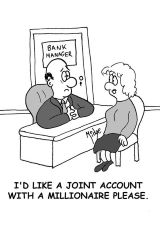
Wealthy But Worried: The Declining Number Of UK’s Billionaires:

Íf you believe all your money concerns will disappear if you become rich, think again”. When the Forbes american media organisation’s staff member, Chase Peterson-Withorn, made this observation to accompany the publication of its 2025 “Global Millionaires List” on 1st April, he also pointed out that although the very prosperous don’t have to cope with “day-to-day survival issues”, they invariably try to build up even more personal wealth “in order to create the kind of financial security that being rich should provide, but doesn’t”. Being affluent, notes the Finance Key online resource, just brings with it more extreme versions of the anxieties that most people with much smaller budgets experience in their daily lives, such as paying their taxes, protecting their assets, avoiding bad investments and not being involved in any form of business failure.

It’s this last one, for example, that seems to have convinced TESLA boss Elon Musk that he should stop working for President Trump as a “special government employee”, a decision he announced on 29th May following a significant drop in both the sales of TESLA vehicles world-wide and its stock market value, along with rumours that the company’s board members were considering replacing him as CEO. Not that the 53-year-old is likely to be struggling economically for quite a while yet: Forbes estimate his net worth to be $342 billion, followed by Facebook’s Mark Zuckerberg (40: $216 billion), Jeff Bezos (61: Amazon: $215 billion), Larry Ellison (80: Oracle Database: $192 billion), Bernard Arnault & family (76: LVMH French luxury products group: $178 billion). According to Forbes, the US has a record 902 billionaires, China (including Hong Kong) 516 and India 205.

It’s a rather different story in the UK, however. This year’s Sunday Times “Rich List”, published on May 18th shows – as it’s author, the broadcaster and commentator Robert Watts points out – that the combined fortunes of the 350 individuals and families featured in it amount to a total of £772.8 billion, 3% less than in 2024 and that there are now just 156 billionaires based in Britain compared to 165 a year ago and 177 in 2022. Watts attributes this reduction to the “array of tax changes” unveiled in Parliament on October 30th by the Labour Government’s Chancellor of the Exchequer, Rachel Reeves. Private company shares worth more than £1 million will incur a 20% charge when passed on to the next generation, a move denounced by the bagless vacuum cleaner inventor Sir James Dyson (No. 4 in the List) as a “cash grab that will rip apart the very fabric of our economy”.

Increases to taxes on capital gains and the income from business sales, but especially the abolition of the “non-dom status” for residents in the country whose domicile for tax purposes is outside Britain, states Watts, constitute an “existential threat” to many “wealth creators” on the Rich List, who are now as a result contemplating moving permanently to more welcoming locations such as Dubai and Singapore or have already done so.

As the BBC journalists Yang Tian and Imogen James have observed, down from 2024 are both the Gopi Hinduja industrial family, the richest in the UK (from £37.3 bn to £35.3 bn) and the DAZN sports streaming owner Sir Leonard Blavatnik (No. 3: From £29.246 bn to £25.725 bn), though at No 2 the property magnates David and Simon Reuben are up from £24,977 bn to £26.873bn and Sir James Dyson has remained the same at £20.8bn. King Charles III is apparently £270 million better off than was his mother, Queen Elizabeth II (£640 million compared to her £370 million, on which he was exempted from inheritance tax). The biggest loser has been the Manchester United part-owner, Sir James Ratcliffe (No 7: £23.519 bn to £17.046 bn).

The Finance Monthly website, though, has very little sympathy for anyone on the Rich List who’s encountered even a modest downturn. “How can so few hold so much?” it queried on 16th May. In a year of mounting economic pressure, it declares, the latest Rich List offers a jaw-dropping glimpse into the astronomical wealth concentrated in the hands of a select minority while in the rest of the nation more families than ever are having to rely on food banks, housing costs are soaring and public services are under great strain.

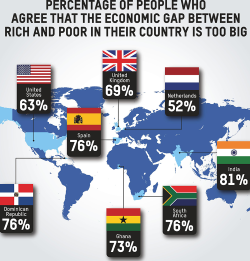
Jack Mark, a columnist for the “UK Reporter” highlighted on October 17 an analysis by the Fairness Foundation indicating that the “huge wealth gap”between the richest and poorest households in the UK has surged by nearly 50% in under a decade, a development described by the Foundation’s CEO, Will Snell, as “ a moral outrage and a clear danger to our society”. On 16th May, the BBC’s cost of living correspondent Kevin Peachey cited a Financial Conduct Authority (FCA) survey suggesting that 25% of the UK adult population (around 13 million people) are “walking a financial tightrope”, have debts that are difficult to manage, have problems in paying even their essential bills and have either low savings or none at all.

Filed under: Media, Society | Posted on July 1st, 2025 by Colin D Gordon | No Comments »

The Surprising Renaissance Of Britain’s Cinemas:

Film is at the heart of the UK’s cultural sector, soft power and identity”. So declared the Guardian in its editorial on 10th May appraising the “potentially disastrous impact” of President Trump’s threat to impose 100% tariffs on all movies “produced in foreign lands”. The industry, the newspaper asserted, is already in a “precarious state” due to the repercussions from a range of adverse factors, especially Covid, the screenwriters’ and actors 2023 strike in the US, streaming platforms such as Netflix and increasing production costs.

The Statista website contributor, Laura Carollo, likewise acknowledged on May 5th that the UK is a particularly vulnerable target for the White House because it has become a favoured location for many foreign studios, “who are delighted to take advantage of the financial benefits offered by local tax reliefs”. Despite such concerns, she also detected an upturn in cinema ticket sales across the UK whereby in 2026 the country will be behind only the USA and China in terms of filmed entertainment revenue.

Carollo’s apparent optimism contrasts sharply with some of the gloomier news emanating from Britain’s media. On 7th May, the Sun journalist Naval Abdisamad reported that the Odeon Cinema group would be closing its branch in Bracknell, Berkshire, following “a string of other shutdowns around the country”, among them their London cinemas in Surrey Quays and Covent Garden. The Cineworld chain has taken similar action in West Yorkshire, Greater Manchester, Middlesborough, Poole and Weymouth (both in Dorset).

Phil Clapp, the CEO of the UK Cinema Association, although acknowledging to the BBC News correspondent Pete Cooper on 2nd January that since the pandemic some cinemas have become uneconomic to run, also insisted that new ones are opening up whose operators are offering something more than people get at home and that “there is still an audience out there for the big-screen experience”. Cooper’s colleague, Bethan Nimmo, on 17th March indeed agreed with Clapp that there are signs of the industry recovering and that there is a significant improvement in ticket sales.The Substack website considers this is because, unlike the streaming platforms, cinemas provide the “unparalleled magic of seeing a film on a mass screen, surrounded by an audience sharing every laugh, gasp and tear”.

On 17th January, the UK Cinema Association issued figures showing that admissions for 2024 had been 126,514,784, 2.3% up on 2023, outperforming not just the USA but also its counterparts in Europe. December was the biggest cinema-going month in 2024, with 15,679,232 admissions, almost 36% more than in 2023. Ian Jacob, CEO of Cinema First, hailed this as demonstrating conclusively that “cinema retains a unique position in the heart of the public”.

A Barclays Insight analysis of “How the UK cinemas got their mojo back”,issued on 28 March, has highlighted the fact that 2025 has started strongly with cinema spending up 15.1% in January and 9% in February, outpacing digital content and subscriptions. Furthermore, between February 7 and March 6th, UK cinemas earned £100.7m, 20% more than the £83.8m for the equivalent period in 2024. Barclays attributes much of this success to “Gladiator II”, “Bridget Jones: Mad About The Boy” and “Captain America: Brave New World” and anticipates this could be exceeded this year by the new Superman film, the latest instalment of “Jurassic World”, the sequels to Wicked and Avatar and the screen debut of megagame “Minecraft”.

The Barclays survey does, however, also reveal that 55% of those questioned and 69% of the over-55’s admitted that they are going to the cinema less than 10 years ago, except for residents in London who say their frequency is just the same as it was then. The cinemas, observes Barclays, are confronting this challenge and the fiercer than ever battle for consumer leisure time by making an outing to see a film more enjoyable, such as by installing sofas and inclining seats, providing in-seat service and improving the standard and variety of available food and drinks. The primary threat to the cinema industry, in the opinion of Mintel.com is the view of prospective customers that cinema ticket prices have become too expensive and because the competition from streaming services has reshaped the perception of what constitutes value for money.

According to an assessment published by the Brussels-based International Union of Cinemas (UNIC) on 12th February, it wasn’t only the UK that managed to maintain strong box office revenue last year. The UNIC data has confirmed that in 2024, cinema admissions also surpassed 2023 in eleven other European nations, among them France, Ireland, Greece, Poland and Turkey. Spain’s national market share rose to 19%, two points higher than in 2023 and France recorded 181.3 million admissions, an increase of almost one million, partly due to the fact that 44.4% of the films shown were French-made. Summer 2024 was the best in Italy’s box office history and during Christmas attendance was up by 28%, with 48% of tickets purchased during that period being for Italian films. As UNIC has emphasised, local productions have clearly played a pivotal role in the resurgence of cinema-going across Europe.

Filed under: Media, Theatre & Film | Posted on June 5th, 2025 by Colin D Gordon | No Comments »

Categories

Recent Posts

Archives

Copyright © 2026 Colin D Gordon. All rights reserved.